
 By Azzam Bilal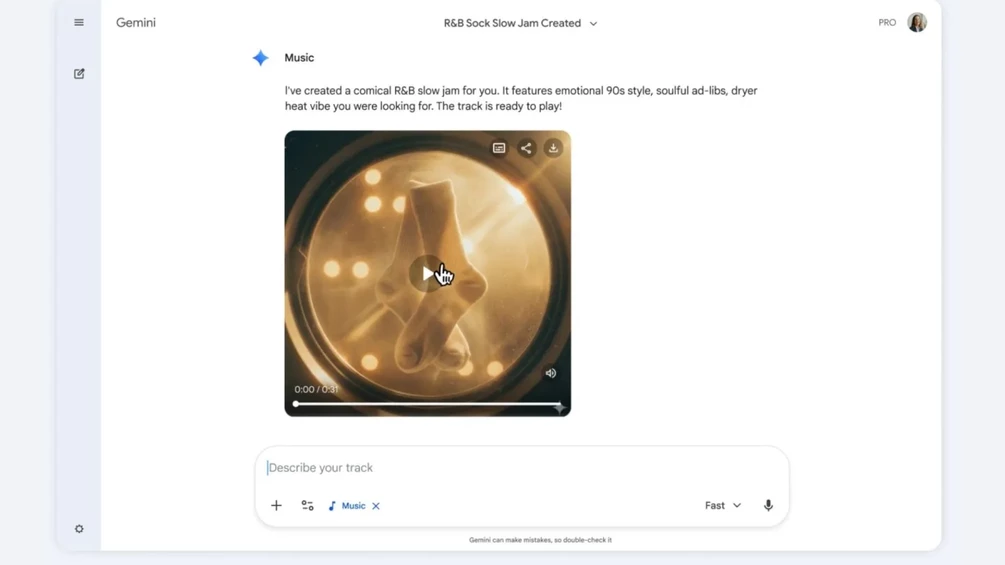
HangupsMusic.com – Mountain View, In a significant move that further bridges the gap between artificial intelligence and creative expression, Google has announced the integration of its advanced Lyria 3 audio model into the Gemini ecosystem. This update allows users to generate short, high-quality musical compositions through simple interactions with the Gemini application. Developed by Google DeepMind, the tech giant’s premier AI research division, the Lyria 3 tool represents the latest evolution in generative audio, offering a streamlined interface for creating 30-second tracks that respond to a variety of sensory inputs, including text, images, and video.
The deployment of Lyria 3 marks a pivotal moment for Google as it seeks to democratize music production for the general public. Unlike professional digital audio workstations (DAWs) that require years of technical mastery, the Gemini-based tool is designed for immediacy and accessibility. By leveraging the multimodal capabilities of the Gemini platform, users can provide a text prompt such as "a lo-fi hip-hop beat for a rainy afternoon" or upload a photograph of a sunset to receive a customized audio track that reflects the mood and aesthetic of the input. This "multimodal" approach—where the AI interprets visual data to inform auditory output—distinguishes Google’s offering from many text-to-audio competitors currently on the market.
As of this week, the tool has entered its Beta phase and is available to a global audience. To ensure responsible usage and adhere to safety guidelines, Google has restricted access to users aged 18 and older. The rollout is notably international in scope, with the AI capable of processing and understanding prompts in eight major languages: English, French, German, Spanish, Hindi, Japanese, Korean, and Portuguese. Google has signaled that this is only the beginning of the tool’s linguistic reach, with plans to incorporate additional languages and dialects in subsequent updates to cater to a truly global user base.
The technical prowess of Lyria 3 allows it to generate not only instrumental arrangements but also full songs featuring synthesized vocals and lyrics. When a user uploads a video, the AI analyzes the pacing, movement, and emotional tone of the footage to create a score that complements the visual narrative. This feature is expected to be particularly popular among social media content creators who require quick, royalty-free soundtracks for short-form videos on platforms like TikTok, Instagram Reels, and YouTube Shorts. However, Google has been transparent about the intended scope of the project. In an official blog post accompanying the launch, the company emphasized that the primary objective is to provide a "fun, unique way to express yourself," rather than to replace the "musical masterpieces" created by human artists.
Despite the excitement surrounding these technological milestones, the launch arrives at a time of intense scrutiny and friction within the global music industry. The rise of generative AI has sparked a complex debate regarding copyright, the devaluation of human artistry, and the integrity of streaming ecosystems. Major platforms have recently been forced to take aggressive stances against an influx of AI-generated content that many critics label as "audio spam." For instance, Apple Music recently made headlines by demonetizing approximately two billion streams identified as fraudulent or bot-driven, a significant portion of which involved AI-generated tracks designed to game the royalty system.
Spotify and Deezer have followed suit, implementing more robust detection algorithms to identify and remove low-effort AI content that saturates their libraries. Deezer recently reported that up to 85% of AI-generated music streams on its platform had been demonetized in an effort to protect the earnings of human musicians. Perhaps the most definitive stance has come from Bandcamp, the artist-centric marketplace, which recently enacted a total ban on AI-generated music. Bandcamp’s leadership argued that the platform’s core mission is to support human creativity and that allowing AI content would undermine the relationship between artists and their fans.
Google’s entry into this space is carefully calibrated to navigate these ethical and legal minefields. By limiting the output to 30 seconds and framing the tool as a personal expression utility rather than a commercial production engine, Google appears to be distancing itself from the more controversial "deepfake" music generators that mimic the voices of famous artists without permission. Furthermore, Google has previously discussed the implementation of digital watermarking technologies, such as SynthID, to ensure that AI-generated audio can be identified as such, providing a layer of transparency that many industry advocates have been demanding.
The scale of the AI music movement cannot be understated. According to the IMS Business Report 2025, an estimated 60 million people utilized some form of artificial intelligence to create music in 2024. This surge in participation highlights a fundamental shift in how the public interacts with sound. Music is increasingly becoming a participatory medium rather than a purely passive one. For the millions of hobbyists who may lack the training to play an instrument or compose a melody, tools like Lyria 3 offer a gateway into the world of sound design, allowing them to translate their thoughts and visual inspirations into audible reality.
However, the rapid adoption of these tools also raises questions about the future of the music economy. If millions of users can generate functional background music for free, the market for production music libraries and stock audio—sectors that provide income for many working composers—could face significant disruption. The industry is currently watching closely to see how the legal framework evolves. In various jurisdictions, including the United States and the European Union, courts and regulators are still grappling with whether AI-generated works can be copyrighted and whether the training of these models on existing, human-made music constitutes fair use or copyright infringement.
Google’s Lyria 3 is built upon the foundations laid by its predecessor, MusicLM, but with significant improvements in fidelity and "prompt adherence"—the ability of the AI to accurately follow complex instructions. The model was trained by DeepMind using a vast dataset of musical concepts, allowing it to understand the nuances of genre, tempo, and instrumentation. By integrating this into Gemini, Google is making AI music creation as simple as a chat conversation. A user could, for example, ask Gemini to "make a 30-second upbeat samba track with a heavy focus on percussion to match this video of a carnival," and the system would synthesize the audio in a matter of seconds.
The cultural impact of such technology is likely to be felt most strongly in the realm of digital communication. Just as emojis and GIFs changed the way people convey emotion in text, AI-generated "audio snippets" could become a new standard for personalized messaging. Imagine sending a friend a birthday greeting accompanied by a unique, AI-composed jingle, or a traveler sharing a photo of the Alps with a custom-generated orchestral score that captures the majesty of the mountains. This is the "fun, unique expression" Google envisions—a world where music is a customizable extension of our digital presence.
As the Beta period progresses, Google is expected to gather feedback from its diverse user base to refine the Lyria 3 model. The company has hinted at future expansions that may include longer track durations, more complex editing features, and deeper integration with other Google services. For now, the focus remains on ensuring the tool is safe, easy to use, and culturally sensitive across the eight languages it currently supports.
In conclusion, while the music industry continues to wrestle with the existential threats and opportunities posed by artificial intelligence, Google’s launch of the Lyria 3 tool on Gemini represents a bold step toward the mainstreaming of generative audio. By focusing on short-form content and personal expression, Google is attempting to carve out a space for AI that complements, rather than competes with, the professional music world. Whether the industry at large will accept this middle ground, or if the sheer volume of AI-generated content will eventually overwhelm the digital landscape, remains to be seen. For the 60 million people already experimenting with AI music, however, the arrival of Lyria 3 provides a powerful new instrument in their digital toolkit.