 By Azzam Bilal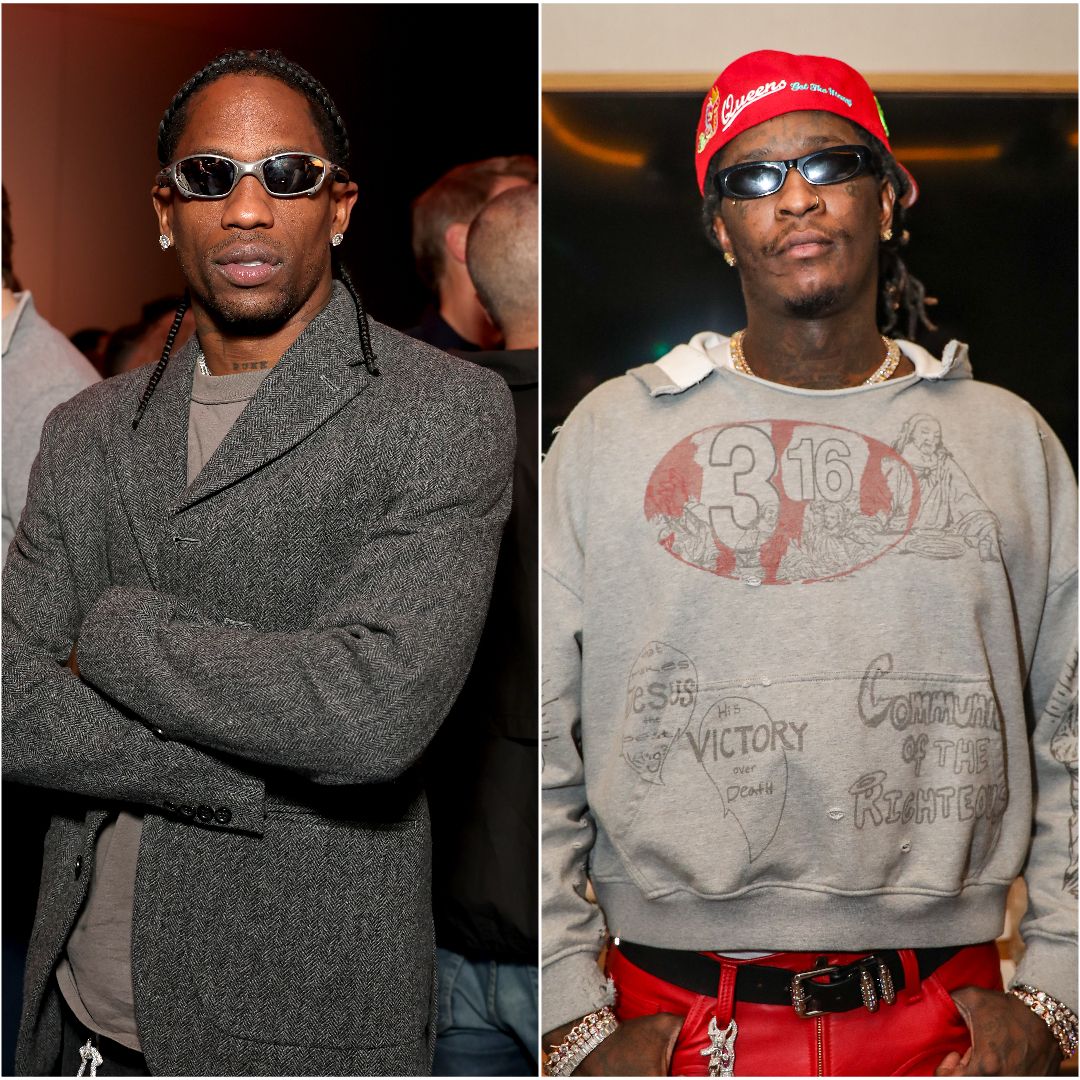
HangupsMusic.com – Washington, D.C., The intersection of creative expression and the American penal system has reached a critical juncture as some of the most prominent figures in hip-hop join forces to challenge the use of rap lyrics in capital sentencing. In a high-stakes move, Travis Scott, Young Thug, and Killer Mike, alongside a coalition of legal scholars and industry advocates, have filed amicus briefs with the United States Supreme Court. Their goal is to halt the scheduled execution of James Garfield Broadnax, a 35-year-old Black man whose creative writings became a focal point of the proceedings that sent him to death row. The case has reignited a national debate over whether the First Amendment protects artistic "outlaw" personas or if the government can continue to use stylized verses as a window into a defendant’s "criminal propensity."
The legal battle stems from a 2009 conviction in Texas. Broadnax, who was 19 at the time of the offense, was found guilty of the murders of two individuals during a robbery outside a recording studio near Garland, Texas. While the conviction itself was based on traditional evidence, the sentencing phase—the period where a jury decides between life in prison or the death penalty—took a controversial turn. Prosecutors introduced 40 pages of Broadnax’s handwritten rap lyrics into the record. These lyrics, filled with the aggressive imagery and bravado common to the "gangsta rap" subgenre, were presented not as art, but as a roadmap of the defendant’s soul. A predominantly white jury reviewed these documents twice during their deliberations before ultimately choosing to sentence the teenager to death.
In the newly filed supporting brief, Travis Scott argues that the inclusion of these lyrics did more than just bias a single jury; it set a precedent that threatens the entire foundation of hip-hop as a protected form of speech. Scott’s legal team contends that by allowing prosecutors to use artistic expression as evidence of "future dangerousness"—a specific legal standard required for the death penalty in Texas—the court essentially placed a "content-based penalty" on the genre. The brief emphasizes that taking rap music out of its cultural and performative context subjects every artist who explores dark themes to the threat of future prosecution. Scott asserts that the court must clarify the constitutional boundaries that prevent protected art from being weaponized against its creator in a court of law.
The argument presented by Scott is bolstered by extensive citations from cultural critics and investigative reporting from outlets like The Fader, Complex, and The New Yorker. These sources have long documented a pattern where rap is uniquely targeted by law enforcement in a way that other genres are not. The brief suggests that if a filmmaker like Quentin Tarantino or a novelist like Stephen King were on trial, their violent scripts or manuscripts would almost certainly be excluded as irrelevant to their personal character. However, in the case of young Black men, the distinction between the "author" and the "narrator" is frequently collapsed by the justice system, leading to what advocates call a "criminalization of creativity."
Killer Mike, a veteran activist and one-half of the duo Run The Jewels, filed a separate brief alongside other artists to highlight the specific racial biases inherent in this practice. For Killer Mike, this is a familiar battlefield. He has spent over a decade advocating for the "Rap on Trial" movement, previously filing briefs in cases such as Bell v. Itawamba County Board of Education in 2015 and the 2019 Supreme Court petition of Jamal Knox. In the Knox case, the court ultimately declined to protect lyrics that were deemed "true threats" against police officers. However, the Broadnax case offers a different legal wrinkle: the lyrics were not used to prove a crime or a threat, but were introduced only after the conviction to influence the severity of the punishment.
The artists argue that this timing is particularly insidious. By introducing the lyrics during the sentencing phase, prosecutors were able to capitalize on deep-seated societal biases against hip-hop culture. The brief notes that the use of rap lyrics often triggers "anti-Black bias" and "anti-rap bias," leading jurors to view the defendant through a lens of fear rather than objective fact. The filing characterizes the Broadnax case as a quintessential example of how racial prejudice can infect a criminal proceeding when the state is allowed to use a defendant’s art to manufacture a narrative of inherent violence.
The broader context of this Supreme Court petition cannot be ignored, as it arrives amidst a sea change in how the legal system views rap lyrics. Perhaps most notably, Young Thug—one of the signatories of the petition—is currently embroiled in a massive RICO (Racketeer Influenced and Corrupt Organizations Act) trial in Georgia. In that case, the prosecution has used lyrics from various Young Stoner Life (YSL) tracks to argue the existence of a criminal enterprise. The YSL indictment has become a flashpoint for the music industry, prompting major labels and stars like Megan Thee Stallion and Drake to voice their concerns about the chilling effect such prosecutions have on the arts.
Legislative bodies have begun to take notice. In 2022, California Governor Gavin Newsom signed the Decriminalizing Artistic Expression Act (AB 2799), which requires judges to consider the potential for racial bias and the "probative value" of creative expression before allowing it as evidence. New York followed suit with a similar bill, and at the federal level, the Restoring Artistic Protection (RAP) Act was reintroduced to Congress in 2023. These laws seek to ensure that the "fictional" nature of song lyrics is recognized, requiring prosecutors to prove a direct, literal connection between a lyric and a specific crime before it can be admitted.
For James Garfield Broadnax, however, these legislative shifts may come too late unless the Supreme Court intervenes. His legal team has filed for a "Writ of Certiorari," a formal request for the high court to review the lower court’s decision. They argue that the Texas court’s reliance on his lyrics violated his First Amendment right to free speech and his Fourteenth Amendment right to a fair trial. With his execution date currently set for April 30, the clock is ticking for a judicial intervention that could redefine the relationship between the Bill of Rights and the recording booth.
The scholars involved in the petition point out that the "future dangerousness" argument is particularly susceptible to abuse. In Texas capital cases, the jury must find a probability that the defendant would commit criminal acts of violence that would constitute a continuing threat to society. By presenting 40 pages of lyrics detailing gang life and violence, the state effectively argued that Broadnax’s thoughts and artistic output were a blueprint for his future behavior. The petitioners argue that this is a "slippery slope" that allows the state to punish individuals for their thoughts and associations rather than their actions.
As the April deadline approaches, the music industry and civil rights advocates are watching closely. A decision by the Supreme Court to hear the case could lead to a landmark ruling that protects artists across all mediums from having their work used against them in sentencing. Conversely, a refusal to hear the case would leave the door open for prosecutors to continue using rap lyrics as a tool to secure the harshest possible penalties. For Travis Scott, Killer Mike, and Young Thug, the fight is about more than just one man on death row; it is about ensuring that the most popular musical genre in the world is not treated as a confession of future crimes. The outcome will determine whether the "outlaw" stories told in hip-hop remain a protected form of American storytelling or a liability that can lead to the ultimate price.