
 By admin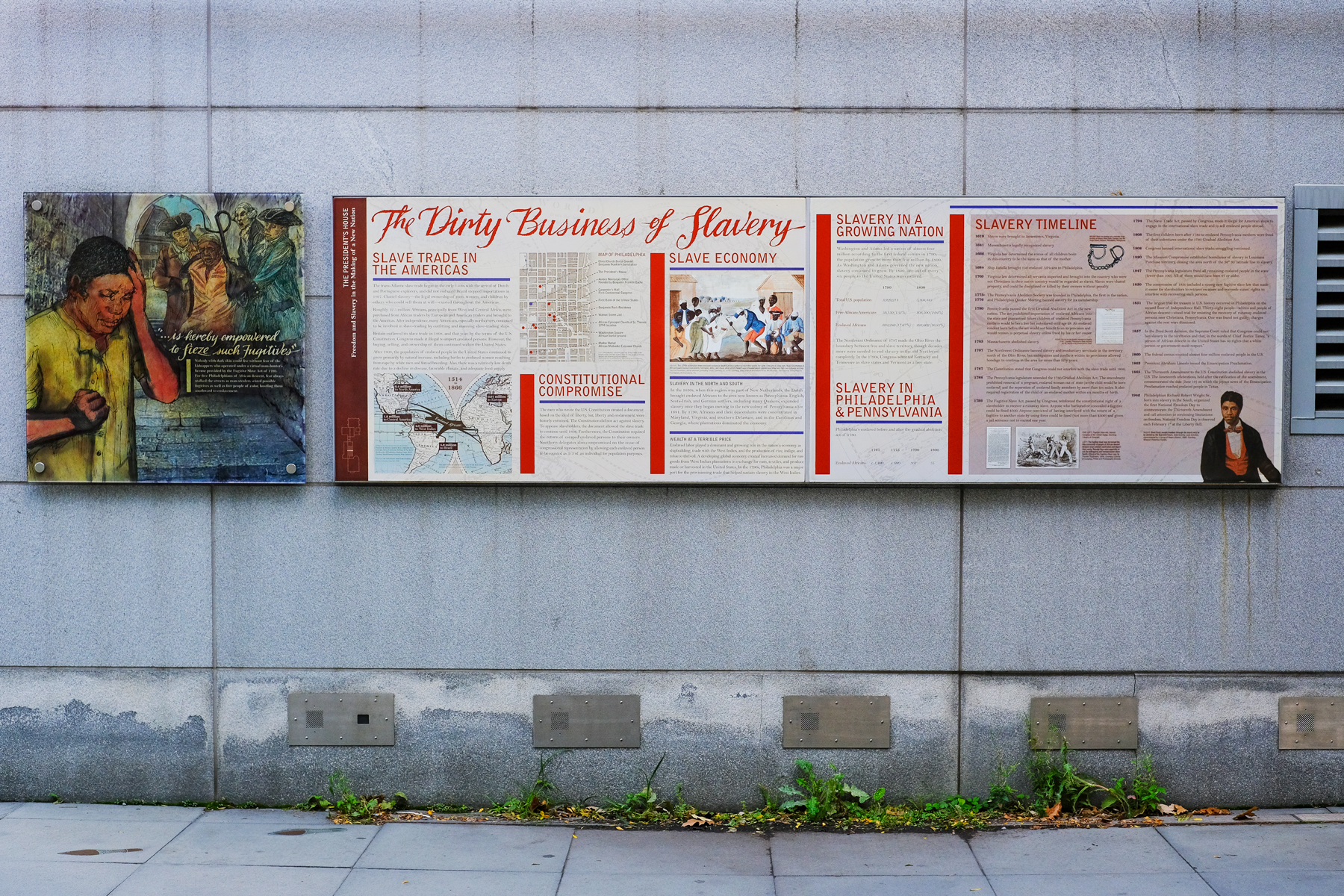
HangupsMusic.com – Philadelphia, Pennsylvania, a federal judge has delivered a powerful judicial declaration, ordering the Trump administration to reinstate historical exhibits detailing slavery at the President’s House Site, a profoundly significant historical landmark in the heart of the city. The ruling, issued as a preliminary injunction by Judge Cynthia M. Rufe of the U.S. District Court for the Eastern District of Pennsylvania, mandates the Department of the Interior and the National Park Service (NPS) to restore the site to its original configuration, specifically requiring the reinstallation of crucial displays that illuminate the complex and often uncomfortable truth of America’s foundational paradox: liberty coexisting with chattel slavery. This decision arrives amidst heightened national discourse surrounding historical interpretation and public memory, particularly as the nation gears up for its 250th-anniversary celebrations of independence.
The President’s House Site, located on Independence Mall, holds a unique and poignant place in American history. It preserves a portion of the original foundation of the executive mansion where George Washington resided during his presidency from 1790 to 1797, when Philadelphia served as the nation’s temporary capital. John Adams also occupied the residence briefly. Crucially, the site is not merely an architectural footprint; since its official commemoration in 2010, it has functioned as a public space dedicated to exploring the "paradox between slavery and freedom in the new nation." It stands as a solemn memorial to the nine enslaved African Americans — including figures like Oney Judge and Hercules — whom President Washington held in bondage at this very location. Their stories, often overlooked in traditional narratives of the Founding Fathers, are central to the site’s interpretive mission, offering visitors a more complete and challenging understanding of the early republic.
The controversy erupted in January when, without prior consultation or agreement with the City of Philadelphia, all exhibits at the President’s House Site were abruptly removed. This drastic action followed a directive issued by then-Secretary of the Interior, Doug Burgum, during the Trump administration. The directive, characterized by critics as a politically motivated effort to sanitize American history, called for the review and potential removal of any national park displays deemed to "inappropriately disparage" the United States. While The Philadelphia Inquirer had previously reported in July that 13 specific items across six exhibits at the President’s House were flagged for review under this directive, the January removal went further, clearing the entire interpretive landscape of the site. This move was seen by many as a direct assault on historical accuracy and the integrity of public education.
In response to the sweeping removal, the City of Philadelphia swiftly initiated legal action, filing a lawsuit against Secretary Burgum and acting NPS Director Jessica Bowron. The city argued that the removal violated agreements regarding the site’s interpretation and constituted an unacceptable attempt to whitewash a critical aspect of American history. Judge Rufe, a George W. Bush appointee, heard the arguments and on Monday, February 16, delivered her compelling preliminary injunction. Beyond ordering the immediate restoration of the exhibits, her ruling stipulated that the Department of the Interior and the NPS must "take all necessary steps to ensure the safety, security, and preservation of any such items" that had been removed. Furthermore, the judge explicitly prohibited the defendants from "making any and all further changes to the President’s House Site, including the installation of replacement materials, without mutual agreement of the City of Philadelphia" as the legal proceedings continue. This ensures that no further unilateral alterations can be made while the case is ongoing, safeguarding the site’s historical integrity.
What lent particular weight and urgency to Judge Rufe’s decision was her unvarnished and pointed judicial language, particularly her opening remarks. She began her written opinion with a chilling quote from George Orwell’s dystopian novel 1984: "All history was a palimpsest, scraped clean and reinscribed exactly as often as was necessary. In no case would it have been possible, once the deed was done, to prove that any falsification had taken place." This literary allusion set a stark tone, immediately framing the government’s actions within a context of historical revisionism and authoritarian control over narrative.
Judge Rufe did not stop at the quote. She then directly applied Orwell’s grim vision to the case before her, writing: "As if the Ministry of Truth in George Orwell’s 1984 now existed, with its motto ‘Ignorance is Strength,’ this Court is now asked to determine whether the federal government has the power it claims — to dissemble and disassemble historical truths when it has some domain over historical facts. It does not." This powerful judicial rebuke underscored the judge’s view that the government’s attempt to remove the exhibits was not merely a bureaucratic decision but an ideological effort to manipulate historical understanding. Her words resonate far beyond the confines of the courtroom, speaking to broader anxieties about truth, censorship, and the preservation of historical memory in an increasingly polarized society. The direct comparison to Orwell’s Ministry of Truth highlights the profound implications of allowing a government to dictate which historical facts are permissible for public display, especially those that challenge comfortable national narratives.
The implications of Judge Rufe’s ruling are profound, reaching into the heart of ongoing debates about how the United States grapples with its complex past. The President’s House Site is not just any historical location; it’s a place where the foundational ideals of liberty and equality collided directly with the brutal reality of human bondage. By foregrounding the lives of the enslaved individuals who served George Washington, the exhibits force a confrontation with the hypocrisy inherent in the nation’s founding principles. The attempt to remove these exhibits, therefore, was perceived by many as an attempt to diminish or erase a crucial, albeit uncomfortable, part of the American story.
The legal arguments presented by the City of Philadelphia likely centered on the sanctity of historical interpretation agreements, the public trust doctrine, and potentially even First Amendment concerns regarding the suppression of information in a public forum. The government, conversely, may have argued for executive prerogative in managing federal property and interpreting its own directives. Judge Rufe’s strong language, labeling the government’s assertion of "full power to change national parks exhibits" as "horrifying" and "dangerous" during a previous hearing, suggests she found the government’s arguments deeply troubling on fundamental principles of historical integrity and democratic accountability. Her concern likely stemmed from the potential precedent such unchecked executive power could set, allowing any administration to selectively curate history to fit a preferred narrative, thus undermining the very purpose of national historical sites to educate and inform.
This preliminary injunction, while not a final resolution of the case, signals a clear direction for the ongoing litigation. Judge Rufe has indicated her intention to move swiftly, recognizing the timely significance of the matter, especially with the nation approaching its 250th anniversary of independence. The celebrations, centered around Independence Mall where the President’s House is located, will inevitably draw immense public attention to the origins and evolution of the American experiment. Ensuring that these celebrations include a complete and honest portrayal of the nation’s founding, including its imperfections and moral failings, is seen as crucial for a mature understanding of American identity.
The struggle over the President’s House exhibits is emblematic of a larger cultural battle being waged across the United States over how history, particularly concerning race and injustice, should be taught and remembered. This ruling reinforces the idea that historical sites are not merely static monuments but dynamic spaces for critical engagement with the past. It serves as a powerful reminder that the effort to create a more perfect union requires confronting, rather than concealing, the full spectrum of its history. In a world increasingly prone to disinformation and selective narratives, a judicial voice upholding the immutable nature of historical truth offers a profound and necessary counterpoint. The Department of the Interior and the National Parks Service have not yet commented on the ruling, but the stage is set for a continued legal and cultural dialogue about whose history gets told, and by whom.