
 By Rose Miami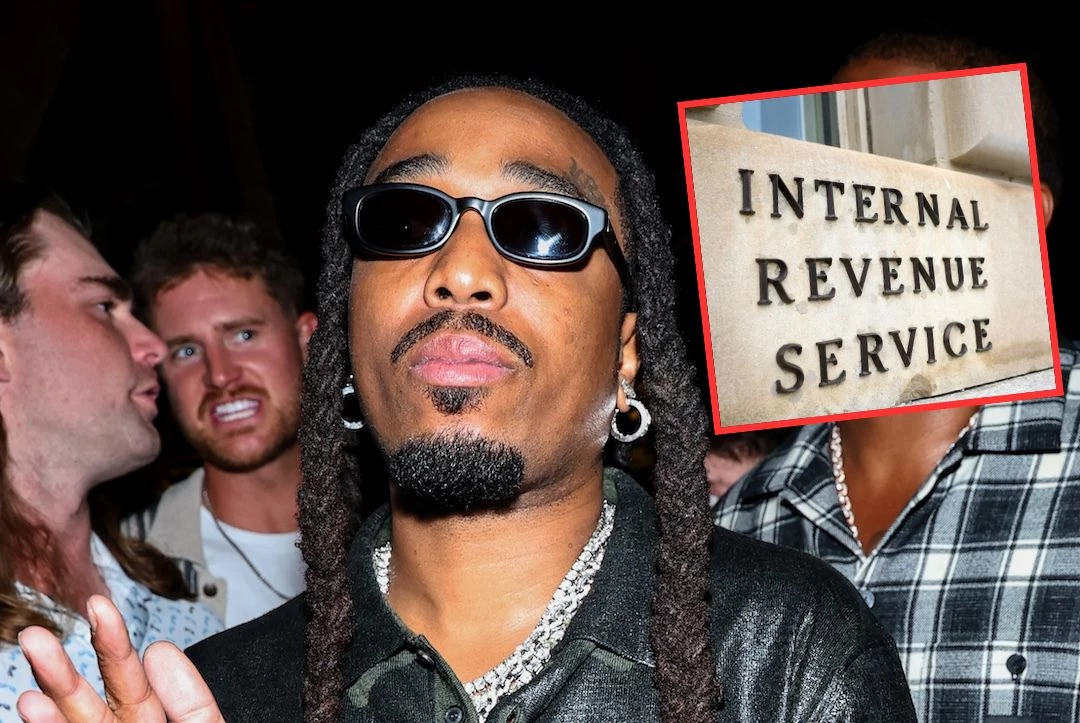
HangupsMusic.com – Atlanta, GA – Renowned hip-hop artist Quavious Marshall, widely known as Quavo, is reportedly facing a significant financial demand from the Internal Revenue Service (IRS), with a federal tax lien of approximately $2.9 million lodged against him. This substantial sum is attributed to alleged unpaid taxes spanning multiple recent years, as detailed in recent reports.
The federal agency, according to sources close to the matter, has formally filed a tax lien against the Migos co-founder, citing a deficit in tax remittances for the years 2021, 2022, and 2023. Publicly available records indicate the IRS is seeking $915,660 for the 2021 tax year, $887,486 for 2022, and an additional $1,109,497.79 for 2023. The cumulative total of this lien amounts to an imposing $2,912,644.33. Representatives for Quavo have been contacted for comment regarding these developments, though no official statement has been released at this time.
This reported tax burden for Quavo emerges in a period where several prominent figures within the music industry have also found themselves navigating substantial tax obligations. Notably, his former Migos groupmate, Offset, whose legal name is Kiari Kendrell Cephus, recently settled a considerable tax debt. Reports indicate that Offset paid off a lien of approximately $1.5 million for the 2022 tax year. This payment was reportedly made amidst his ongoing divorce proceedings with rapper Cardi B. However, Offset’s financial entanglements with tax authorities are not entirely resolved. He is also reportedly facing an outstanding debt of $486,426.35 for the 2023 tax year, alongside a separate lien from the Georgia Department of Revenue for an alleged $292,000 bill from 2021. Combined, these outstanding obligations for Offset are estimated to be around $778,426.

The challenges faced by Quavo and Offset are not isolated incidents within the hip-hop community. The scrutiny of financial records and the subsequent demands from tax agencies have become a recurring theme for artists with high earning potential. In April 2023, rapper Lil Pump was reported to owe the IRS a substantial sum of $2 million in back taxes. Furthermore, in September 2025, former music executive and entrepreneur Dame Dash reportedly found himself facing an overwhelming debt of $25 million. This extensive financial liability included significant amounts owed to various governmental bodies, such as $8.7 million to the IRS, $9.65 million to the New York State Department of Taxation and Finance, $5.79 million to Los Angeles County, and $3.5 million to the New Jersey Division of Taxation.
These instances underscore the complex financial landscape that successful artists and industry professionals must navigate. While the exact circumstances leading to Quavo’s substantial tax lien remain undisclosed, the IRS’s aggressive approach to collection through federal tax liens signifies a serious financial matter. Such liens can have significant implications, including potential impacts on credit scores and the ability to secure future loans or conduct financial transactions. The public nature of these filings also brings increased attention to the financial health of prominent figures, often sparking widespread discussion and speculation within fan communities and the broader entertainment news cycle.
The IRS’s mandate is to ensure compliance with tax laws and to collect revenue for the government. When individuals or entities fail to meet their tax obligations, the IRS has a range of enforcement tools at its disposal, with tax liens being a significant measure. A federal tax lien is a legal claim by the government against a taxpayer’s property, including real estate, personal property, and financial assets. This lien remains in place until the tax debt is fully satisfied, interest and penalties are paid, or the lien is otherwise released by the IRS.
The reporting of Quavo’s tax lien also highlights the broader implications for the music industry, where substantial earnings can often be accompanied by equally substantial tax liabilities. Managing these obligations effectively requires diligent financial planning, professional accounting, and timely remittance of taxes. As more details emerge regarding Quavo’s situation, the industry will likely be watching closely, as such cases serve as a stark reminder of the financial responsibilities that accompany significant success in the entertainment world. The artist’s response, whether through immediate settlement, negotiation, or other legal avenues, will be a key development to monitor in the coming weeks and months.