 By admin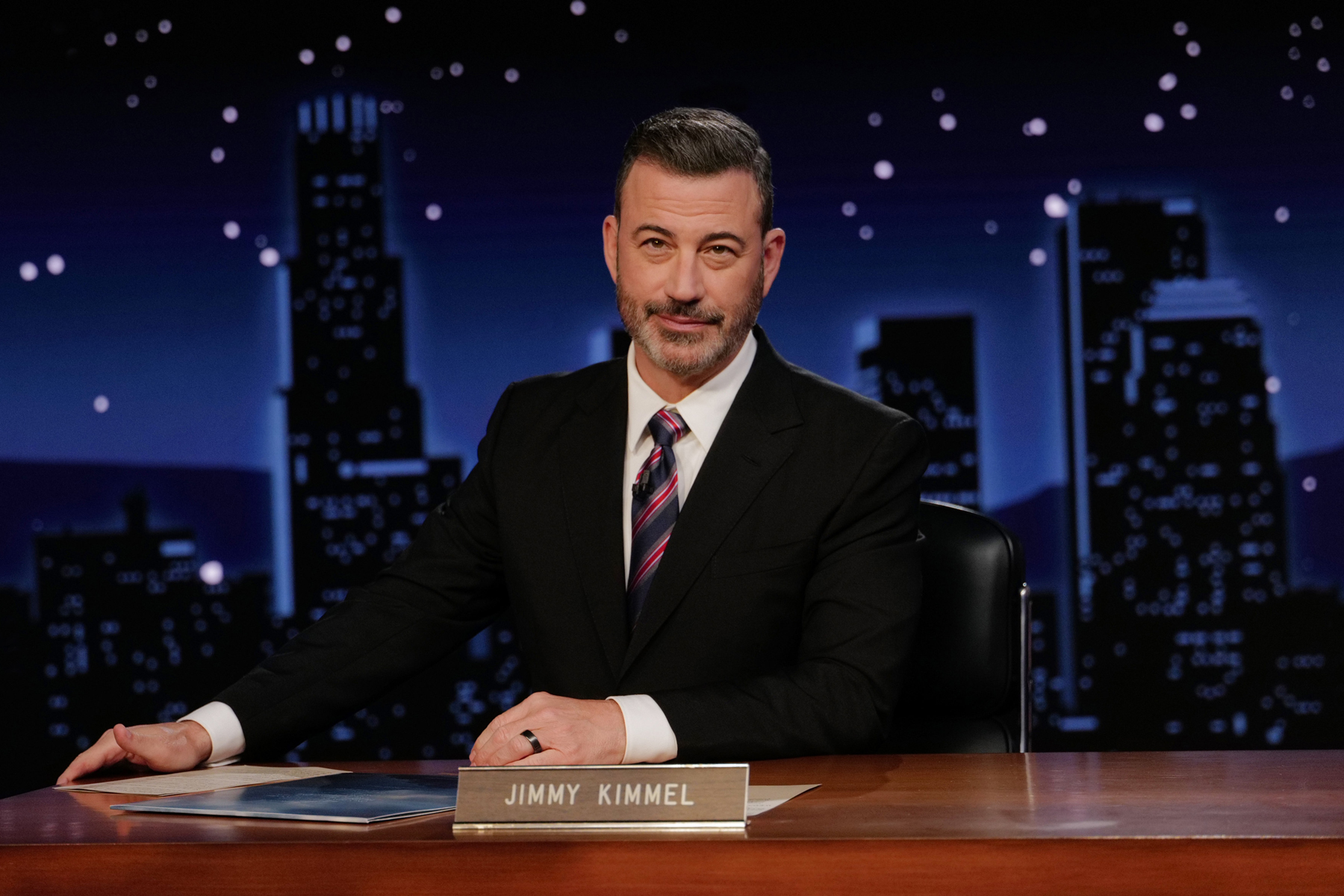
HangupsMusic.com – The cultural divide surrounding America’s biggest sporting event, the Super Bowl, often extends beyond the gridiron to the halftime show, a globally televised spectacle that has become a lightning rod for ideological debate. This year, the controversy reached a fever pitch, culminating in an "alternative" halftime program orchestrated by conservative youth organization Turning Point USA (TPUSA) and headlined by Kid Rock. However, what was intended as a patriotic counter-narrative quickly devolved into a technical and artistic quagmire, drawing sharp, satirical rebukes from late-night television stalwarts Jimmy Kimmel and Jon Stewart.
The genesis of the "All-American Halftime Show" stemmed from a vocal segment of conservative media and commentators expressing outrage over the selection of Puerto Rican superstar Bad Bunny as a performer for the official Super Bowl halftime show. While Bad Bunny’s performance was lauded by many for its vibrant energy and global appeal, integrating Spanish-language elements and showcasing Latin music culture, some critics decried it as un-American, citing the language barrier as a primary grievance. This sentiment fueled TPUSA’s initiative, announced with much fanfare, to offer an English-language, "all-American" alternative, promising a performance that would resonate with their demographic.
Kid Rock, an artist whose career trajectory has seen him evolve from a genre-bending rap-rocker to a staunch conservative icon, was chosen to spearhead this cultural counter-offensive. Known for his provocative stage presence, his unapologetically blue-collar image, and his vocal support for right-wing political figures, Kid Rock seemed a natural fit for TPUSA’s vision. He was joined by a lineup of other conservative-leaning country musicians, including Brantley Gilbert, Lee Brice, and Gabby Barrett, aiming to deliver a distinct musical experience for those who felt alienated by the mainstream Super Bowl offering.
However, the event itself, reportedly pre-taped, was plagued from the outset. Organizers initially announced that the "All-American Halftime Show" would stream on Elon Musk’s X platform, only to retract the statement last-minute, citing unspecified "licensing restrictions." Viewers were instead directed to YouTube, a less exclusive platform, immediately signaling logistical hurdles. But the troubles didn’t end there. When the show finally aired, audiences were reportedly met with technical glitches, most notably issues with Kid Rock’s lip-syncing, which appeared noticeably out of sync with his own vocals. Despite being the headliner, Kid Rock’s segment was brief, featuring only two songs at the conclusion of the half-hour program.
These glaring inconsistencies and the underlying irony of the event provided rich fodder for late-night comedians. Jimmy Kimmel, hosting "Jimmy Kimmel Live" on Monday night, wasted no time in dissecting the debacle. With his characteristic blend of observational humor and sharp wit, Kimmel lambasted the "All-American Halftime Show" as a profound failure. He opened by mockingly describing the program as "not a good program" and confessing it "went off with a lot of hitches." His humor extended to Kid Rock’s sartorial choice, specifically his denim shorts, or "jorts," and the awkwardness of his performance, which Kimmel comically dubbed a "lip-synch battle with himself."
Kimmel then zeroed in on the core hypocrisy that underpinned the entire alternative show. He framed the event as a reaction from "snowflakes" upset at the prospect of "listening to Spanish for eight minutes," juxtaposing this perceived intolerance with the shambolic execution of their own English-centric program. "And of course, like everything they do, it was a disaster," Kimmel quipped, enumerating the streaming failures and Kid Rock’s botched lip-sync. The punchline, however, resonated deepest: "Almost all the complaints about Bad Bunny were you can’t understand what he’s saying. So who do they go to? Kid Rock, an artist whose most popular song is literally gibberish." This pointed observation highlighted the absurdity of criticizing one artist for linguistic unfamiliarity while championing another whose most iconic work, "Bawitdaba," is celebrated precisely for its nonsensical, albeit catchy, vocalizations.
Kimmel wasn’t alone in his comedic assault. Jon Stewart, in a highly anticipated return to his role on "The Daily Show," also took aim at the "All-American Halftime Show," employing his signature brand of biting sarcasm. Stewart opened by "praising" Turning Point USA for delivering an event that celebrated "this beautiful country in the King’s English we all share." The setup was classic Stewart: a seemingly earnest commendation immediately followed by a devastating visual punchline. He then played a clip of Kid Rock’s notoriously indecipherable "Bawitdaba" performance, perfectly illustrating the very "language barrier" that the alternative show purported to overcome.
Stewart’s comedic translation of Kid Rock’s lyrics further underscored the irony. He jokingly offered a mock interpretation of the song’s gibberish, saying, "Merriam and Webster couldn’t have put it better themselves regarding the up-jumping of said boogie, insofar as the diggy-diggy-diggy, being da-bang-a-da-bang." This elaborate, nonsensical "translation" served to highlight the profound disconnect between the stated goal of the "All-American Halftime Show" – clarity and traditional American values – and its actual execution, which featured a headliner famous for unintelligible lyrics and a performance riddled with technical issues.
In the aftermath, Kid Rock himself offered his perspective on Bad Bunny’s performance and the alternative show during an interview with Laura Ingraham on her news program. His comments, while critical of the NFL, were surprisingly tempered when discussing Bad Bunny directly. He stated that Bad Bunny’s performance was "not his cup of tea" and admitted, "I didn’t understand any of it," acknowledging the visual spectacle but not the musical substance. However, he then pivoted to blame the National Football League, asserting, "I fault the NFL for putting him in that position and Turning Point for having to come out and have an alternative for people to watch." He concluded with a somewhat patronizing "poor kid," suggesting a degree of pity for Bad Bunny, framing him as a pawn in a larger cultural game rather than a celebrated artist making a global statement.
This entire episode serves as a microcosm of the ongoing culture wars that permeate contemporary American society. The Super Bowl halftime show, once primarily a musical interlude, has evolved into a significant cultural battleground, where debates over identity, language, and national values are fiercely contested. Turning Point USA’s attempt to create a "safe space" for their audience, free from what they perceive as "woke" or un-American influences, ultimately backfired, not only due to its technical failings but also because of the potent comedic commentary it inspired.
The critiques from Kimmel and Stewart went beyond mere jokes; they highlighted the inherent contradictions and hypocrisies embedded in the conservative outcry. By exposing the irony of an "All-American" show struggling with basic production and featuring an artist whose most popular track is indecipherable, the comedians underscored the performative nature of some of these cultural grievances. The incident became a vivid illustration of how easily ideological purity tests can unravel when confronted with the realities of execution and the sharp scrutiny of satire. Ultimately, the "All-American Halftime Show" will likely be remembered less for its patriotic aspirations and more for its comical shortcomings, immortalized in the annals of late-night television.