
 By admin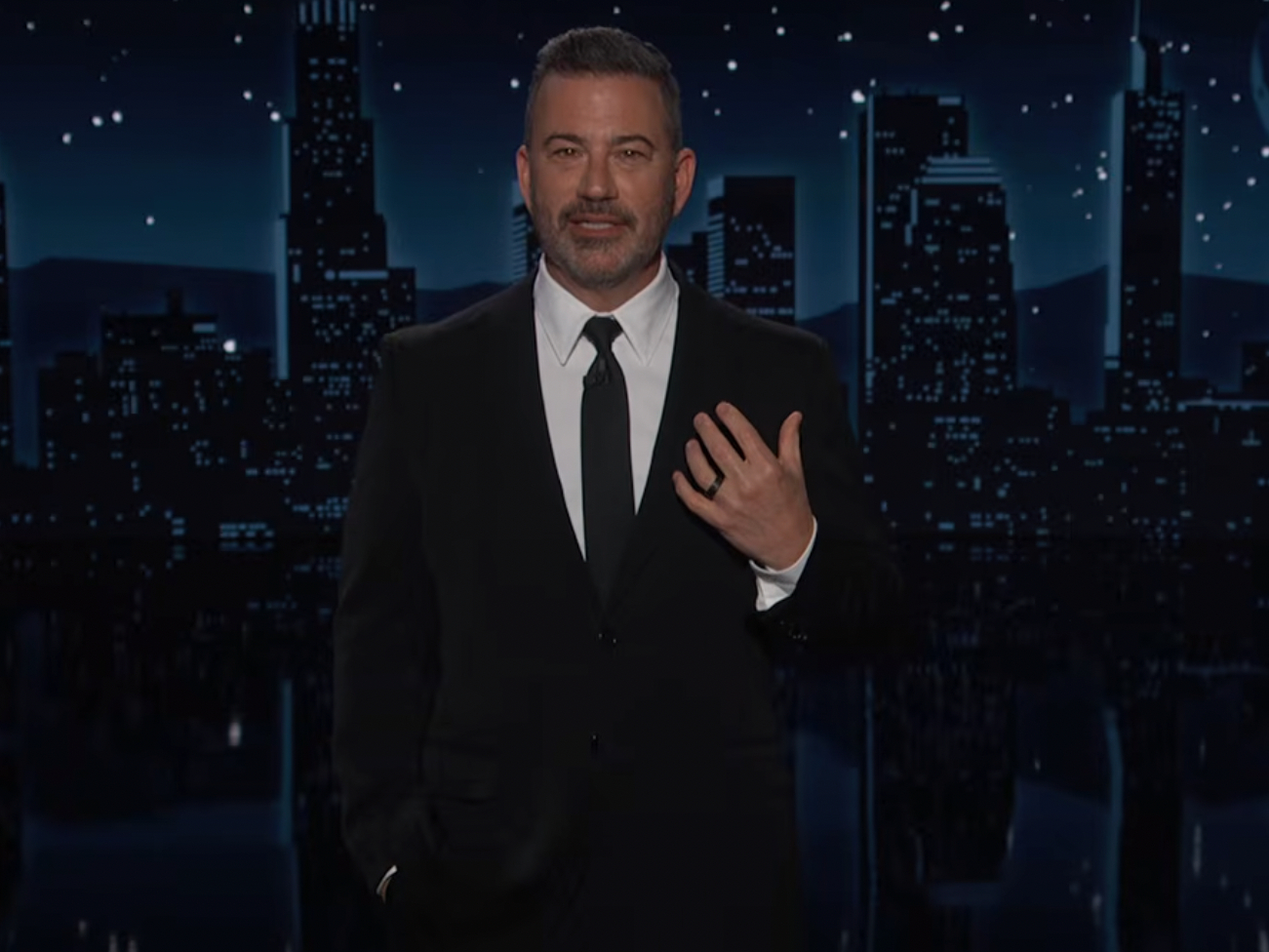
HangupsMusic.com – In the ever-evolving landscape of late-night television, hosts often serve as crucial barometers of public sentiment, blending sharp political commentary with comedic relief. Among the most prominent voices in this arena is Jimmy Kimmel, whose eponymous show, Jimmy Kimmel Live!, consistently navigates the complex interplay between entertainment and current affairs. Recently, Kimmel turned his satirical lens towards two distinct, yet equally intriguing, aspects of former President Donald Trump’s public persona: a visible, unexplained mark on his neck and his sometimes-conflicting statements regarding international conflicts. These segments underscore the unique position of late-night comedy in shaping public discourse and offering an alternative perspective on political narratives.
The emergence of a distinct, reddish mark on Donald Trump’s neck during public appearances quickly became a focal point for media speculation and public curiosity. Such physical observations on high-profile figures often trigger a flurry of conjecture, given the intense scrutiny public officials face. Kimmel, ever attuned to the visual cues and unspoken narratives surrounding political figures, wasted no time in addressing this peculiar development. He playfully dubbed the visible irritation a “big red yuck,” immediately setting a tone that blended lighthearted mockery with an underlying current of public bewilderment over the lack of official explanation. This moment highlighted how even minor physical details of a prominent individual can become national talking points, particularly when shrouded in mystery.
Kimmel’s initial comedic jabs at the neck mark were delivered with his characteristic blend of wry wit and suggestive humor. He mused, with a theatrical flourish, "Just when you thought Melania couldn’t find another reason not to sleep with him," implying a humorous, if cynical, connection between the former First Lady and her husband’s perceived new ailment. This quip, while designed for laughter, tapped into existing public narratives and speculative gossip surrounding the couple’s relationship. He then playfully offered a more dramatic, albeit equally absurd, alternative: "Or maybe she tried to strangle him in his sleep," a line that pushed the boundaries of dark humor while still remaining within the realm of late-night satire. Such remarks, while clearly hyperbolic, serve to inject a dose of levity into often tense political discussions.
The late-night host further elaborated on the media’s attempts to uncover the truth behind the mysterious mark, noting the absence of any detailed official explanation. He recounted a facetious claim that "first they claimed it was a kite-surfing accident," a clear fabrication intended to highlight the perceived evasiveness surrounding the issue. This lack of transparency, Kimmel implied, was the very fuel for his comedic fire. In the absence of concrete information, the comedic imagination flourishes, allowing satirists to construct their own elaborate, often ridiculous, narratives. This is a common tactic in late-night television: when serious answers are scarce, humor steps in to fill the void, often by exaggerating the absurdity of the situation.
Driven by this perceived lack of official clarity, Kimmel launched into his own "investigation," a theatrical segment that perfectly encapsulated the show’s irreverent approach. He introduced a memorable prop: "Donald Trump’s badly bruised baby hand," an orange-hued, miniaturized hand adorned with a distinctive Trump-esque wig and a prominent bruise. This visual gag was not merely for show; it served as a stand-in for the former president, allowing Kimmel to engage in a mock interview that parodied Trump’s speaking style and characteristic denials. The "hand," speaking in a simulated Trump voice, became a vehicle for further comedic exaggeration, providing an absurd "explanation" for the neck mark.
During this segment, Kimmel, playing the straight man, inquired, "I was hoping you could tell us what is going on with that rash or whatever is happening north of you on the president’s neck." The "hand" immediately retorted with a familiar cadence, "That’s not a rash." What followed was a masterclass in comedic misdirection and self-aggrandizement, as the puppet offered an utterly ludicrous reason for the neck irritation. "The neck is just a little irritated from all the medals it has been wearing," the hand declared, launching into a fantastical list of awards. These included the "FIFA Peace Prize," an "Olympic gold," and a "lifetime achievement award from Arby’s for eating 10,000 beef and cheddars." This segment expertly combined visual comedy, vocal impersonation, and exaggerated self-praise to create a biting yet humorous commentary on the former president’s public image.
Beyond the dermatological mystery, Kimmel’s monologue also delved into the more weighty realm of foreign policy, specifically addressing Trump’s perplexing statements regarding a potential conflict with Iran. The former president’s public declarations often contain a degree of ambiguity or perceived inconsistency, which late-night hosts are quick to dissect. Kimmel pointed out, "He keeps calling it a war. We’re now on day five of whatever this is," highlighting the nebulous nature of Trump’s pronouncements and the difficulty in discerning official policy from casual remarks. This part of the monologue served as a reminder that while comedy provides an escape, it also functions as a critical mirror reflecting the complexities and occasional contradictions of political leadership.
Kimmel further illustrated this point by referencing commentary from other media outlets, noting, "Pete Hegseth today said we’re just getting started in Iran. They’re still trying to figure out who will be Iran’s next top Ayatollah." This observation not only underscored the differing narratives circulating in the media but also subtly critiqued the casual, almost reality-show-like framing of serious international relations by some commentators. By juxtaposing the gravity of potential conflict with a flippant search for a "next top Ayatollah," Kimmel effectively highlighted the potential disconnect between political rhetoric and its real-world implications, all while maintaining his comedic edge.
This wasn’t the first time Kimmel had poked fun at the mysterious neck mark. His earlier commentaries provided a trajectory of his comedic engagement with the topic, demonstrating how a recurring visual can become a running gag. In a previous episode, he had joked with characteristic bluntness, "Who knew diaper rash could go up that high?" This early remark immediately set a tone of playful indignity, using an infantile comparison to diminish the perceived seriousness of the ailment. Such a direct and somewhat crude comparison is typical of Kimmel’s style, aiming for immediate shock and laughter.
He then escalated his humorous speculation, proposing, "One thing we know for sure, it’s not a hickey from Melania. It’s probably a vampire bite from Rudy Giuliani or something." This line not only revisited the ongoing public fascination with Trump’s personal relationships but also introduced another prominent, often-parodied political figure into the comedic equation, linking two subjects of frequent late-night jest. The suggestion of a "vampire bite" from Giuliani added a layer of grotesque absurdity, playing on the public image of the former mayor. Kimmel concluded this earlier segment with a pop culture reference, stating, "Every day our president looks more like Pizza the Hutt from Space Balls." This comparison to a memorable, grotesque character from a beloved parody film served to visually encapsulate the perceived physical decline and comedic potential of the situation, resonating with a broad audience familiar with the reference.
The consistent return to the neck mark, evolving from "diaper rash" to "Pizza the Hutt," illustrates Kimmel’s adeptness at sustaining a comedic narrative over time. Each joke, while distinct, builds upon the last, creating a cumulative effect that reinforces the image he wishes to project. This strategic use of repetition and escalation is a hallmark of effective late-night satire, allowing a single observation to generate multiple layers of humor and commentary. By continuously offering new, outlandish explanations, Kimmel keeps the topic fresh while subtly reinforcing the idea that the official silence only invites more absurd speculation.
Ultimately, Jimmy Kimmel’s recent monologues serve as a microcosm of late-night television’s role in contemporary culture. They demonstrate how comedic platforms can simultaneously entertain, provoke thought, and offer a critical counter-narrative to official statements and media portrayals. Whether dissecting a politician’s unexplained physical mark or scrutinizing ambiguous foreign policy declarations, Kimmel uses humor as a powerful tool to engage with and interpret the political landscape. His ability to blend sharp wit with a keen eye for public curiosity ensures that Jimmy Kimmel Live! remains a significant voice in the ongoing dialogue between the public and its leaders, filtered through the unique lens of late-night comedy.