
 By Rose Miami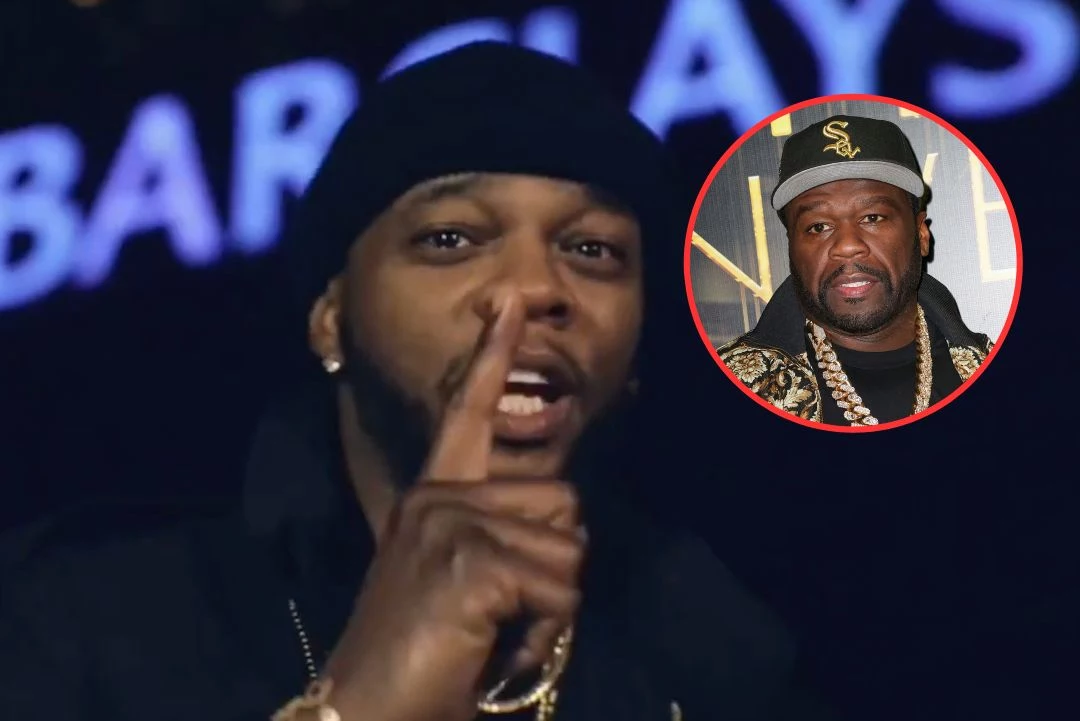
HangupsMusic.com – Brooklyn rapper Papoose has once again ignited the rap battle arena, dropping a potent new diss track titled "Agent Provocateur," directly targeting his ongoing lyrical conflict with industry mogul 50 Cent. Released on Wednesday, March 11th, the visual accompaniment to the Ron Browz-produced track hit Papoose’s Instagram, serving as a stark declaration of war. In "Agent Provocateur," Papoose meticulously dissects and challenges 50 Cent’s carefully cultivated image of street toughness, notably casting doubt on the widely publicized narrative of him being shot nine times.
The fiery verses from Papoose aim to dismantle the foundation of 50 Cent’s legendary status, suggesting that his rise to prominence was heavily influenced by external factors and a strategic manipulation of his personal narrative. "He was a crab in a barrel until Eminem picked him," Papoose spits, implying that his initial success was a result of being discovered by the Detroit rap icon rather than organic ascent. He continues to critique 50 Cent’s claims of victimhood, stating, "Made hisself famous by claiming he was a victim." The core of the lyrical assault lies in Papoose’s assertion that the iconic "shot nine times" story, a cornerstone of 50 Cent’s mystique, is fabricated. "His claim to fame was I got shot nine times/But the truth is he only got shot five times," Papoose raps, directly challenging the veracity of the widely accepted account. He further elaborates on this point with a provocative jab, suggesting a competitive motivation behind the alleged exaggeration: "He lied ’cause he wanted to get shot more than Tupac." The track concludes with a dismissive "Lame choice, game voice/G-U-not," an obvious play on the acronym for "Get the fuck out," reinforcing Papoose’s disdain.
The visual component of "Agent Provocateur," expertly directed by Will C & Tana, amplifies Papoose’s lyrical barbs with a series of humorous and pointed imagery that visually underscores his criticisms of 50 Cent. These visual cues serve to further emphasize the playful yet aggressive nature of the diss track. In his Instagram caption accompanying the release, Papoose declared his strategic patience, stating, "Been s*tted on this hating as ‘Chump’ I was just waiting for the fight to be over." This statement suggests that his retaliation has been a calculated move, waiting for the opportune moment to strike after a perceived period of provocation.
This latest salvo from Papoose follows closely on the heels of his initial freestyle track, which also targeted 50 Cent’s street credibility. That earlier diss utilized the instrumental from 50 Cent’s seminal 2003 hit, "Many Men," a track that itself boasts about surviving multiple shootings. By employing the beat of such an iconic song, Papoose not only demonstrated his lyrical prowess but also directly engaged with the very narrative he sought to dismantle, creating a meta-commentary on 50 Cent’s legacy.

The escalating diss track exchanges paint a picture of 50 Cent finding himself increasingly on the defensive, facing a barrage of lyrical attacks from a diverse array of artists. Beyond Papoose’s direct confrontations, 50 Cent has also been the subject of pointed diss tracks from T.I., the burgeoning talents of the Harris brothers, and veteran rapper Maino. This multi-pronged lyrical assault suggests a growing sentiment within certain segments of the hip-hop community that 50 Cent’s reign as an untouchable figure is being challenged, and his past narratives are being scrutinized more intensely than ever before. The sheer volume and ferocity of these attacks indicate a significant shift in the dynamic, with multiple artists feeling empowered to confront the power player.
The current landscape of this rap feud is undeniably reaching a fever pitch, characterized by its intensity and the public nature of the exchanges. The back-and-forth lyrical battles are not confined to underground cyphers; they are being broadcast across social media platforms, amplified by music news outlets, and consumed by a global audience eager to witness the unfolding drama. This widespread engagement transforms a personal rap beef into a significant cultural event within the hip-hop sphere, highlighting the enduring power of lyrical warfare and the strategic maneuvering of artists seeking to assert their dominance or reclaim their narratives. The "Agent Provocateur" track is a clear indication that this conflict is far from over and will likely continue to generate significant attention and commentary within the music industry.
The strategic deployment of the "Agent Provocateur" title itself is noteworthy. The term refers to an individual who incites or provokes a reaction, often by acting in a deliberately inflammatory way. By labeling his diss track as such, Papoose positions 50 Cent as the instigator, while he, Papoose, is merely responding to perceived provocations. This framing adds another layer to the lyrical narrative, suggesting that 50 Cent’s actions and pronouncements have created the conditions for this intensified conflict, and Papoose is the one exposing the underlying truths and perceived falsehoods.
The broader implications of these diss tracks extend beyond mere personal animosity. They represent a challenge to established hierarchies and narratives within hip-hop. For artists like Papoose, who may not possess the same level of mainstream commercial success as 50 Cent, these lyrical confrontations offer an opportunity to gain visibility and assert their artistic merit on a larger stage. By directly confronting a figure as influential as 50 Cent, Papoose is not only seeking to discredit his rival but also to elevate his own standing within the competitive rap landscape. The success of such an endeavor hinges on the potency of his lyrical content, the authenticity of his message, and his ability to resonate with an audience that values genuine artistry and unflinching commentary. The ongoing narrative of this feud serves as a testament to the enduring power and relevance of the diss track as a vehicle for artistic expression and cultural commentary within the hip-hop genre.