 By admin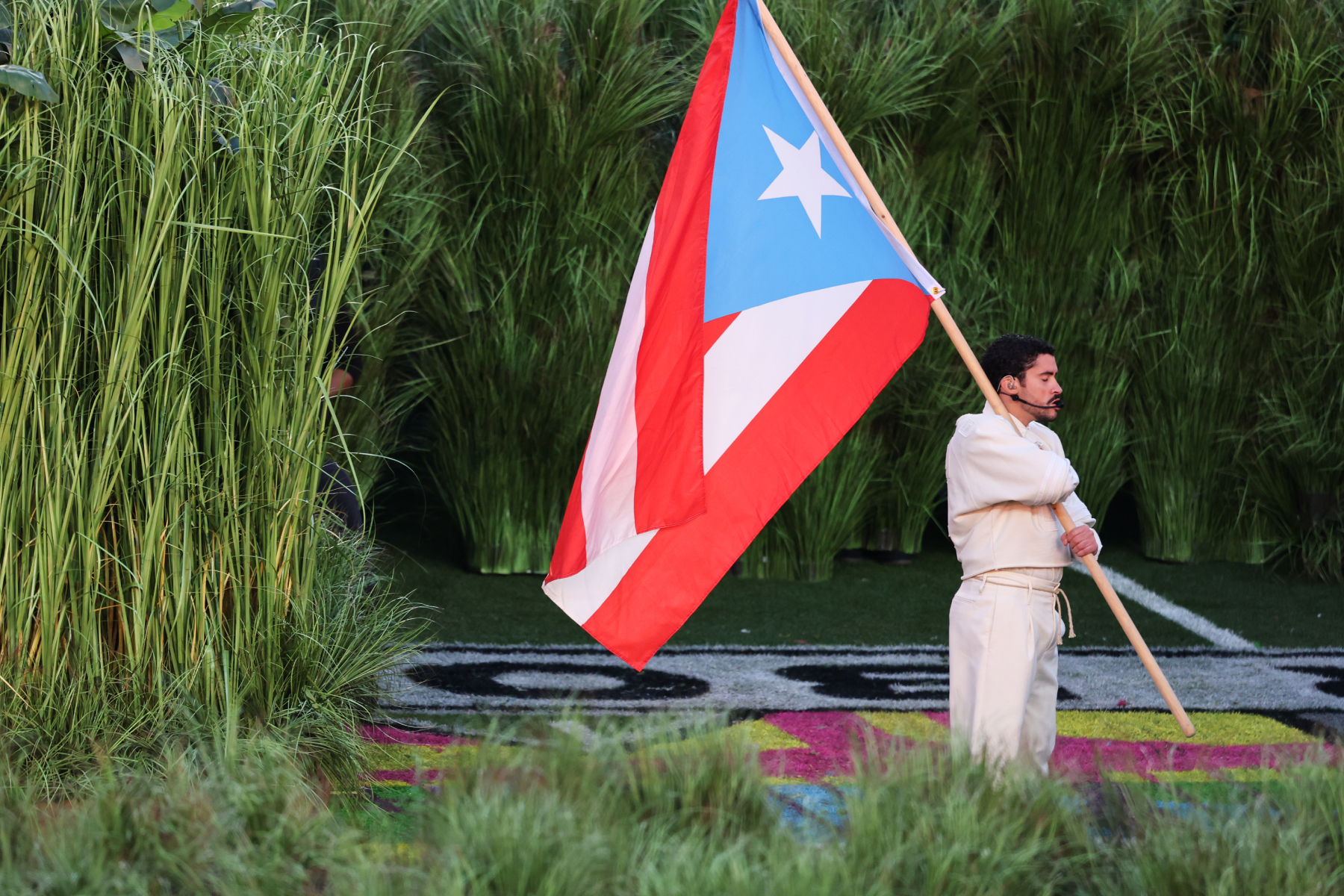
HangupsMusic.com – The recent Super Bowl Halftime Show, featuring the global phenomenon Bad Bunny, ignited a cultural and political firestorm, drawing prominent figures into a heated exchange that spotlighted issues of citizenship, economic policy, and celebrity influence. Following Benito Antonio Martínez Ocasio’s electrifying performance, which resonated deeply with his Puerto Rican heritage, influencer-turned-boxer Jake Paul sparked widespread condemnation with a social media post that controversially labeled the superstar a "fake American citizen." This provocative statement quickly unraveled into a broader debate, bringing Representative Alexandria Ocasio-Cortez into the fray and illuminating the complex realities of Puerto Rico’s relationship with the United States.
Paul’s initial comment, delivered via a prominent social media platform, was met with immediate pushback. A community note, a fact-checking feature on the platform, swiftly appended itself to his post, clarifying a fundamental historical truth: residents of Puerto Rico have been recognized as U.S. citizens since the enactment of the Jones-Shafroth Act in 1917. This historical context underscored the ignorance inherent in Paul’s assertion, highlighting a common misconception about the island territory’s legal status and its people. However, the discourse truly escalated when Congresswoman Ocasio-Cortez, known for her sharp political commentary and advocacy for progressive causes, weighed in with a powerful rebuke that shifted the focus from citizenship to economic ethics.
Ocasio-Cortez’s response was a masterclass in direct engagement, challenging Paul’s credibility by drawing a stark contrast between his financial practices and Bad Bunny’s philanthropic endeavors. She pointedly questioned Paul’s decision to relocate to Puerto Rico, alleging it was a strategic move to exploit the island’s generous tax incentives, commonly referred to as Act 60 (formerly Act 20 and Act 22). This legislation, designed to attract foreign investment and high-net-worth individuals, offers substantial tax exemptions to new residents, effectively turning Puerto Rico into a tax haven for those who qualify. The congresswoman juxtaposed Paul’s alleged tax avoidance with the pressing issue of hunger among children in the United States, suggesting a profound moral disparity. Furthermore, she lauded Bad Bunny for actively funding arts and sports programs for low-income youth, portraying him as a figure who reinvests in his community rather than withdrawing from it. Her closing remark, "He makes you look small," succinctly encapsulated the perceived moral and cultural gulf between the two celebrities.
The phenomenon of wealthy individuals, including Jake and his brother Logan Paul, migrating to Puerto Rico for fiscal advantages is not new. Since 2021, a noticeable influx of foreign residents has capitalized on the island’s tax policies, which exempt eligible individuals from local and federal income taxes on passive and active income. While proponents argue these incentives stimulate economic growth and create jobs, critics, including many Puerto Ricans, contend that they exacerbate gentrification, inflate housing costs, and displace local communities, often without significant reciprocal benefits for the average island resident. This tension formed the unspoken backdrop of Ocasio-Cortez’s criticism, framing Paul’s move as part of a larger pattern of exploitation.
Bad Bunny himself has been a vocal critic of these very policies and the socio-economic impacts of wealthy expatriates on his homeland. His critically acclaimed album, Un Verano Sin Ti, features the powerful track "El Apagón" (The Blackout), which serves as both a musical composition and a potent social commentary. The accompanying music video, a nearly 23-minute documentary, delves deep into the struggles faced by Puerto Ricans, including chronic power outages, the crumbling infrastructure, and the displacement caused by foreign investors. By performing "El Apagón" at the Super Bowl Halftime Show, complete with dancers on electric poles symbolizing the island’s precarious power grid, Bad Bunny brought these vital issues to an international audience, underscoring his commitment to advocating for his people. His artistry is intrinsically linked to his activism, using his global platform to shine a light on the challenges confronting Puerto Rico.
Interestingly, this was not the first time the Paul brothers had engaged with Bad Bunny regarding Puerto Rico’s tax exemptions. In a 2022 interview, Logan Paul had previously accused Bad Bunny of hypocrisy, asserting that the Puerto Rican artist was privately benefiting from the same tax program he publicly condemned. This earlier exchange adds another layer to the current controversy, revealing a persistent misunderstanding or willful misrepresentation of Bad Bunny’s position. While Bad Bunny, as a Puerto Rican resident, is subject to Puerto Rican tax laws, his wealth is largely generated outside the island and then brought in, differing from the structure of the Act 60 exemptions which primarily benefit new residents relocating to the island. His criticism has consistently focused on the impact of these laws and the influx of foreign capital on the local populace, rather than a blanket rejection of all economic incentives.
Despite their past disagreements, Logan Paul demonstrated a nuanced perspective regarding his brother’s "fake American citizen" comment. While openly admitting his lack of excitement for Bad Bunny’s Super Bowl performance, he publicly distanced himself from Jake’s specific phrasing. Taking to social media, Logan declared, "I love my brother but I don’t agree with this. Puerto Ricans are Americans & I’m happy they were given the opportunity to showcase the talent that comes from the island." This statement not only corrected his brother’s factual error but also acknowledged the cultural significance of Bad Bunny’s performance for Puerto Rico, highlighting a rare moment of solidarity with the island’s identity.
Faced with overwhelming backlash, Jake Paul eventually attempted to clarify his controversial remarks, albeit with a convoluted explanation. He altered his social media bio to read "Benito #1 fan" in a seemingly conciliatory gesture, then insisted that his "fake citizen" comment was not about the actual citizenship status of Puerto Ricans. Instead, he claimed it targeted individuals who, in his view, "publicly criticize ICE who are doing their job and openly hating on America." He further elaborated, "If you benefit from a country and the platform it gives you, but publicly disrespect it at the same time, that’s what I mean by being a fake citizen." This revised stance shifted the debate from a factual error about citizenship to a broader, more subjective argument about patriotism, free speech, and the perceived "disrespect" of American institutions. It underscored a common sentiment among certain political factions that dissent or criticism, particularly from public figures, equates to disloyalty.
The entire episode serves as a powerful reminder of the intersection between celebrity culture, political discourse, and deeply rooted socio-economic issues. It brought to the forefront the complex colonial legacy of Puerto Rico, its unique status as a U.S. territory, and the ongoing debate surrounding its economic policies. While Jake Paul’s initial misstep ignited the fire, the subsequent exchange between Bad Bunny’s implicit activism and AOC’s explicit condemnation transformed a simple celebrity spat into a meaningful dialogue about identity, responsibility, and the true meaning of citizenship in a globalized world.