
 By Azzam Bilal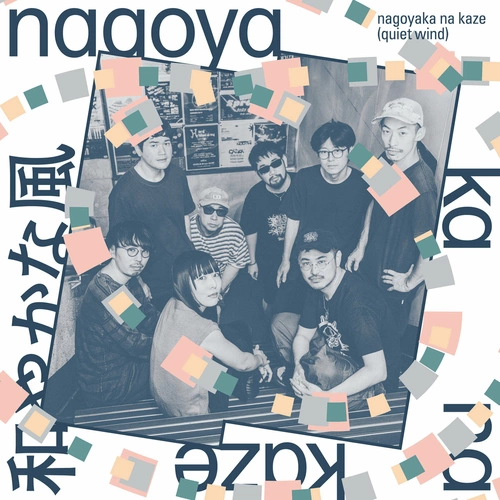
HangupsMusic.com – Nagoya, the sprawling industrial heart of Japan’s Chubu region, has long occupied a curious position in the global cultural consciousness. Often overshadowed by the neon-drenched futurism of Tokyo and the gritty, neon-lit charm of Osaka, Nagoya is frequently regarded by travelers as little more than a convenient Shinkansen stop between the nation’s two primary cultural poles. However, for those who listen closely to the subterranean frequencies of the Japanese archipelago, a different narrative is emerging. The city is currently fostering a vibrant, idiosyncratic electronic music scene that prioritizes experimentalism, rhythmic complexity, and a unique blend of organic and digital textures. This burgeoning movement has been captured with precision on the latest compilation from the esteemed UK-based label Wisdom Teeth, titled nagoyaka na kaze (quiet wind).
The title itself is a masterful bit of linguistic play. In Japanese, "Nagoyaka" translates to peaceful, mild, or harmonious—a descriptor that stands in stark contrast to the city’s reputation as a manufacturing powerhouse and the home of the Toyota Motor Corporation. By pairing this adjective with "kaze" (wind), the compilation suggests a gentle but persistent movement of air through the city’s concrete canyons. Furthermore, the phonetic overlap with the city’s name, Nagoya, creates a localized identity for the music, framing these tracks as products of a specific geographic and social environment. Curated with a keen ear for detail, the collection serves as a cross-section of a scene that is finally beginning to receive its due recognition on the international stage.
Wisdom Teeth, a label helmed by K-LONE and Facta, has built a reputation for championing music that exists in the "in-between" spaces of the dance floor. Their catalog often explores the intersections of UK bass, minimal techno, and ambient music, making them the perfect vessel for the Nagoya sound. The label’s interest in Japanese electronic music is not a new phenomenon, but nagoyaka na kaze represents a deeper, more focused investigation into a regional pocket that has remained largely invisible to Western audiences until recently.
The compilation is co-curated by Yuya Abe, who records under the moniker abentis. Abe’s presence on the record is pivotal, not just as a curator but as a contributor. His track, "Choreography," acts as the collection’s most direct bridge to the dance floor. It is a masterclass in what might be termed "micro-functionalism"—a style of music that utilizes the skeletal structure of a 4×4 house beat but populates it with an unpredictable ecosystem of sound. "Choreography" is built upon a foundation of steady, clipping percussion, but its true character lies in the "cloud of error tones" and jagged clicks that orbit the central rhythm. It evokes the aesthetic of early 2000s glitch-hop and the clinical precision of the Raster-Noton era, yet it remains imbued with a certain warmth and kinetic energy that prevents it from feeling purely academic.
The diversity of the compilation is perhaps its greatest strength. While abentis provides the rhythmic anchor, other tracks venture into more abstract territories. "Karula," for instance, introduces a fascinating South Asian influence into the mix. The track utilizes percussive patterns and melodic flourishes that feel ancient and ritualistic, yet they are processed through a modern electronic lens. This fusion of traditional motifs with contemporary production techniques is a hallmark of the Nagoya scene, reflecting a generation of artists who are as comfortable with global folk traditions as they are with modular synthesis.
Similarly, the track "Xylophonica" offers a sensory exploration of texture. It is a composition defined by "woody thwacks" and echo-laden snares that seem to bounce off the walls of a digital forest. The use of percussive sounds that mimic natural materials—wood, stone, metal—creates a tactile listening experience. It is music that feels "played" rather than simply "programmed," bridging the gap between acoustic percussion and electronic manipulation. This focus on the "organic-digital hybrid" is a recurring theme throughout the compilation, suggesting a collective interest in how technology can be used to simulate or enhance natural environments.
To understand the significance of nagoyaka na kaze, one must look at the broader context of Nagoya’s recent visibility. For years, the city’s most famous electronic export has been Foodman (Shinsuke Sugamoto), whose dizzying, genre-defying "footwork-adjacent" experiments have earned him a cult following worldwide. Foodman’s work often feels like a collage of the mundane and the surreal, reflecting the cluttered, high-density reality of Japanese urban life. Last year, the city received another high-profile shout-out via Nikki Nair’s "Nagoya" EP, a collaboration with Foodman that served as a sonic postcard of their shared creative energy. These releases have acted as precursors to the Wisdom Teeth compilation, signaling to the world that Nagoya is a city with a distinct sonic signature.
The "Nagoya Sound," if such a thing can be defined, is characterized by its refusal to adhere to a single genre. It is a "grab bag" of influences, ranging from the dub-heavy low-end theories of the UK to the crystalline ambient textures of the Japanese "Kankyo Ongaku" (environmental music) movement of the 1980s. There is a sense of playfulness and lack of pretension in these tracks. Free from the commercial pressures and rigid scene expectations of Tokyo, Nagoya’s artists seem empowered to follow their own idiosyncratic paths. This independence results in music that is often difficult to categorize but deeply rewarding to inhabit.
The compilation also highlights the importance of localized scenes in an increasingly globalized digital landscape. While the internet has made it possible for an artist in Nagoya to collaborate with a label in London instantaneously, the physical environment still plays a crucial role in shaping the music. The industrial backdrop of Nagoya, with its massive port, sprawling factories, and intricate highway systems, provides a unique aesthetic framework. One can hear the hum of the city in the sustained ambient drones and the mechanical precision of the percussion. It is music that reflects a specific kind of urban solitude—the quiet wind blowing through a city that never truly sleeps but often feels remarkably still.
Furthermore, nagoyaka na kaze serves as a reminder of the depth of the Japanese electronic underground. While international attention often focuses on the legacy of Yellow Magic Orchestra or the legendary techno producers of the 1990s, there is a vast and fertile "middle ground" of contemporary artists who are pushing the boundaries of the medium. By focusing on a single city, Wisdom Teeth provides a focused lens through which we can appreciate the nuances of this landscape. It is not just a collection of songs; it is a document of a community.
As the global music community continues to look for fresh perspectives, regional surveys like nagoyaka na kaze become essential. They challenge the monolithic view of national music scenes and highlight the diversity that exists within them. For Nagoya, this compilation marks a turning point—a transition from being an "oft-overlooked" city to becoming a recognized hub of electronic innovation. The "quiet wind" of the title may be a subtle metaphor, but the impact of this music is anything but quiet. It is a resonant, complex, and deeply beautiful exploration of sound that demands, and deserves, our full attention.
In the end, nagoyaka na kaze is a testament to the power of curation and the enduring appeal of the regional underground. It proves that some of the most exciting developments in electronic music are happening not in the well-trodden centers of the industry, but in the cities we often pass through without a second thought. As we listen to the blippy microhouse, the swaying dub grooves, and the coruscant ambient textures of this compilation, we are not just hearing the sound of Nagoya; we are hearing the sound of a city finding its voice and, in doing so, enriching the global sonic tapestry. The secret is out: Nagoya has arrived, and the wind is blowing in a very exciting direction.