
 By admin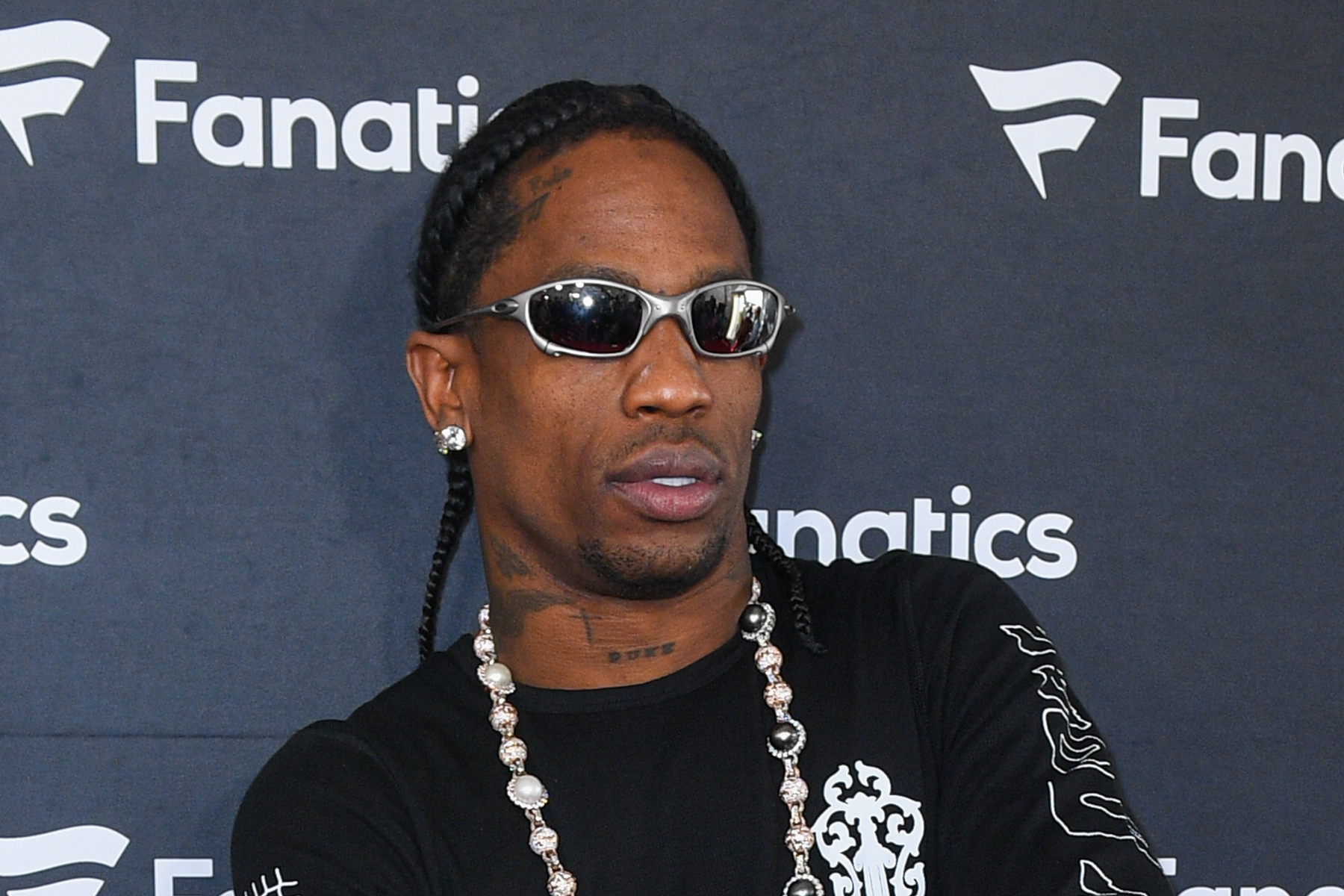
HangupsMusic.com – Washington D.C., The Supreme Court of the United States finds itself at the epicenter of a groundbreaking legal and cultural battle, as some of hip-hop’s most influential figures throw their collective weight behind a death row inmate whose rap lyrics were presented as evidence during his sentencing. This critical juncture challenges the very essence of artistic freedom, particularly for a genre historically scrutinized and disproportionately targeted within the American justice system. The case of James Garfield Broadnax, a Black man facing execution in Texas, has ignited a fervent debate about racial bias, constitutional rights, and the dangerous precedent set when creative expression is wielded as a weapon by the state.
Broadnax’s plight dates back to 2009, when an almost entirely white jury in Texas found him guilty of the murders of two men during a robbery the previous year near Garland. A contentious aspect of the trial involved the prosecution’s systematic elimination of all prospective jurors who were Black, raising immediate concerns about the impartiality and racial composition of the deliberating body. Following the conviction, during the crucial punishment phase—where the jury was tasked with determining whether Broadnax should be sentenced to death—prosecutors introduced his handwritten rap lyrics. These forty pages of personal artistic expression were not used to establish guilt but rather to paint a portrait of future dangerousness, a critical factor in Texas capital sentencing. The jury’s request to review these lyrics twice during deliberations underscores the significant, and arguably undue, influence they held over the ultimate decision. With Broadnax’s execution looming in the coming month, his legal team has urgently petitioned the Supreme Court to intervene, requesting a halt to the execution and a comprehensive review of his case.
The gravity of Broadnax’s situation has galvanized an unprecedented coalition of artists, scholars, and advocacy groups. Two significant amicus curiae briefs – "friend of the court" briefs – have been filed with the Supreme Court, offering critical perspectives from outside the direct parties involved. One brief boasts the signatures of an impressive roster of hip-hop luminaries, including Killer Mike, T.I., Young Thug, Fat Joe, and N.O.R.E., alongside esteemed music scholars and arts organizations. Simultaneously, Travis Scott’s legal team submitted its own compelling brief. Both filings converge on a singular, powerful argument: the use of rap lyrics in Broadnax’s trial was not merely inappropriate but fundamentally unconstitutional, infringing upon protected First Amendment rights and perpetuating harmful stereotypes.
Travis Scott’s brief sharply critiques the prosecution’s methodology, stating, "The prosecutors argued Mr. Broadnax was likely to be dangerous in the future simply because he engaged in ‘gangster rap.’ Such an argument functionally operates as a categorical and straightforwardly unconstitutional content-based penalty on rap music as a form of expression." This assertion cuts to the core of the issue, highlighting how the justice system, in this instance, appears to have penalized an individual based on the perceived nature of his artistic genre rather than concrete evidence related to the crime itself. The brief further warns of a broader chilling effect, arguing that "at a certain level of abstraction, the reality is even more problematic: taking rap music out of context subjects the entire genre to prosecution." This raises alarming questions about the future of creative expression, particularly for artists whose work often explores challenging themes or portrays fictional narratives.
The First Amendment protection of free speech, the brief asserts, extends unequivocally to rap music, a genre "primarily created by and historically associated with minority artists." To criminalize such expression is a direct assault on these rights, and the brief implores the Supreme Court to "clarify the constitutional limits" on using "protected artistic expression as evidence of criminal propensity." Ellyde R. Thompson, an attorney representing Travis Scott, underscored the profound implications, telling Rolling Stone, "A death sentence should never be based in any part on constitutionally protected artistic expression." This statement encapsulates the profound moral and legal quandary presented by the case, where the very act of creative writing could contribute to a person’s demise.
The separate brief filed by Killer Mike, T.I., and others delves deeper into the artistic conventions of rap, emphasizing its nature as fiction rather than autobiography. "Exaggerated tales of violence, sex, and criminal behavior sell to a broad swath of Americans – and any would-be gangsta rapper must learn and practice these conventions of the form," the filing explains. This argument seeks to demystify rap music for a legal system that often misinterprets its artistic license, comparing it to other forms of storytelling—such as crime novels, horror films, or theatrical dramas—whose creators are rarely held legally accountable for the fictional acts depicted within their art. The brief forcefully argues that Broadnax’s lyrics were entirely irrelevant to the case’s merits, given that they were not introduced during the guilt or innocence phase. Instead, their deployment, it claims, was a calculated move to "stoke racial and anti-rap bias" and to deliberately cast Broadnax as inherently dangerous.
"This case exemplifies the racial prejudice that infects a criminal proceeding when the State uses a defendant’s rap lyrics to capitalize on anti-rap bias, the misinterpretation of rap lyrics, and anti-Black bias triggered by rap music," the filing states. This charge is particularly potent in a death penalty case, where racial disparities in sentencing are well-documented. Lucius T. Outlaw III, counsel on the brief, echoed this sentiment, asserting that the state of Texas "misused Mr. Broadnax’s rap artistic expression to secure a death sentence by appealing to racial stereotypes and fears of the young black ‘super predator.’" The "super predator" myth, a racially charged concept from the 1990s, has historically been used to dehumanize young Black men and justify harsh criminal justice policies. Its implicit invocation through the selective use of rap lyrics highlights the systemic issues at play.
Chad Baruch, an attorney representing counsel for Killer Mike and Professor Erik Nielson—a renowned scholar at the University of Richmond who has extensively researched the criminalization of rap—articulated the broader ambition of the amicus briefs. "This case presents an ideal opportunity for the Supreme Court – once and for all – to plunge a much-needed dagger through the heart of the criminalization of rap as an art form," Baruch stated. This reflects a wider movement within legal and artistic communities to protect rap as a legitimate and constitutionally protected form of expression, pushing back against what many perceive as a discriminatory double standard. Both briefs collectively urge SCOTUS to "grant the Petition for a Writ of Certiorari," which would compel the high court to review the lower court’s decision, thereby opening the door for a landmark ruling that could redefine how artistic expression is treated in criminal proceedings nationwide.
The state of Texas, in its counterarguments, has contended that Broadnax’s attorneys waited too long to raise objections regarding the use of his lyrics. Furthermore, they assert that the lyrics constituted only a minor part of their overall arguments during the sentencing phase. However, the jury’s repeated request to review the lyrics suggests their impact was far from negligible. The weight of the decision now rests with the Supreme Court, whose ruling could send a powerful message about the intersection of art, justice, and race in America. As Killer Mike eloquently told The New York Times, summarizing the artists’ collective stance, "No matter how beautiful it sounds, or how horrific it may sound, it’s still just art. It’s an interpretation of the human spirit. It is not an admission of guilt." This case stands as a stark reminder that in the pursuit of justice, the line between artistic expression and criminal intent must be meticulously drawn, especially when a human life hangs in the balance.