
 By Azzam Bilal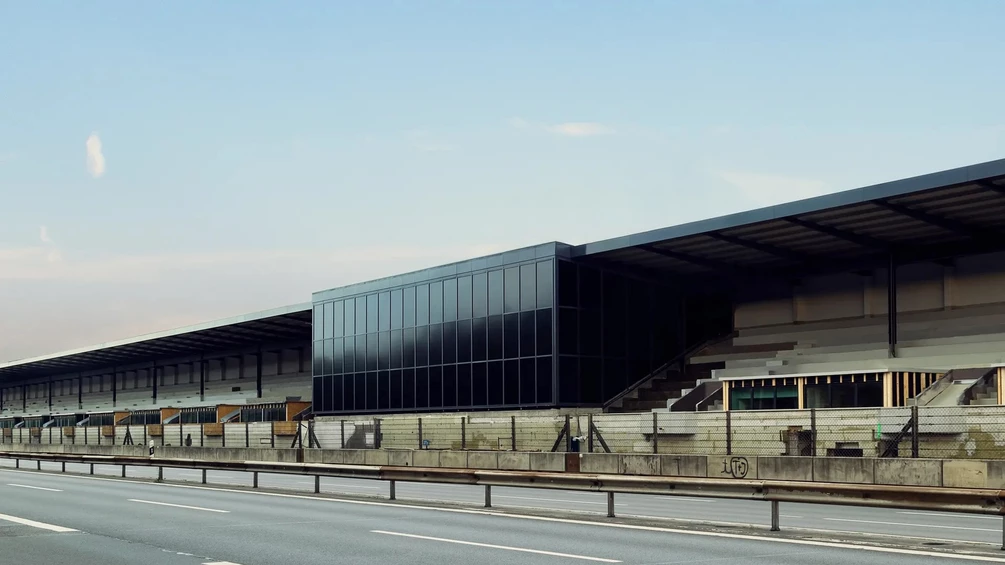
HangupsMusic.com – Berlin, Germany. In a city where the echoes of the past are frequently repurposed to serve the avant-garde of the future, a new cultural landmark is emerging from the concrete and steel of West Berlin’s industrial heritage. Situated at Messedamm 23, perched directly above the A115 motorway, a historic grandstand that once overlooked the roaring engines of the world’s first high-speed racetrack is being transformed into C115. This new venue, a 400-capacity club and cultural space, represents a bold intervention in Berlin’s nightlife landscape, merging the architectural gravity of a 100-year-old monument with the cutting-edge requirements of modern electronic music.
The location is nothing short of legendary. The AVUS-Tribüne, or AVUS grandstand, is a protected monument that stands as a silent witness to the evolution of German engineering and transportation. Originally built in the early 20th century and significantly expanded and redesigned in 1936, the structure served as the primary viewing point for the Automobil-Verkehrs- und Übungsstraße (AVUS), a former racing circuit that is now a vital artery of the city’s motorway network. For decades, the grandstand remained a relic of a bygone era of motorsport. However, following an extensive renovation process that sought to honor its protected status while modernizing its internal infrastructure, the space is now ready to host a different kind of high-octane energy.
The aesthetic of C115 is defined by its preservation of the grandstand’s original Brutalist and industrial sensibilities. The renovation has meticulously maintained the raw concrete and exposed steel that characterize the 1936 design. Perhaps most striking for a Berlin club—a city often synonymous with windowless "dark rooms" and basement bunkers—are the floor-to-ceiling windows that wrap around much of the building. These glass facades offer a panoramic view of the A115, allowing the rhythmic flow of motorway traffic to serve as a cinematic backdrop to the dance floor. This visual connection to the city’s movement creates a unique sense of place, grounding the club in the physical reality of West Berlin’s urban geography.
To complement this architectural grandeur, the team behind C115 has installed a high-fidelity sound system and a modular lighting rig designed to adapt to various moods and event formats. The intent is to create a versatile environment where the technology enhances the space without overshadowing its historical character. The 400-person capacity ensures an intimate atmosphere, a deliberate choice that deviates from the massive, sprawling industrial complexes that have dominated the headlines of Berlin’s club scene in recent years.
The official launch of the club’s in-house series, also named C115, is scheduled for March 14th. This opening event signals the venue’s commitment to high-level curation, featuring a lineup that bridges the gap between local stalwarts and international innovators. Leading the charge is Lena Willikens, a figure renowned for her idiosyncratic, unpredictable selections and her long-standing residency at Düsseldorf’s Salon des Amateurs. Joining her is Ciel, the Toronto-based producer and DJ whose work often blends intricate breakbeats with melodic house. The lineup is rounded out by the eclectic sounds of DJ Durbin and the vibrant, groove-heavy selections of Regularfantasy.
The musical direction of the club is overseen by Mohajer, a programmer who has recently gained significant recognition in the electronic music community. Mohajer’s involvement suggests a forward-thinking booking policy, focusing on emerging talent and artists who defy easy genre categorization. This fits within the broader vision of the club’s owner, Nico Mohammadi, who views C115 as more than just a weekend destination for techno tourists.
In a statement regarding the venue’s opening, Mohammadi acknowledged the significant challenges facing the nightlife industry in 2026. He noted that launching a new project in the current climate is a daunting task, as Berlin’s clubs feel "more fragile than ever." This fragility is not merely an abstract concept; it is a reality documented in the recent film Ausgetanzt? Berliner Clubs unter Druck (Danced out? Berlin Clubs under Pressure), which explores the rising rents, gentrification, and regulatory hurdles that have led to several high-profile closures across the city.
Despite these headwinds, Mohammadi and his team remain undeterred. "For our small, deeply committed team it’s also a no-brainer," he stated. "We’ve been given the chance to bring a truly historic space… to life, so we’re going all in." The decision to open C115 is presented as a labor of love and a commitment to preserving the "community" aspect of clubbing. Mohammadi emphasizes a long-term vision, one that prioritizes intentional curation over the "quick wins" of a standard commercial operation.
One of the most significant departures from the traditional Berlin club model is C115’s scheduling philosophy. Rather than adhering to a rigid, weekly Friday-to-Monday calendar, the venue will operate on a more flexible basis. The programming will include a mix of curated club nights, daytime parties, listening sessions, and broader cultural events. This approach reflects a growing trend in the international scene toward "slow clubbing" and multi-disciplinary spaces that can serve different functions depending on the time of day and the nature of the performance. By hosting listening parties, the club can utilize its high-end sound system to showcase ambient, experimental, or non-dance music, appealing to an audience that may be looking for a more contemplative experience than a standard rave.
The location of C115 at the AVUS-Tribüne also places it in a unique position relative to Berlin’s existing club districts. While the majority of the city’s famous nightlife is concentrated in the east—areas like Friedrichshain, Kreuzberg, and Lichtenberg—C115 is firmly rooted in the West. Located just three S-Bahn stops from Charlottenburg, it brings a fresh injection of cultural energy to an area of the city that has, in recent decades, been seen as more residential or commercial than "alternative." This geographic shift is part of a wider movement of venues seeking space outside the saturated inner-city cores, as seen with the recent opening of a 1,000-capacity venue in a former casino under the arches of Alexanderplatz.
The opening of C115 comes at a crossroads for Berlin’s global identity as a nightlife capital. While the city continues to attract millions of visitors drawn to its club culture, the infrastructure supporting that culture is under immense pressure. The transformation of a protected monument like the AVUS grandstand into a club is a symbolic victory for those who believe that Berlin’s history and its contemporary music scene should exist in a symbiotic relationship. By repurposing a site of 20th-century transit for 21st-century communal gathering, the project pays homage to the city’s past while actively shaping its future.
As the March 14th opening approaches, the anticipation within the local electronic music community is palpable. The combination of a world-class sound system, a historic architectural setting, and a thoughtfully curated musical program suggests that C115 is poised to become a vital new node in the city’s cultural network. It stands as a testament to the resilience of Berlin’s creative class—a group willing to take significant risks to ensure that the city remains a place where "community can happen" and where the beat continues to drive forward, even in the shadow of the motorway.
For those looking to explore the intersection of history and modern rhythm, C115 offers a compelling new narrative. It is a space where the roar of the engines from 1936 is replaced by the pulse of a drum machine, and where the windows overlooking the A115 serve as a reminder that even in a city of constant motion, there is always room to stop, listen, and dance. Through the vision of Nico Mohammadi, Mohajer, and their dedicated team, the AVUS grandstand is no longer a monument to the past, but a living, breathing part of Berlin’s present.