
 By admin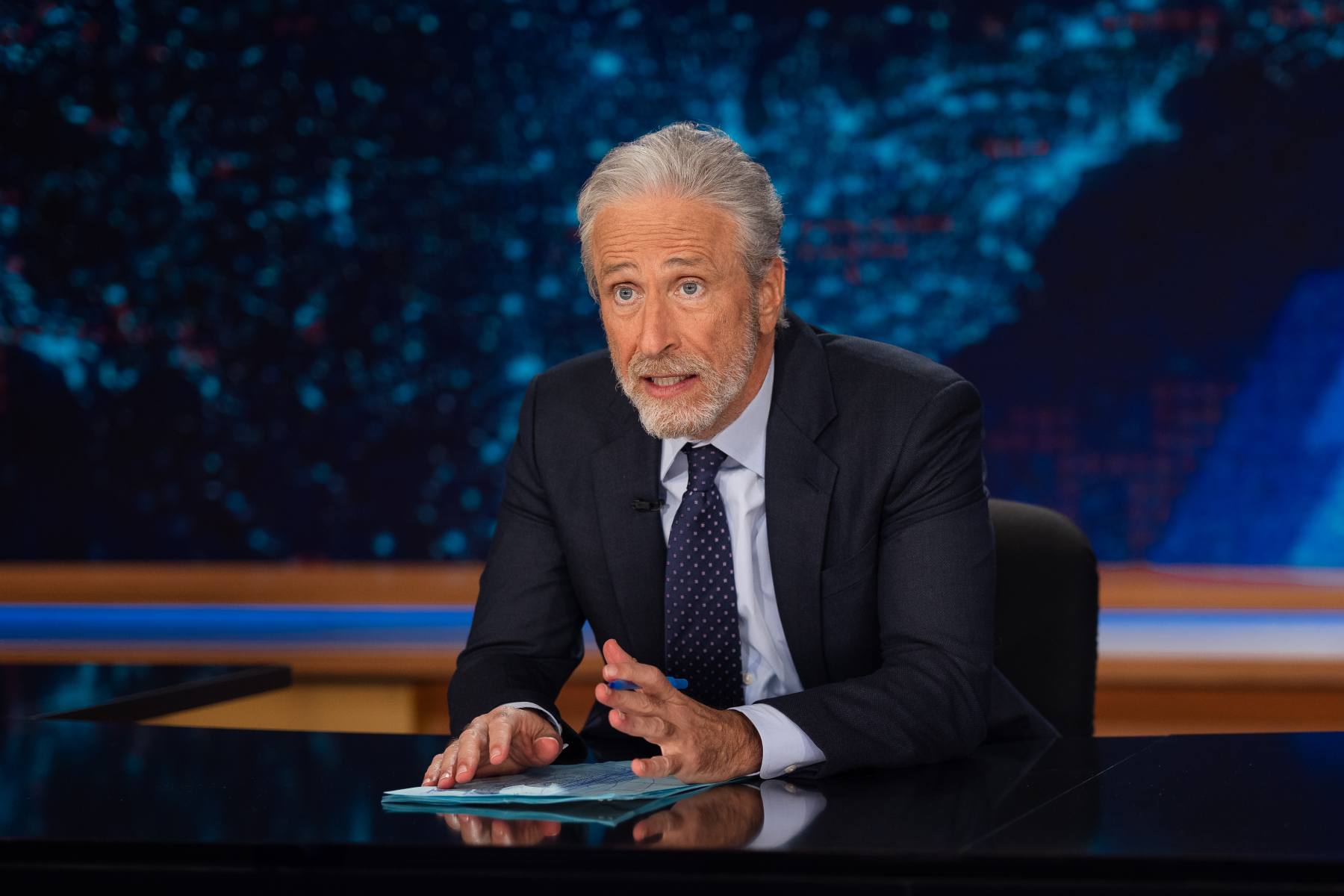
HangupsMusic.com –
In a recent episode that resonated deeply with viewers, Jon Stewart, at the helm of The Daily Show, delivered a masterclass in political and cultural satire, meticulously dissecting the fervent backlash from conservative commentators following Bad Bunny’s appearance at the Super Bowl halftime show. Airing on February 9th, Stewart’s segment not only spotlighted the outrage surrounding the Puerto Rican superstar’s performance but also gleefully lampooned the hastily assembled alternative programming by Turning Point USA, featuring a lip-synced set from Kid Rock. The segment underscored a broader cultural chasm, where even a widely celebrated sporting event becomes a battleground for ideological contention, and Stewart, with his signature blend of wit and exasperation, proved once again why he remains an indispensable voice in American political commentary.
The Super Bowl halftime show, a monumental platform for global artists, is perennially a subject of intense scrutiny, but this year saw an unusual surge of politically charged criticism. Bad Bunny, a Grammy-winning artist celebrated for his genre-bending music and global appeal, joined the headliner, bringing his unique flair and a significant portion of his performance in Spanish. For millions, it was a vibrant display of artistry and cultural representation. For a vocal segment of right-wing media and commentators aligned with the "Make America Great Again" (MAGA) movement, it was perceived as an affront to traditional American values, primarily due to the inclusion of Spanish lyrics and what they deemed a lack of "patriotism."
Stewart began his segment by effusively praising Bad Bunny’s contribution, describing it as "joyful and infectious." This commendation, however, was immediately undercut by a clip of right-wing pundit Benny Johnson, who dramatically declared the performance "the single worst halftime show in NFL history." The stark contrast between Stewart’s genuine appreciation and Johnson’s hyperbolic condemnation set the stage for the comedic takedown that followed. Stewart, feigning a moment of realization, adopted a tone of mock sympathy, revising his initial assessment. "I forgot," he quipped, "for a significant portion of Americans, everything that happens must uniformly be filtered through a particular MAGA-centric worldview. And judged on how well it conforms to that traditional vision, which doesn’t include knowing where the biblioteca is." This sharp observation immediately cut to the heart of the matter, highlighting the cultural insularity and xenophobia that often underpin such criticisms. The casual dismissal of a globally recognized language and the implied ignorance of basic Spanish vocabulary served as a potent symbol of the critique’s narrow-mindedness.
To further illustrate the absurdity of the situation, Stewart presented a montage of other commentators expressing their dismay over the Spanish lyrics. The collective outrage, amplified across various conservative media outlets, painted a picture of a nation under siege by foreign tongues, despite the fact that Spanish is widely spoken in the United States and has a deep historical and cultural presence. Stewart, however, chose not to dwell on every individual complaint. Instead, he zeroed in on one particular commentator whose appearance seemed to encapsulate the overheated rhetoric: Sid Rosenberg, a radio host whose visibly tanned complexion became an immediate target for Stewart’s incisive humor.
"Here’s some English for you," Stewart declared, his voice dripping with sarcasm, "who put Thanos over here in the air fryer? Did Fox decide they needed an actual buffalo wing to comment on the game?" The comparison to Thanos, the famously purple Marvel villain, and a deep-fried buffalo wing, was a classic Stewart maneuver – a visual gag layered with a pointed critique of the commentator’s perceived aggressive and overcooked persona. It was a moment that transcended simple mockery, subtly suggesting that the commentators themselves, in their exaggerated outrage, were becoming caricatures, almost as artificial as the "culture" they claimed to be defending.
The segment then pivoted to the conservative counter-programming, an event meticulously organized by Turning Point USA, a prominent right-wing youth organization. This "All-American Halftime Show" was explicitly designed to offer a patriotic alternative to the Super Bowl’s official entertainment, promising to celebrate "this beautiful country in the King’s English we all share." Stewart, ever the master of ironic setup, delivered this description with a straight face, building anticipation for what was meant to be a beacon of linguistic purity and traditional American values.
The clip that followed, however, delivered the punchline with devastating effect. It featured Kid Rock, the controversial musician known for his blend of rock, country, and hip-hop, performing his 1998 hit "Bawitdaba." The performance itself was revealed to be lip-synced, a detail that immediately undermined the authenticity the counter-program claimed to embody. But it was the lyrics of "Bawitdaba" that truly allowed Stewart to unleash his comedic genius. The song, a chaotic mix of gibberish, slang, and aggressive declarations, begins with the infamous lines: "Bawitdaba da bang da bang diggy diggy diggy / Sha-SHAZAM! Da bang da bang diggy diggy diggy / Sha-SHAZAM! Da bang da bang diggy diggy diggy / Da boogie da bang da bang diggy diggy diggy."
Stewart’s reaction was priceless. With feigned reverence and an utterly bewildered expression, he exclaimed, "Thank you! Merriam and Webster couldn’t have put it better themselves regarding the up-jumping of said boogie, insofar as the diggy-diggy-diggy, being da-bang-a-da-bang." This elaborate, pseudo-academic breakdown of Kid Rock’s nonsensical lyrics served as a brilliant rhetorical device. By meticulously analyzing the gibberish as if it were profound poetry, Stewart exposed the hypocrisy of those who decried Bad Bunny’s Spanish lyrics while championing an English-language performance that was, by any measure, far less articulate or comprehensible. The irony was palpable: the "King’s English" they so fiercely defended turned out to be an incoherent jumble, delivered by a performer not even singing live.
Stewart’s segment was more than just a series of jokes; it was a potent commentary on the ongoing culture wars that permeate American society. The controversy surrounding Bad Bunny’s performance highlighted the discomfort some segments of the population feel with multiculturalism and the evolving demographics of the United States. The insistence on "English only" during a global entertainment event often masks deeper anxieties about national identity, immigration, and the shifting landscape of cultural influence. By juxtaposing this anxiety with the absurdity of Kid Rock’s "All-American" performance, Stewart effectively dismantled the intellectual and moral high ground claimed by the critics.
Moreover, the episode underscored the enduring power of satire in navigating these complex and often contentious issues. In an era of increasing polarization, where genuine dialogue can feel impossible, humor provides a unique lens through which to expose hypocrisy, challenge rigid ideologies, and offer a shared moment of laughter, even in disagreement. Stewart’s ability to take seemingly disparate elements – a global pop star, a political pundit, a right-wing organization, and a rock musician – and weave them into a coherent, hilarious, and ultimately insightful narrative speaks to his unparalleled skill as a satirist. He doesn’t just mock; he illuminates, using comedy as a tool for critical examination.
In conclusion, Jon Stewart’s return to The Daily Show continues to prove vital in a media landscape often overwhelmed by uncritical outrage. His segment on the Super Bowl halftime show and its subsequent conservative backlash was a masterful display of comedic timing, sharp analysis, and fearless critique. By dissecting the "MAGA meltdown" over Bad Bunny and the ironic spectacle of the Turning Point USA counter-program, Stewart not only provided much-needed comic relief but also offered a profound commentary on the cultural anxieties and political divisions that continue to define contemporary America. His segment was a reminder that sometimes, the most effective way to understand the serious absurdities of our world is to laugh at them.