 By admin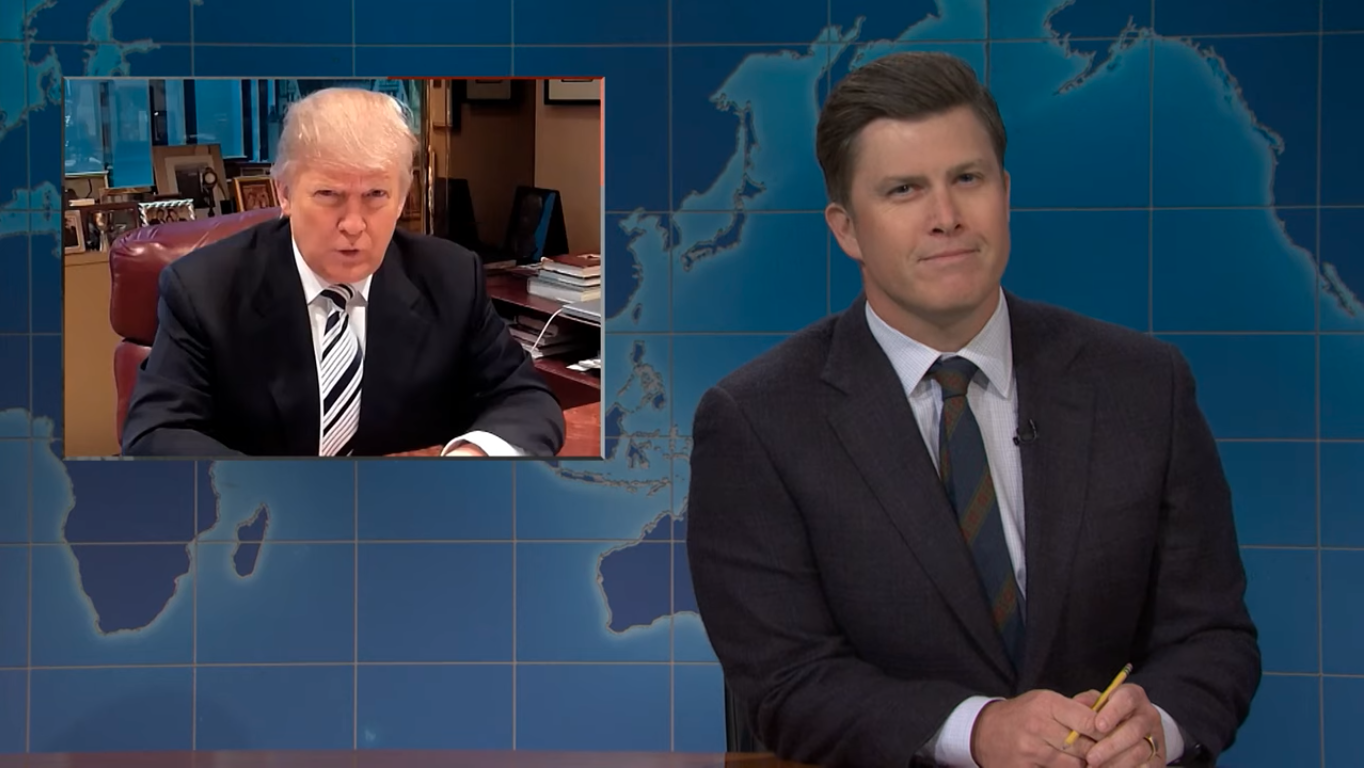
HangupsMusic.com – The hallowed halls of late-night television, particularly the satirical crucible of Saturday Night Live‘s "Weekend Update," once again served as a sharp mirror to the political landscape, reflecting a stark contrast between past pronouncements and present actions. In a recent segment, co-anchor Colin Jost masterfully leveraged a 2011 clip of Donald Trump to underscore the perceived hypocrisy surrounding the then-President’s aggressive stance on Iran, reigniting conversations about leadership, negotiation, and the enduring power of political rhetoric.
The segment aired in the immediate aftermath of a significant geopolitical development: the U.S. and Israel had reportedly launched coordinated strikes against Iran. Early Saturday, the world woke to news of Trump’s announcement, which not only confirmed military action but also included a direct appeal to Iranian citizens to "take over your government." This audacious call for regime change was swiftly followed by reports that the strikes had resulted in the death of Ayatollah Ali Khamenei, Iran’s supreme leader since 1989. The human cost of these operations quickly became apparent, with the Iranian rights group HRANA reporting a grim toll of 133 civilian fatalities and 200 injuries by late Saturday.
Against this backdrop of escalating tensions and human tragedy, Colin Jost opened "Weekend Update" with his characteristic deadpan delivery, immediately targeting a well-known ambition of the former president. "You guys, I’m starting to worry that President Trump might not win that peace prize," Jost quipped, a direct jab at Trump’s often-stated desire for a Nobel Peace Prize, an aspiration frequently framed by his administration’s claims of ending conflicts and brokering deals. The irony, given the recent military actions, was palpable, setting a darkly comedic tone for the segment.
Jost continued, employing a common comedic device of feigned humility to amplify the impending punchline. "This attack might be a bad idea. I don’t know. I’m not really an expert on Iran. So let’s hear from someone who can explain why we might have done it," he announced, artfully paving the way for the historical footage. The screen then cut to a 2011 clip of a pre-presidential Donald Trump, seated authoritatively behind a desk in Trump Tower, delivering a stark critique of the then-incumbent, Barack Obama.
In the archival footage, Trump’s voice, unmistakable and resolute, declared, "Our president will start a war with Iran because he has absolutely no ability to negotiate. He’s weak and he’s ineffective." The contrast between this decade-old statement and Trump’s current actions could not have been more striking. The clip served as a potent reminder of the often-cyclical nature of political criticism, where the very accusations leveled against predecessors can, with the passage of time, be turned back upon the accuser. The implication was clear: Trump, who once decried the potential for war with Iran under Obama’s "weak" leadership, was now initiating military action himself, seemingly contradicting his earlier stance and raising questions about the consistency of his foreign policy philosophy.
As the clip faded, Jost returned to the screen, his expression a blend of mock satisfaction and pointed sarcasm. "See? Now that’s the Trump I voted for," he deadpanned, a line that resonated with a knowing segment of the audience. This particular barb was designed to highlight the profound shift in Trump’s public persona and policy approach, from a critic of foreign intervention to an architect of it. It underscored the cynical reality that political figures often adapt their rhetoric to suit their immediate goals, even if it means abandoning previously held positions. The comedic genius lay in the way Jost used Trump’s own words to expose a perceived inconsistency, forcing viewers to grapple with the implications of such a dramatic pivot.
Following Jost’s incisive commentary, co-anchor Michael Che stepped in, injecting his unique brand of observational humor into the complex debate surrounding the legality and authorization of the strikes. Che tackled the criticisms emerging from both the political right and left regarding Trump’s apparent lack of Congressional authorization for the military action, especially given previous negotiations with Iran over its nuclear program.
"He did—Netanyahu said it was okay," Che quipped, referring to Israeli Prime Minister Benjamin Netanyahu. This joke carried a layer of historical context, alluding to Netanyahu’s decades-long stance as a staunch critic of Iran and his consistent warnings about its nuclear ambitions. The implication was that Trump might have circumvented traditional U.S. legislative processes, instead relying on the endorsement of a key international ally with a vested interest in the region. Che’s humor here deftly pointed to the often-intertwined and sometimes controversial relationship between U.S. and Israeli foreign policy, particularly concerning Iran.
Che then broadened his critique, reflecting a common sentiment among those concerned about executive power. "I can’t believe our leader can just attack Iran with no vote, no provision from Congress, no anything," he mused, before delivering a sharp punchline that simultaneously critiqued American foreign policy and the very nature of authoritarianism. "I mean, what is this? Iran?" The joke was a clever inversion, suggesting that the very lack of democratic oversight in the U.S. mirrored the autocratic systems often criticized in countries like Iran, highlighting a potential erosion of checks and balances within American governance.
Beyond the immediate geopolitical crisis, "Weekend Update" also found time to lampoon other recent political events, including Trump’s record-length State of the Union address. The Tuesday speech, clocking in at nearly two hours, became another target for Jost’s wit. He described its duration as "almost two full diapers," a crude but effective jab at the President’s age and perceived garrulousness, resonating with a segment of the audience that often criticized Trump’s stamina and public speaking style.
Jost continued his assault on the State of the Union, dissecting Trump’s optimistic claims about the nation’s health. "During the State of the Union address, Trump said our nation is back, ‘bigger, better and stronger than ever before,’" Jost recounted, setting up another punchline that linked current events with the President’s rhetoric. He then delivered the concise, cutting retort: "‘Same,’ said the measles." This joke cleverly juxtaposed Trump’s pronouncements of national strength with the resurgence of vaccine-preventable diseases, a subtle but potent commentary on public health challenges that were often overshadowed by political grandstanding. The humor lay in the implied irony: while the nation might be "stronger" in some respects, it faced vulnerabilities that contradicted an unqualified declaration of overall improvement.
The "Weekend Update" segment served as a powerful example of Saturday Night Live‘s enduring role in American political discourse. By blending sharp wit with historical context and current events, Jost and Che not only entertained but also prompted critical reflection on leadership, accountability, and the often-contradictory nature of political rhetoric. In a rapidly shifting global landscape, where news cycles are relentless and information overload is common, SNL continues to cut through the noise, using humor as a potent tool to highlight inconsistencies, challenge authority, and ultimately, remind audiences to look beyond the immediate headlines to the deeper currents of political action and historical precedent. This blend of entertainment and incisive social commentary solidifies its place as a crucial, albeit comedic, voice in the ongoing national conversation.