
 By Azzam Bilal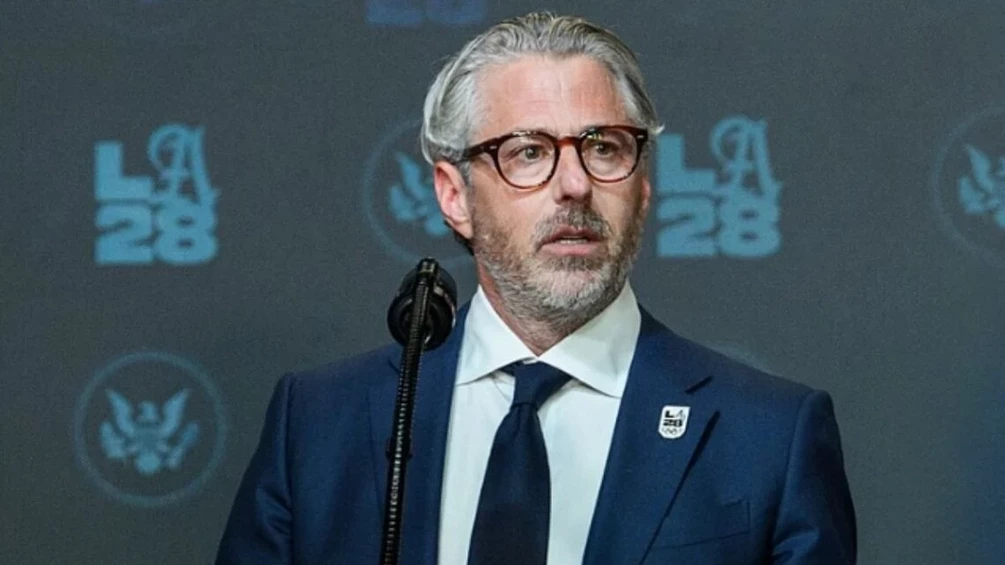
HangupsMusic.com – Los Angeles, In a move that has sent shockwaves through the global entertainment and sports landscape, Casey Wasserman, the high-profile founder and CEO of the Wasserman Group, has officially announced his intention to put the massive talent and marketing conglomerate up for sale. This decision follows a period of intense public scrutiny and internal unrest triggered by the executive’s appearance in recently unsealed documents related to the late convicted sex offender Jeffrey Epstein. The announcement, delivered via an internal memo to staff on a Friday evening, marks a dramatic turning point for one of the industry’s most influential firms, as its leader acknowledges that his continued presence has become an untenable "distraction" for the company and its high-profile clientele.
The catalyst for this corporate upheaval dates back to late January, when the United States Department of Justice authorized the release of approximately three million documents related to Jeffrey Epstein and his long-time associate Ghislaine Maxwell. Among this massive cache of evidence were several email exchanges between Wasserman and Maxwell that occurred in the early 2000s. These communications, described in various reports as suggestive and flirtatious in nature, have cast a shadow over Wasserman’s professional reputation. Maxwell is currently serving a two-year-plus-decade sentence in federal prison for her role in child sex trafficking and other related offenses, while Epstein’s death in 2019 left behind a trail of victims and a web of powerful associates whose connections to him are now being re-examined under a modern lens of accountability.
The fallout was almost instantaneous within the music division of the agency. Wasserman Music, a subsidiary that grew significantly after the acquisition of Paradigm Talent Agency’s North American music assets in 2021, represents a "who’s who" of the electronic and indie music worlds. The agency’s roster has long been the envy of the industry, boasting top-tier DJs, producers, and touring acts. However, as the details of the Epstein files began to circulate through social media and industry trade publications, the very artists who formed the backbone of the agency’s prestige began to distance themselves.
The reaction from the artist community has been both swift and public. Chappell Roan, a breakout pop star of the current year, and the indie-rock outfit Wednesday were among the first to officially sever their ties with the agency, signaling that the controversy had reached a point of no return for many performers. The exodus was not limited to those leaving; it also included a chorus of voices from within the roster demanding structural change. John Summit, one of the most prominent figures in modern house music and a centerpiece of the Wasserman electronic roster, took to the social media platform X to issue a stern ultimatum. Summit stated clearly that if Wasserman did not step down, he would be forced to take his business elsewhere, emphasizing that the CEO’s past actions did not align with the integrity of the individual agents who work on the ground with the artists.
Similarly, the Grammy-nominated electronic duo ODESZA released a poignant statement via Instagram, explaining their decision to depart. The duo highlighted a fundamental disconnect between their values and the leadership of the company. While they acknowledged they had never personally met Casey Wasserman and had maintained a long-term, positive relationship with their specific booking agent—whose previous firm had been absorbed by Wasserman—they felt they could no longer be associated with an organization that failed to hold its top leadership accountable. This sentiment was echoed by a wide array of other artists, including Bethany Cosentino of Best Coast, Lane 8, Sylvan Esso, and Louis The Child, all of whom issued statements ranging from demands for resignation to total disassociation.
In his Friday memo to employees, Wasserman expressed a sense of profound regret, describing himself as "heartbroken" that his past interactions from over two decades ago had caused such significant hardship for the agency’s staff and clients. He acknowledged that the discomfort felt by the company’s partners was unfair and that the pain experienced by the victims of Epstein and Maxwell was "unimaginable." This memo was a follow-up to an earlier public apology issued on February 1st, in which Wasserman attempted to provide context for the emails. At that time, he stated that the flirtatious nature of the messages occurred long before the full extent of Maxwell’s and Epstein’s criminal activities were public knowledge. He further clarified that while he had no professional or personal relationship with Epstein himself, he did participate in a 2002 humanitarian mission to Africa as part of a delegation with the Clinton Foundation, during which he traveled on Epstein’s private aircraft.
Despite these attempts at damage control, the pressure has only intensified. Beyond the music and talent sectors, Wasserman’s role as the chairperson for the LA28 Olympic Committee has also come under fire. As Los Angeles prepares to host the 2028 Summer Games, critics and community organizers have questioned whether a figure embroiled in such a high-profile scandal can effectively lead a project of such global and civic importance. The calls for his resignation from the Olympic post have mirrored the demands from his music clients, creating a dual-front crisis for the executive.
The structural impact on the Wasserman Group has been visible in real-time. Earlier this week, observers noted that the agency had quietly removed its entire artist roster from its official website. This move was highlighted by groups like the United Musicians & Allied Workers (UMAW), who have been vocal about the need for transparency and ethical standards in talent representation. The removal of the roster is often a precursor to major corporate restructuring or, in this case, a potential signal that the agency is preparing for a complete change in ownership and branding.
The sale of the Wasserman Group represents a seismic shift in the industry’s power dynamics. Founded in 2002, the agency had spent twenty years aggressively expanding into sports marketing, talent management, and music, often positioning itself as a more artist-centric alternative to the "Big Three" agencies (CAA, WME, and UTA). Casey Wasserman, the grandson of legendary Hollywood mogul Lew Wasserman, had utilized his deep industry roots to build a modern empire. Now, that empire faces an uncertain future. Industry analysts suggest that while the agency’s assets remain incredibly valuable—particularly its sports division and its remaining music contracts—any potential buyer will have to navigate the significant "reputational tax" now associated with the Wasserman name.
The broader implications for the entertainment industry are significant. This situation serves as a stark reminder of the "Me Too" era’s lasting influence and the "cancel culture" era’s evolution into a more structured demand for corporate accountability. Artists are no longer willing to view their booking agents or management firms as mere administrative entities; they increasingly see them as extensions of their own personal brands and ethical standing. When the leadership of such a firm is compromised, the talent—who are effectively the primary assets of the business—have shown they are willing to exercise their leverage to force a sale or a resignation.
As the process of selling the company begins, many questions remain. It is unclear who the potential suitors might be, though private equity firms or larger rival agencies are the most likely candidates. Furthermore, the fate of the individual agents within Wasserman Music hangs in the balance. Many of these agents are highly respected and have maintained loyal relationships with their artists for decades, often predating their time at Wasserman. The challenge for a new owner will be to retain this talent while scrubbing the organization of the stigma that has led to the current crisis.
For now, the music world watches closely as one of its biggest gatekeepers prepares to exit the stage. The downfall of Casey Wasserman’s leadership is a complex narrative of past mistakes meeting modern standards of conduct, proving that even the most powerful figures in entertainment are not immune to the consequences of their associations. As the agency moves toward a new chapter, the primary focus for the remaining staff and the departing artists alike remains the pursuit of an environment where professional success is not overshadowed by the ghosts of a controversial past.