
 By Azzam Bilal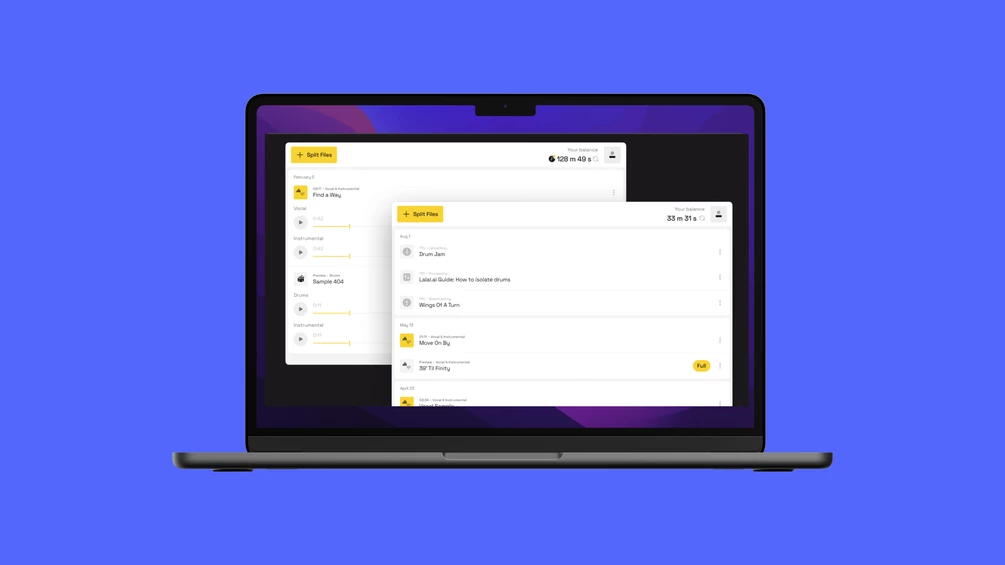
HangupsMusic.com – The landscape of modern music production is undergoing a radical transformation as artificial intelligence transitions from a novelty tool to a fundamental component of the creative process. In a significant move that signals the next phase of this evolution, LALAL.AI, a prominent developer in the field of AI-driven audio processing, has officially launched its first dedicated plug-in version of its acclaimed stem separation technology. This development marks a transition from a browser-based utility to a fully integrated studio tool, designed to exist within the native environments where producers, engineers, and artists spend the majority of their creative hours.
Since its inception in 2020, LALAL.AI has established itself as a leader in the source separation market. Its web-based platform gained popularity for its ability to dismantle complex audio files into individual components—such as vocals, drums, bass, and synthesizers—with a level of precision that was previously unattainable through traditional filtering methods. However, the requirement to leave a Digital Audio Workstation (DAW), upload files to a server, wait for processing, and then re-import the results has long been a point of friction for professionals. The new plug-in aims to eliminate this logistical bottleneck, allowing users to isolate tracks without ever closing their project windows.
The utility of stem separation extends far beyond simple vocal removal for karaoke. In the contemporary production environment, the ability to extract clean elements from legacy recordings or mixed masters is a cornerstone of the remixing and sampling culture. Producers looking to flip a specific drum break or isolate a haunting vocal hook can now do so with surgical accuracy. Furthermore, the educational implications are profound. Music educators and students are increasingly utilizing these tools to deconstruct complex arrangements, allowing a student to hear exactly what a bassist is playing beneath a dense wall of sound or enabling a vocalist to practice over a pristine instrumental version of a contemporary hit.
At launch, the LALAL.AI plug-in focuses on the most fundamental requirement of the industry: the separation of vocal and instrumental tracks. This core functionality is powered by the company’s proprietary neural networks, which have been trained on vast datasets to distinguish between the harmonic characteristics of the human voice and various musical instruments. While the browser version of the software currently supports up to ten different stems—including specialized categories like electric guitar, acoustic guitar, and even wind instruments—the plug-in is currently rolling out in stages. The company has already confirmed that multi-stem separation, which will allow for the isolation of up to six different instrument types simultaneously within the DAW, is currently in development and slated for a future update.
The primary philosophy behind this release is the preservation of the "flow state." In the world of audio engineering, technical interruptions are the enemy of creativity. LALAL.AI co-founder Nik Pogorsky emphasized this point in a recent press statement, noting that the goal was to make isolation as fluid as any other standard task, such as applying an EQ or a compressor. Pogorsky observed that while professionals have already integrated AI tools into their workflows, the "tab jumping" and repetitive uploading inherent in browser-based solutions were significant hurdles. By placing the tool directly in the workstation, the company is attempting to make AI-powered separation a seamless part of the mixing and arranging process.
Technologically, the plug-in represents a significant achievement in cross-platform compatibility. It is designed to function across macOS, Windows, and Linux, ensuring that it caters to the diverse range of operating systems used by the global producer community. Whether a producer is working in Ableton Live, Logic Pro, FL Studio, or Reaper, the plug-in is intended to integrate without the stability issues that often plague high-demand AI software. However, this high-level processing power comes with a specific access model. The Stem Separator plug-in is currently offered as an exclusive benefit for subscribers of LALAL.AI’s Pro tier, which carries a monthly subscription fee of $15. This positioning suggests that the company is targeting serious hobbyists and industry professionals who require frequent, high-volume access to separation tools.
The rise of LALAL.AI’s plug-in occurs within a broader context of an "AI arms race" in the music technology sector. Since the late 2010s, the ability to un-mix a song has gone from a theoretical concept to a standard feature in several high-profile software suites. For instance, VirtualDJ recently overhauled its engine to provide what it describes as "studio-quality" stems in real-time, a feature that has revolutionized the way DJs perform live mashups. Similarly, Ableton—one of the world’s most popular DAW developers—recently integrated its own stem separation tool into the Live 12.3 update, effectively making the technology a native feature for its user base.
In this crowded market, LALAL.AI is betting on the specialized nature of its algorithms to maintain a competitive edge. Unlike general-purpose DAWs that include stem separation as one of many features, LALAL.AI’s entire infrastructure is built around the science of source separation. This specialization often results in fewer artifacts—the digital "ghosting" or warbling sounds that can occur when an AI fails to perfectly distinguish between overlapping frequencies. For high-end professional work, where the extracted stem might be featured prominently in a commercial release, the purity of the extraction is the most critical metric of success.
The implications for the future of music production are vast. As these tools become more accessible and integrated, the concept of a "finished" mix becomes more fluid. We are moving into an era where any piece of recorded audio can be treated as a collection of MIDI-like parts that can be rearranged, replaced, or processed individually. This level of control opens up new creative avenues for sound design and historical restoration. Engineers tasked with remastering older recordings, where the original multi-track tapes may have been lost or damaged, can use these tools to perform "spectral surgery," cleaning up specific instruments without affecting the rest of the mix.
However, the proliferation of such powerful tools also brings to the forefront ongoing discussions regarding copyright and the ethics of sampling. While the technology itself is neutral, the ease with which one can now "borrow" a performance from a copyrighted work presents new challenges for the industry. Despite these complexities, the demand for high-quality separation continues to grow, driven by the insatiable appetite for content in the social media and streaming era, where remixes and "flipped" tracks are a primary driver of engagement.
As LALAL.AI continues to refine its plug-in, the industry will be watching closely to see how the promised multi-stem updates are implemented. The ability to separate drums, bass, and keys as individual tracks within a DAW in real-time would represent a "holy grail" for many producers. For now, the launch of the vocal and instrumental plug-in stands as a significant milestone, bridging the gap between advanced cloud-based AI and the tactile, immediate world of the modern recording studio. By focusing on the reduction of technical friction, LALAL.AI is not just providing a new tool; it is attempting to redefine the boundaries of what is possible within the digital workspace, ensuring that the act of making music remains the central focus of the artist.