
 By Azzam Bilal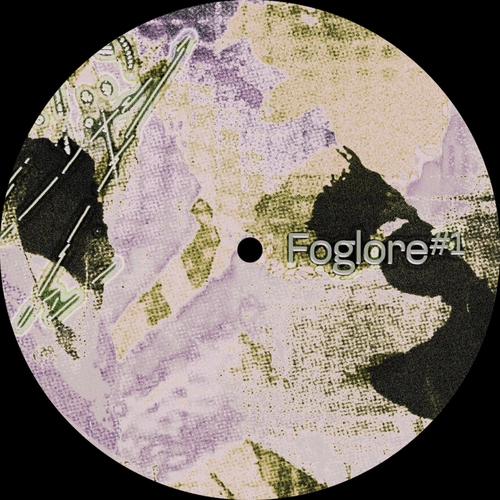
HangupsMusic.com – Kyoto, the ancient heart of Japan, has long been a sanctuary for traditional arts and contemplative silence, yet in recent years, it has birthed a vibrant, pulsing underground electronic scene that rivals the neon-soaked energy of Tokyo. At the forefront of this sonic evolution is Stones Taro, a producer whose work consistently bridges the gap between the heritage of UK club culture and a distinctly Japanese sense of atmospheric precision. With his latest release, Foglore#1, Taro ventures into a realm that feels both prehistoric and futuristic, utilizing the foundational principles of dub to construct a narrative of shadows, echoes, and physical weight. This collection of tracks is more than a mere addition to the bass music canon; it is a meticulously crafted exploration of how sound can alter the perception of space and time.
The title Foglore#1 serves as a perfect linguistic portmanteau, merging the natural phenomenon of heavy mist with the cultural weight of folklore. This evocative naming convention sets the stage for the auditory journey within. The music does not merely play; it inhabits the room, creating an environment that feels thick with humidity and ancient secrets. Stones Taro has managed to capture the essence of a mysterious ritual occurring in a remote, fog-drenched landscape, where the only guidance is the rhythmic throb of a distant sound system. It is a testament to his growth as an artist that he can command such a specific and vivid aesthetic while remaining firmly rooted in the mechanics of the dancefloor.
The cornerstone of the Foglore#1 experience lies in Taro’s masterful application of dub techniques. Dub, as a genre and a production philosophy, has always been about the "art of the ghost"—the removal of elements to leave behind echoes of what once was. Taro takes this playbook and updates it for the contemporary era. His use of delay is not merely a decorative effect but a structural necessity. In these tracks, the delay lines behave like living organisms, fluttering across the stereo field and creating secondary rhythms that seem to emerge from the mist and vanish just as quickly. This psychedelic texture gives the music a hallucinatory quality, making the listener feel as though the walls of the room are breathing in time with the beat.
Central to this immersive experience is the treatment of low-end frequencies. Any veteran of the global sound system culture knows that bass is not just heard; it is felt in the chest and the marrow. Taro’s sub-bass lines on Foglore#1 are exceptional, possessing a full-bodied richness that provides a sense of security and warmth amidst the eerie upper-register textures. It is this "warm, fuzzy feeling of home" that anchors the release, ensuring that even at its most experimental or haunting, the music remains deeply grounded in the physical reality of the club.
The EP is expertly balanced between high-energy club weapons and more contemplative, downtempo excursions. On the more aggressive side of the spectrum, we find "Illegalized Dub" and "New Mineral." These tracks represent the peak-time potential of the Foglore sound. "Illegalized Dub" is a masterclass in tension and release, featuring intricate, uptempo breakbeats that snap with surgical precision. Here, the dub-infused delays are bolted onto a driving percussive framework, creating a sense of forward motion that is relentless yet ethereal. The track feels like a high-speed chase through a forest at night, where the obstacles are blurred by speed and shadow.
"New Mineral" continues this high-octane exploration, utilizing metallic textures and sharp, crystalline synth stabs that cut through the low-end fog. The rhythmic complexity here is a hallmark of Stones Taro’s style, drawing from the frantic energy of jungle and footwork but slowing the pulse just enough to allow the dub elements to breathe. It is a "peak-time dub injection" that would be as effective in a cavernous warehouse as it would be on a boutique sound system in a small, sweat-drenched basement. These tracks prove that the "Foglore" aesthetic is not limited to ambient introspection; it has the teeth and the momentum required to command a dancefloor.
Conversely, the EP’s slower movements, "Obscured Breath" and "Twist Thumb," offer a necessary counterpoint to the kinetic energy of the opening tracks. These pieces are unhurried, spacious, and deeply atmospheric—what some might describe as "smokers’ delights." In "Obscured Breath," the tempo drops, and the space between the notes expands, allowing the listener to fully appreciate the micro-details of Taro’s sound design. The "breath" referred to in the title is audible in the way the filters open and close, mimicking a slow, rhythmic respiration. It is a track to melt away to, providing a sense of total immersion that is rare in modern electronic music.
"Twist Thumb" follows a similar trajectory, leaning even further into the minimalism of traditional dub. The percussion is sparse, leaving vast gulfs of silence that are filled by the decaying tails of reverbs and the subterranean rumble of the sub-bass. There is a meditative quality to this track, a sense of stillness that belies the complexity of its construction. It is in these moments that Stones Taro’s connection to the "primordial landscapes" mentioned by early listeners becomes most apparent. The music feels ancient, tapping into a collective subconscious where rhythm and ritual are inextricably linked.
The production quality throughout Foglore#1 is impeccably clean, yet it retains a certain grit and character that prevents it from feeling sterile. Taro’s ability to balance the technical demands of modern bass music with the organic, unpredictable nature of dub is a rare skill. He understands that the beauty of dub lies in its imperfections—the way a feedback loop might spiral out of control or the way a snare hit might catch a delay tap in an unexpected way. By embracing these elements, Taro breathes life into his machines, creating a record that feels human and visceral.
Furthermore, Foglore#1 serves as a significant marker for the Kyoto electronic scene. As a co-founder of the NC4K label, Stones Taro has been instrumental in putting his city on the global map for forward-thinking club music. This release, however, feels like a more personal statement, a refinement of his own aesthetic interests. It moves away from the more straightforward house and garage influences of his earlier work and moves toward something more idiosyncratic and harder to categorize. It is the sound of an artist who is no longer content to follow trends but is instead focused on building his own world.
The cultural impact of such a release should not be underestimated. In an era where electronic music is often consumed in bite-sized, algorithm-friendly chunks, Foglore#1 demands a different kind of attention. It is an EP that rewards deep listening and multiple rotations. Each listen reveals new layers—a hidden melody buried in the feedback, a subtle shift in the percussion, or a new depth to the bassline. It is music that respects the listener’s intelligence and patience, offering a profound emotional and physical experience in return.
As the first installment in what one hopes will be a series, Foglore#1 sets a high bar. It captures a specific moment in Stones Taro’s career where his technical proficiency and his creative vision are in perfect alignment. He has taken the "eerie, primordial landscapes" of his imagination and translated them into a sonic language that is universally understood by those who worship at the altar of the bass bin. Whether you are looking for a high-energy injection for a DJ set or a spacious soundtrack for a late-night session of introspection, this EP provides the perfect vessel.
Ultimately, Foglore#1 is a celebration of the enduring power of dub. It proves that the techniques pioneered in Jamaican studios decades ago are still relevant and capable of being recontextualized for the 21st century. Stones Taro has not just copied the dub playbook; he has added a new, fog-shrouded chapter to it. In doing so, he has created a work that is as much about the future of electronic music as it is about its roots. It is a haunting, beautiful, and heavy collection of tracks that will undoubtedly resonate with sound system veterans and newcomers alike, providing a warm, fuzzy feeling of home in the midst of a mysterious and captivating sonic mist.