
 By Azzam Bilal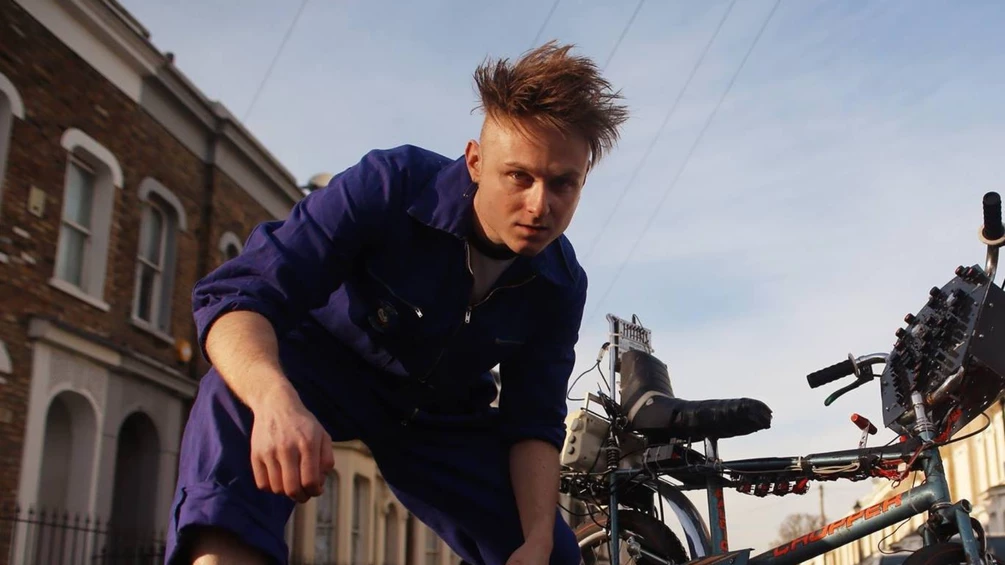
HangupsMusic.com – LONDON, In a move that signals a radical departure from traditional pop balladry, the BBC has officially confirmed that the United Kingdom will be represented at the 2026 Eurovision Song Contest by the avant-garde electronic composer and inventor Sam Battle. Better known to his millions of digital followers as "Look Mum No Computer," Battle is set to bring his unique brand of high-voltage, analog-driven spectacle to the international stage. The 70th edition of the storied competition is scheduled to take place at the Wiener Stadthalle in Vienna, Austria, on May 12, marking a milestone anniversary for the event amidst a backdrop of significant geopolitical tension and internal organizational challenges.
The selection of Battle represents a calculated risk by the British broadcaster, shifting away from the polished, radio-friendly acts of recent years toward an artist whose work is defined by its raw, mechanical energy and DIY ethos. Based in Kent, Battle has carved out a distinct niche in the contemporary music landscape. He is perhaps most famous for his "This Museum Is (Not) Obsolete" project in Ramsgate, a dedicated space for discontinued and experimental technology, and his viral YouTube channel where he documents the creation of bizarre musical machines. His repertoire includes the infamous "Furby Organ"—a polyphonic instrument constructed from dozens of interactive toys—and a "Synth Bike" that generates electronic music through the act of cycling. By choosing an artist whose work sits at the intersection of engineering and performance art, the BBC appears to be leaning into the "eccentric" reputation of British creativity.
In a formal statement following the announcement, Battle expressed a mixture of humility and intense creative focus. He noted that being chosen to represent the United Kingdom was an "absolute honour," emphasizing that his journey to this point has been defined by years of independent creation. Battle has spent over a decade writing, producing, and documenting his idiosyncratic visions from the ground up, often eschewing modern digital convenience for the tactile unpredictability of analog circuits. He promised to bring "every ounce" of that creative spirit to the Vienna stage, hinting at a performance that will likely involve custom-built hardware and a level of technical complexity rarely seen in the contest’s history. For Battle, the Eurovision stage is not just a platform for a song, but a laboratory for his latest sonic experiments.
Kalpna Patel-Knight, the BBC’s Head of Entertainment, championed the selection as a testament to the UK’s commitment to artistic innovation. According to Patel-Knight, Battle was chosen primarily for his "bold vision" and a "unique sound" that transcends conventional genre boundaries. She described his performance style as "electric," suggesting that the live show in May will be designed to leave a lasting impression on the global audience. Patel-Knight further elaborated that Look Mum No Computer encapsulates a specific trifecta of values the BBC wishes to project: ambition, creativity, and a "distinctly British wit." This last point is often seen as a crucial ingredient for Eurovision success, where personality and a sense of self-awareness can often elevate a performance above its competitors.
However, the excitement surrounding the UK’s entry is tempered by a growing crisis within the European Broadcasting Union (EBU). As the 70th anniversary of the contest approaches, the event is grappling with an unprecedented wave of withdrawals. Five nations—Iceland, Spain, Ireland, Slovenia, and the Netherlands—have officially announced their intention to boycott the 2026 competition. The collective decision stems from the EBU’s refusal to exclude Israel from the contest, a point of contention that has sparked intense debate across the continent over the past several years. Critics of the EBU’s stance argue that the organization is applying a double standard, pointing to the swift expulsion of Russia following the invasion of Ukraine as a precedent for political intervention.
The boycott gained significant momentum in late 2025. Iceland’s national broadcaster, RÚV, issued a particularly poignant statement regarding their withdrawal. The broadcaster noted that after extensive internal deliberation and observation of the national mood, it became clear that "neither joy nor peace" would characterize their participation. RÚV’s leadership concluded that the public debate within Iceland had reached a point where taking part in the contest would be contrary to the spirit of the event and the expectations of their audience. This sentiment has been echoed by the other four boycotting nations, creating a fractured landscape for the 2026 edition. The absence of Ireland and the Netherlands, both of which have storied histories in the contest, is expected to have a significant impact on the semi-final dynamics and the overall television viewership.
Despite these external pressures, the preparations for Vienna proceed. The Wiener Stadthalle, a venue with a rich history of hosting major international events, will serve as the focal point for the 70th-anniversary celebrations. For Sam Battle, the technical requirements of his performance may pose a unique challenge for the EBU’s production team. Known for his "no computer" philosophy, Battle’s rigs often involve massive modular synthesizers, tangled patch cables, and high-voltage components that require specific power and safety considerations. Integrating these DIY inventions into the highly synchronized, time-sensitive environment of a live Eurovision broadcast will be a feat of logistical coordination.
The UK’s strategy with Battle appears to be a continuation of the "prestige" era of British Eurovision entries that began with Sam Ryder in 2022. By selecting artists with established identities and genuine musical credibility, the BBC has successfully rehabilitated the UK’s reputation in the contest, moving away from the "nil points" era of the early 2000s. Battle, while vastly different in style from Ryder or Mae Muller, shares that same sense of authenticity. He is an artist who has built a global community through his transparency and his passion for the mechanics of sound. His participation is likely to attract a younger, tech-savvy demographic to the broadcast, many of whom may be more interested in the oscillators and filters of his equipment than the traditional tropes of the song contest.
As May 12 approaches, the conversation surrounding Eurovision 2026 remains split. On one hand, there is the celebration of seven decades of European musical exchange and the debut of one of the UK’s most inventive musical minds. On the other, there is a somber reflection on the role of international cultural events in times of global conflict. The EBU remains firm in its position that the Eurovision Song Contest is a non-political event designed to unite through music, yet the withdrawal of five member states suggests that the "non-political" label is becoming increasingly difficult to maintain.
For Sam Battle, the focus remains on the work. His Kent studio is likely a hive of activity as he refines the circuitry for his Vienna performance. Whether he is building a new wall of sound out of salvaged components or writing a hook that can resonate across borders, Battle is staying true to the DIY spirit that made him a digital sensation. The UK’s hopes for a victory in Austria rest on the shoulders of a man who prefers soldering irons to sequencers, and whose vision of the future of music is rooted in the glorious, buzzing relics of the past. As the 70th Eurovision Song Contest draws near, the world waits to see if Battle’s analog heart can beat loud enough to overcome the digital and political noise of the modern era.