
 By Azzam Bilal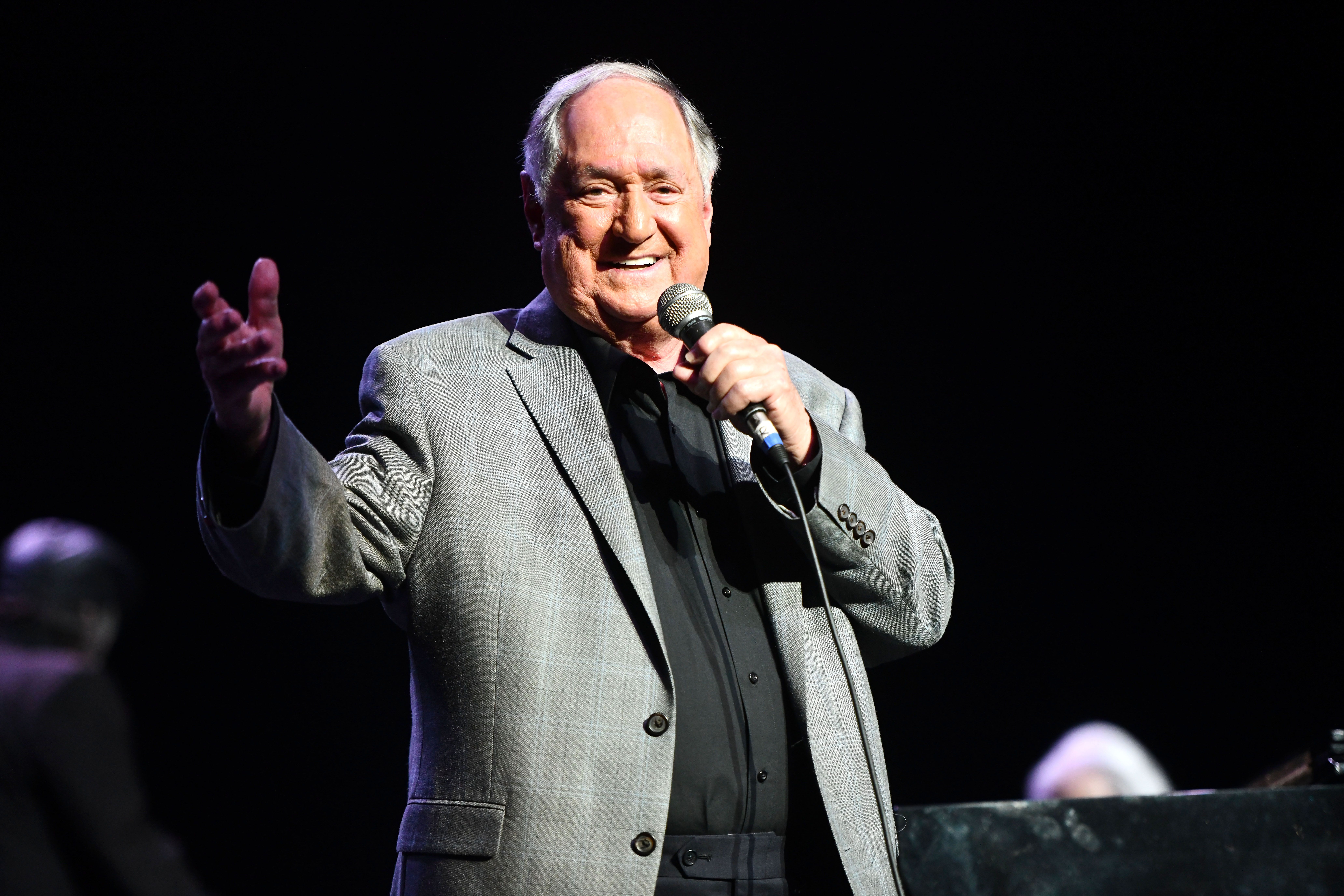
HangupsMusic.com – The landscape of American popular music has lost one of its most prolific and enduring architects. Neil Sedaka, the classically trained pianist who transitioned from a teenage songwriter at the legendary Brill Building to a global superstar with a career spanning seven decades, has passed away at the age of 86. The news was shared by his family through a poignant social media statement, expressing the profound void left by a man who was not only a rock and roll pioneer but a cornerstone of their personal lives. The family described him as a "true legend" and an "inspiration to millions," though they emphasized that his greatest role was as a devoted husband, father, and grandfather.
Sedaka’s career was a masterclass in the art of the "comeback" and a testament to the power of melodic reinvention. Born in Brooklyn in 1939, Sedaka’s journey began not in the world of pop, but in the rigorous halls of the Juilliard School’s preparatory division. This classical foundation would later become his secret weapon, allowing him to infuse simple pop structures with sophisticated harmonic progressions that set him apart from his contemporaries. By the time he was a teenager, he had already formed a songwriting partnership with his neighbor, Howard Greenfield. Together, they became one of the most successful duos in the history of the music industry, operating out of the famous Brill Building—a hit factory that defined the sound of the late 1950s and early 1960s.
During that initial golden era, Sedaka became a household name both as a writer for others and as a performer in his own right. His early catalog is a roadmap of early rock and roll’s evolution from doo-wop to polished pop. Songs like "Oh! Carol"—a playful tribute to his high school girlfriend and fellow songwriter Carole King—and the rhythmic "Calendar Girl" showcased his ability to craft infectious, radio-friendly hooks. By 1963, Sedaka had already moved a staggering 25 million records, a feat that represented nearly half of his eventual lifetime sales. His voice, a clear and youthful tenor, became the soundtrack for a generation of teenagers navigating the innocence and heartbreak of the pre-British Invasion era.
However, the arrival of the Beatles and the Rolling Stones in the mid-1960s fundamentally shifted the American musical landscape. Many of Sedaka’s peers found themselves relegated to the "oldies" circuit, unable to compete with the raw energy and self-contained band structures of the UK imports. Sedaka, demonstrating the resilience that would define his later years, pivoted. Recognizing that his style of performance was temporarily out of fashion in the United States, he focused his energies on songwriting for other artists. His pen produced hits for the likes of Connie Francis, including the perennial favorites "Stupid Cupid" and "Where the Boys Are." He also branched out into international markets, showcasing a remarkable linguistic dexterity by re-recording his hits in Italian, Spanish, German, and Japanese. This global strategy not only kept his career afloat but solidified his status as an international icon, particularly in the United Kingdom and South America.
The 1970s marked what many historians consider the most impressive second act in pop history. After moving his family to England to seek a fresh start, Sedaka caught the attention of a young Elton John. Recognizing Sedaka’s untapped potential and melodic genius, Elton John signed him to his fledgling Rocket Records label. This partnership sparked a creative renaissance. Sedaka abandoned the "teen idol" aesthetic for a more mature, singer-songwriter approach that resonated with the soft-rock sensibilities of the decade. This era produced some of his most sophisticated work, including the chart-topping "Laughter in the Rain" and the biting, high-energy "Bad Blood," which featured backing vocals from Elton John himself.
Perhaps the most significant achievement of this period was Sedaka’s reimagining of his own history. In 1975, he released a slow, torch-song version of his 1962 upbeat hit "Breaking Up Is Hard to Do." The drastic reinterpretation transformed the song from a bouncy teenage anthem into a soulful, melancholic ballad. The new version became a Top 10 hit, making Sedaka the only artist to have a Top 10 hit with two different versions of the same song. This feat earned him a Grammy nomination for Song of the Year in 1976 and proved that his compositions possessed a timeless quality that could transcend genre and tempo.
As the decades progressed, Sedaka refused to remain static. While he continued to tour and perform his classic hits for adoring audiences, his creative curiosity led him into unexpected territories. In the mid-1990s, he returned to his classical roots with Classically Sedaka, an ambitious project where he set original lyrics to the melodies of composers like Chopin, Tchaikovsky, and Rachmaninoff. He also delved into the world of symphonic composition, producing works such as "Joie de Vivre" and "Manhattan Intermezzo." Even in his 70s and 80s, his output remained steady. He released children’s music, including the 2009 album Waking Up Is Hard to Do, and continued to explore the nuances of the Great American Songbook.
On stage, Sedaka was a consummate professional, known for a stage presence that combined technical brilliance at the piano with an infectious, genuine warmth. Unlike the brooding personas of the rock era or the carefully curated "cool" of the modern age, Sedaka leaned into a persona of "goodhearted grin and vintage sheen." He was a performer who clearly loved his craft, and that joy was palpable in every performance. He was a bridge between the Tin Pan Alley tradition of songwriting and the modern era of the self-produced pop star.
The final years of Sedaka’s life were characterized by a surprising digital resurgence. When the COVID-19 pandemic forced the world into isolation, Sedaka did not retreat. Instead, he took to social media, launching a series of daily "mini-concerts" from his home piano. These informal performances, where he shared stories behind his songs and played through his vast catalog, provided comfort to millions of people during a time of global uncertainty. It was a poignant full-circle moment: the man who had helped define the birth of the pop era was now using the latest technology to connect with a new, diverse audience of fans.
In a candid 2020 interview, Sedaka reflected on the longevity of his career and offered a piece of advice that served as his personal manifesto: "Don’t repeat yourself. Develop and grow. Raise the bar. And reinvent your creativity." It was a philosophy he lived by until the very end. He understood that while the "hook" might get people to listen, it was the willingness to evolve that kept them coming back for seventy years.
Neil Sedaka’s passing marks the end of an era, but his influence is woven into the very fabric of popular music. From the karaoke bars where "Breaking Up Is Hard to Do" remains a staple, to the modern songwriters who study his melodic structures, his presence will continue to be felt. He was more than just a hitmaker; he was a melodic architect who understood that a great song is a conversation between the composer and the listener—a conversation he kept alive for nearly a century. As the world says goodbye to this rock and roll legend, they do so with the knowledge that while the singer may have left the stage, the music remains as vibrant and essential as the day it was written.