
 By Azzam Bilal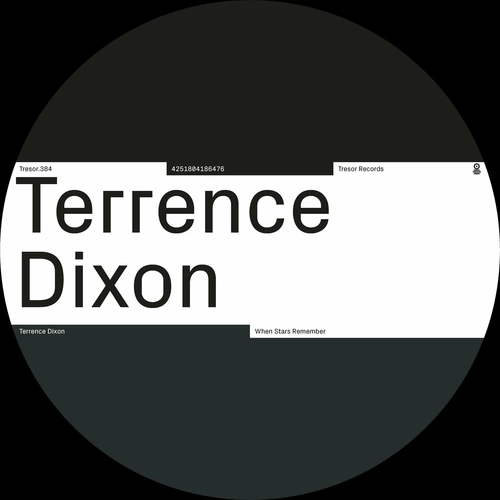
HangupsMusic.com – Detroit, the ancestral home of techno, has always been a city defined by the duality of its industrial grit and its forward-looking aspirations. In the pantheon of the city’s electronic music architects, few figures command as much quiet reverence as Terrence Dixon. For decades, Dixon has operated as both a foundational pioneer and a perpetual outlier, a producer whose work transcends the standard tropes of the genre to touch upon something more ethereal and structurally complex. His latest offering, When Stars Remember, represents a fascinating evolution in his storied career, signaling a recalibration of his signature "minimalist" philosophy toward a more immediate, peak-time intensity without sacrificing the intellectual depth that has long defined his output.
To understand the significance of When Stars Remember, one must first understand the unique space Terrence Dixon occupies within the Detroit lineage. While the first wave of Detroit techno innovators sought to marry the soul of Motown with the precision of Kraftwerk, and the second wave expanded these ideas into cinematic and tribal territories, Dixon found his voice in the spaces between the notes. Through his label, Minimal Detroit, he pioneered a sound that was skeletal yet profoundly expressive. His music has traditionally been characterized by a certain "minimal mysticism"—a term that describes his ability to evoke vast, cosmic landscapes using a remarkably limited palette of sounds. However, his latest work suggests a shifting of gears, a moment where the veteran producer leans into the kinetic energy of the dance floor with a renewed sense of purpose.
The lead track of the collection, "Mono Collapse," serves as a definitive statement of this stylistic pivot. While Dixon has never been a stranger to rhythm, "Mono Collapse" possesses a visceral, almost frantic energy that sets it apart from his more meditative back catalog. The track is built upon a foundation of relentless, pounding keys that drive the arrangement forward with an urgency that borders on the manic. It is a masterclass in tension and release; towering arpeggios climb toward the stratosphere, creating a sense of verticality in the music that feels both overwhelming and exhilarating. The synth motifs here are sleek and mechanical, yet as they bloom and interact, they coalesce into a sonic entity that is far greater than the sum of its individual components. It is techno in its most potent form: music that feels like it was forged in an automated factory but possesses the erratic, breathing pulse of a living organism.
This intersection of the mechanical and the biological is where Dixon truly shines. Throughout When Stars Remember, there is an underlying sense of "soul within the circuitry." This concept is perhaps most poignantly explored in the track "Code Of The Forgotten." Here, the tempo may be designed for the club, but the tonal hue is significantly darker and more contemplative. The track functions as a sonic meditation on the current state of the human condition, specifically the perceived erosion of fundamental values in an increasingly digitized and fractured world. Dixon uses the cold, precise language of synthesizers to communicate a deeply human sense of loss and reflection. The atmosphere is thick with a haunting resonance, inviting the listener to look inward even as the beat compels them to move. It is a rare feat in electronic music to create a track that functions equally well as a peak-time floor-filler and a poignant social commentary.
Dixon’s ability to weave these complex narratives into his music is a testament to his status as a "machine meditator." In an era where much of electronic music is produced with an eye toward social media engagement and superficial trends, Dixon remains a steadfast advocate for letting the music speak for itself. He has long been an artist who shuns the limelight, preferring the shadows of the studio to the glare of celebrity. This anonymity has allowed him to cultivate a sound that feels untethered from time and place. When Stars Remember feels like it could have emerged from the Detroit of thirty years ago, yet it sounds entirely futuristic, perfectly capturing the anxieties and hopes of the modern era.
The title itself, When Stars Remember, hints at the afrofuturist themes that have often bubbled beneath the surface of Dixon’s work. There is a cosmic dimension to his minimalism—a sense that these repetitive loops and shifting textures are echoes of celestial movements or ancient memories stored in the vacuum of space. By grounding these high-concept ideas in the heavy, driving rhythms of "peak-time" techno, Dixon bridges the gap between the intellectual and the physical. He reminds us that the dance floor can be a place of transcendence, a site where the individual dissolves into the collective and where the "troubling times" of the outside world can be processed through the ritual of rhythm.
Technically, the production on this release is impeccable, showcasing Dixon’s mastery of sound design. He manages to achieve a sense of "weight" without cluttering the frequency spectrum. Every element—from the sharp, metallic percussion to the deep, resonant basslines—has its own clearly defined space. This clarity is essential to the minimalist ethos; when there are fewer elements to hide behind, each sound must be perfectly crafted. In "Mono Collapse," the way the synth motifs evolve and modulate creates a sense of constant motion, ensuring that the repetition never feels stagnant. Instead, it feels like a journey through a shifting landscape of light and shadow.
As the global electronic music community continues to grapple with its identity in a post-pandemic world, releases like When Stars Remember serve as vital touchstones. They remind us of the genre’s roots in Detroit—a city that taught the world how to find beauty in the industrial and how to use technology as a tool for liberation. Terrence Dixon’s work is a continuation of that legacy, a persistent reminder that techno is not just music for parties, but a sophisticated art form capable of expressing the deepest complexities of the human experience.
Ultimately, When Stars Remember is a record of dualities. It is both aggressive and introspective, mechanical and soulful, grounded in the grit of the earth and reaching for the stars. It sees a master of the craft refusing to rest on his laurels, instead choosing to sharpen his tools and confront the present moment with a bold, new intensity. For those who have followed Dixon’s career, it is a thrilling new chapter in an already legendary story. For the uninitiated, it serves as a perfect entry point into the world of a producer who has spent his life decoding the language of the machines to tell the story of humanity. In these troubling times, Dixon’s machine meditations offer more than just a beat to dance to; they offer a space for reflection, a spark of hope, and a reminder that even in the darkest of nights, the stars have a memory of the light.