
 By admin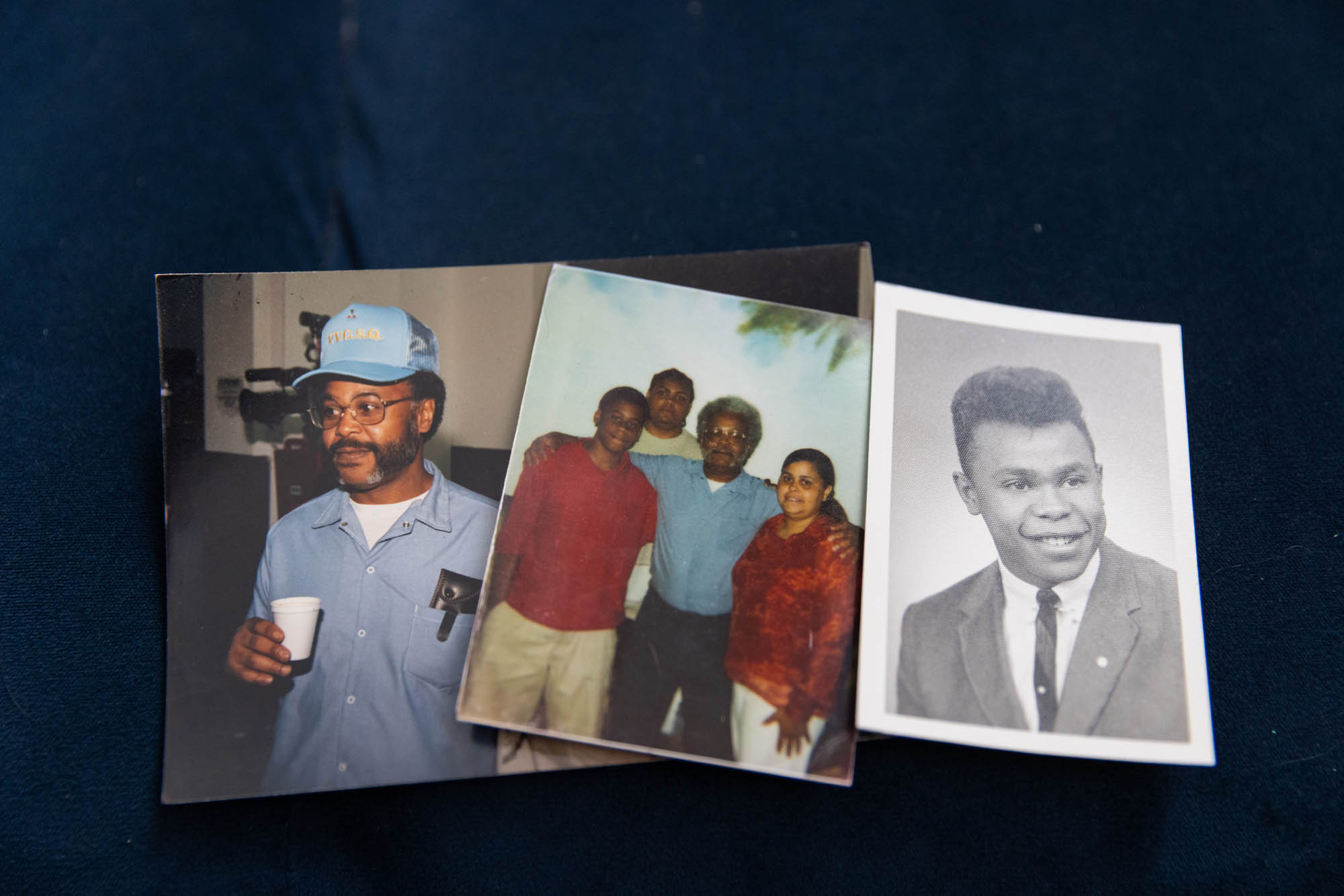
HangupsMusic.com – Sacramento, California, 1978. The quiet of a late winter night in the River Gardens neighborhood was shattered by an unspeakable act of violence that would forever alter the lives of a family and ripple through the American justice system. Thirteen-year-old Kimberly felt the searing heat of gunpowder on her skin, dropping instantly to the floor of her bedroom. In the suffocating darkness, she feigned death, a desperate, child-like instinct for survival in a nightmare that had just begun.
It was just past 10:30 p.m. Kimberly, her nine-year-old brother Kevin, and their 17-year-old cousin Jeannie were upstairs in their townhouse, the gentle hum of a radio filling the air as Jeannie, a bright young woman on the cusp of starting college, listened to the siblings recount their day. Downstairs, their parents, Ralph and Shirley, were at the kitchen table, a disarray of bills testament to financial anxieties that had lately strained their household.
Earlier, Kimberly had overheard her parents discussing a disputed debt, a familiar discord in a marriage that had weathered storms for years. Shirley, tall, beautiful, and sensitive, found joy in styling hair and painting nails, interests yet foreign to her tomboy daughter. Ralph, an avid outdoorsman who coached Kimberly’s baseball team, had once been a pillar of his community, a Bronze Star recipient from his service in Vietnam and a church deacon back in Ohio. But in recent years, a profound change had taken root in him, subtly twisting his once-steady demeanor.
Around 11:30 p.m., the tension escalated. Kimberly heard her father ascend and descend the stairs, a single gunshot echoing from below. He returned upstairs, his footsteps unhurried, his voice cutting through the silence: "I don’t have to take this shit anymore." The bedroom door burst open, and even in the gloom, Kimberly could discern the cold glint of a rifle. Without raising his voice, he uttered a chilling apology: "I’m sorry I have to do this." Jeannie’s plea, "No, Uncle Ralph, don’t," was met with another shot. Jeannie fell. Kimberly and Kevin scrambled under the bed, but their father flipped it, firing again, ending Kevin’s young life. A third shot narrowly missed Kimberly, who remained motionless, her breath caught in her throat. Then, the footsteps receded.

Minutes crawled by before Kimberly dared to move. Descending the stairs, she found her father on the phone, her mother’s lifeless body slumped in a kitchen chair, a gunshot wound to her head. In a moment of profound confusion and instinct, Kimberly approached her father and embraced him. He pushed her away. "I’d never seen my father like that," Kimberly would later recall, her voice still laced with disbelief. "He was so far gone, so detached. He wasn’t himself." He handed her the phone. It was her Aunt Vertistine "Tina" Parks on the line, Jeannie’s aunt as well. Tina’s calm voice instructed Kimberly: "Your father’s sick. Don’t bother him. Just try to get help and leave quietly." As Ralph retreated upstairs, Kimberly fled to a neighbor’s house. Shortly after, Ralph Coleman called the police, confessing: "Send somebody here, please, it’s an emergency. I just killed my family." Officers arrived to find him on the living room couch, his head buried in his hands.
The tragedy of the Coleman family, however, was not just a singular act of violence but the genesis of a decades-long struggle for justice, understanding, and systemic reform, deeply intertwining with the life of the narrator’s own mother. The narrator’s mother, a formidable advocate in the realm of prison law, passed away on December 26, 2018, at the age of 64, after a two-year battle with brain cancer. In her final year, she raced against time to bring closure to her life’s work, one of the most pressing being the release of Ralph Coleman, whose prostate cancer had returned.
Coleman had been her client for nearly three decades, beginning in 1990 when he became the lead plaintiff in a landmark class-action lawsuit against the State of California, Coleman v. California. Twelve years into his sentence, Coleman struggled to access adequate mental health care for the profound post-traumatic stress disorder (PTSD) he developed after his decorated service in Vietnam. In 1995, a judge ruled that California prisons were failing to treat mentally ill inmates, leading to the appointment of a special master to monitor the state’s correctional facilities. This case became the narrator’s mother’s life’s mission. She visited prisons across the state, fostering relationships with hundreds of inmates, answering countless letters detailing everything from petty grievances to suicidal ideations and inhumane treatment.
Coleman’s case, bearing his name, shaped her career. To the narrator, Ralph was always "Ralph," spoken of with a familiarity usually reserved for a cherished family member. The narrator grew up hearing discussions about the systemic failures of incarceration in California – overcrowding, inadequate care, and the prioritization of punishment over rehabilitation. For Ralph, her mother argued for clemency based on declining recidivism rates for offenders over 65, the exorbitant cost of housing lifers, and a deeper conviction: a belief that a man who had committed an unforgivable act, truly atoned, and worked to better himself should be allowed to die a free man. Ralph symbolized the rehabilitative ideal she had dedicated her life to defending.
When Governor Jerry Brown began releasing lifers before leaving office, the narrator’s mother saw a genuine chance for Ralph. Despite her cancer spreading, she meticulously compiled data, gathered character witnesses, and reviewed records with a team of lawyers. Their clemency application in February 2018 included heartfelt letters from a former Pelican Bay State Prison warden, a psychiatrist, and a veterans’ aid director offering support for Ralph’s transition. Kimberly, Ralph’s daughter, also wrote a letter in support. Yet, Ralph Coleman was not on Governor Brown’s Christmas Eve 2018 clemency list. Two days later, the narrator’s mother passed away peacefully in her sleep.

Six months after her death, consumed by grief but seeking a path forward, the narrator wrote to Ralph Coleman. A hope stirred: perhaps telling his story now, under a new governor, Gavin Newsom, could finally secure his release, tying up the last loose end of their mother’s life. Ralph wrote back, initiating biweekly calls where they discussed his life, the narrator’s mother, and the unique experience of grieving behind bars. The calls, though emotionally taxing, brought forth fragmented memories of the narrator’s mother: her fierce advocacy when Ralph’s leg became infected, her poignant wish that his life could be "edited" to remove "that one hour." Ralph, who had "been grieving for 40 years," confessed how deeply he missed her.
On one call, the narrator asked Ralph if they could speak to Kimberly. A heavy silence fell, broken only by the automated prison line message counting down their remaining time. Ralph, after a deep breath, explained that revisiting 1978 was like "picking a scab," feeling he had already put his family through enough. The narrator respected his wishes, but the story felt incomplete without Kimberly’s voice. Ralph Coleman died in December 2024. Months later, the narrator’s father contacted Kimberly, who then reached out. She wanted her story told, insisting that "that part of her had healed." For her, looking back was not picking a scab but a necessary journey through trauma. "If my story can help somebody else, then heck yeah, let’s do it," she declared.
"It would have been different to accept the way it played out if he had been a bad dad," Kimberly Coleman McCall, now 60 and a grandmother, reflected during their first conversation. "But he wasn’t a bad dad. He was a great father." Her voice, surprisingly buoyant, belies the weight of her past. Her Christian faith, she explained, provided the framework to navigate her life’s traumatic moments with a certain distance, a guiding force through chaos.
Kimberly was raised in Youngstown, Ohio, where her parents, Ralph and Shirley, had been high school sweethearts. Their interracial relationship was fraught from the start; Shirley’s parents, particularly her grandfather, harbored deep racist sentiments. Despite familial opposition, they married in 1964 after Shirley became pregnant with Kimberly during Ralph’s Marine Corps leave. Even after Kevin was born, Ralph was never invited into his in-laws’ home.
Ralph was honorably discharged from the Marine Corps in 1967, a sergeant decorated with a Bronze Star for bravery in Vietnam. Kimberly remembered a loving father, a church deacon who dedicated himself to his children, taking them fishing, camping, and coaching their sports teams. "My dad loved us," she affirmed. "I don’t have no doubt about that, you know? I never, ever doubted that." However, as Kimberly grew, Ralph’s ability to maintain employment waned. Dr. Pablo Stewart, a psychiatrist and UCSF professor, later noted in support of Ralph’s clemency that around 1971, classic PTSD symptoms began to manifest: nightmares, flashbacks, intrusive thoughts, and extreme anxiety triggered by violence or the smell of gunpowder. He became increasingly paranoid, believing his phone was tapped, coworkers were "playing tricks," and his marriage was under scrutiny. His mental health spiraled further after Shirley confessed to an affair with their minister in 1974.

The family moved to California in 1975, a difficult transition for Shirley, who "cried all the time" for her Ohio family. Ralph’s paranoia deepened; a 1978 psych report detailed his delusions of intruders, fingerprints on walls, and dead flowers left in his car. In 1977, after a period of living separately in a trailer, Ralph moved back in, hoping to salvage the marriage. His favorite sister’s niece, Jeannie, came to stay, eager to start college. These were the months leading up to the murders. Kimberly, a child, missed the full scope of her father’s deterioration but recalled his increasingly bizarre behaviors in California: asking her to inventory the house, teaching her military tactics for intruders—lessons that would, chillingly, save her life that fateful night. "As I look back on it," she said, "the paranoia was getting worse and worse and worse."
In August, the narrator traveled to Columbus, Ohio, to meet Kimberly. Her home, once surrounded by farmland, now sat amidst a burgeoning suburban landscape. Over photos spread across her kitchen table, Kimberly introduced her family: her grandmother Exia, her brother Kevin in his baseball uniform, Jeannie in her cap and gown. She pointed to a snapshot from Kevin’s birthday party: her father holding Kevin, her mother holding her, around age five or six. "I remember that. I do remember that, oddly enough. That’s crazy. I remember she made that cake," Kimberly whispered, a quiet, lingering sadness in her voice. "Like yesterday, you can remember that stuff."
After the murders, Kimberly became a ward of the state. Her mother’s family made no attempt to take her in. She lived with her Uncle Billy in Boston, then her bedridden Aunt Tina, before settling with her grandmother in a better school district. After high school, she moved into the YWCA. Pregnant soon after, she had to move out. Remarkably, her Aunt Barbara, Jeannie’s mother, offered her a place to stay. Barbara and Ralph had been incredibly close, even naming her son after him. Yet, Barbara was a "shell of herself" in her grief, and Kimberly, bearing a striking resemblance to her father, knew her presence was a constant, painful reminder. "She never took anything out on me. She always told me it wasn’t my fault," Kimberly recounted, shaking her head. The narrator recognized the profound grace in Barbara’s actions, a woman who, in her unbearable loss, found compassion for the child of her daughter’s killer.
Kimberly recalled the night after the killings, alone and numb in a receiving home. A young girl sat beside her, asking what happened. After Kimberly recounted the horror, the girl quietly responded, "That happened to me, but my dad ended up taking his own life, so I don’t have anybody." In that moment of profound empathy, Kimberly felt a strange sense of luck, realizing it "could be worse." It was then, she said, she decided "that, as a person, I wanted him to be OK." She believes the girl was an angel, a divine intervention that prevented her heart from hardening with hate. "God immediately made it to where I would not experience hate in my heart, because if I carried that through my adulthood, it would have killed me," she affirmed.
Years ago, a lawyer told the narrator, "Telling stories about the wrongfully accused is too easy. It’s much more important to tell stories about guilty men who’ve served their time and should be free." Ralph Coleman, who entered confinement in 1978 with no prior criminal record, embodied this complex truth. He acknowledged his illness, sought help, and, through his lawsuit, paved the way for thousands of others to access mental health care. His former warden described his institutional record as "nothing short of remarkable." Ron Self, a Marine Corps veteran who served 23 years in California prisons, noted that veterans often adapt well to structured environments like prison. He also highlighted the disproportionate number of Vietnam veterans incarcerated, many returning home with unaddressed trauma.

Despite the brutal environment of prisons like San Quentin in earlier decades, Coleman spent over four decades striving for self-improvement. Among the boxes of his belongings sent to Kimberly by the California Department of Corrections and Rehabilitation (CDCR), a report card from 1981 revealed his enrollment in Sacramento State classes offered at Folsom Prison: British Isles, Interpersonal Communication, American Governments, and Advanced Psychology. A writing pad contained essays, letters, and poetry, including a poignant verse: "A small place of happyness; where do we find it. Deep below the surface of the mind we search for this precious gift." When asked what rehabilitation meant to her, Kimberly paused. "To me, that means to put something back together a different way."
Kimberly was always realistic about her father’s chances of returning to the man he once was, yet she and her husband agreed to welcome him into their home if clemency had been granted. She knew his soul wasn’t "black," but tormented. "Even if I really am remorseful and try to reverse the situation," she observed, "our society has a funny way of always dragging that in front of you, and so you’re constantly treading water." For Kimberly, true healing began only after leaving Youngstown decades after the murders. The constant questions about her father’s actions, though understood through the lens of PTSD, remained a persistent ache.
In her late 20s, a mission trip to Uganda for a women’s conference proved transformative. A local woman embraced her, whispering "Jesus loves you" repeatedly in Swahili. "She wouldn’t let me go, and I just broke," Kimberly recounted, tears welling. "I cried for almost 45 minutes straight. She just pressed all the pain out of my life right at that moment." It was, for Kimberly, God’s embrace, allowing her to "run on a little further."
The narrator’s own understanding of Ralph’s crime evolved from a simplified narrative of a good man snapping to a more complex, painful reality. Court documents revealed Shirley’s letters detailing Ralph’s prior threats to kill her and the children, a testament to his worsening paranoia. Psychologist Robert T. Muller explained that PTSD-induced psychosis doesn’t "snap" but descends, marked by identifiable red flags like paranoia, weapon access, and social isolation, compounded by "betrayal trauma" unique to Vietnam veterans. The mother’s hope for clemency, though seemingly improbable, reflected her unwavering belief in rehabilitation as a transformative force. If Ralph Coleman’s 40 years of self-improvement and advocacy within the system didn’t count, what was the purpose of her life’s work? She needed to believe that no soul was lost, that everyone could serve their time and return home.
Ralph, by the end, was not a threat but a symbol of the state’s declaration that some acts are unforgivable. When asked what clemency would mean, he spoke of joy, of being able to sit face-to-face with his grandsons and great-grandson, beyond words. Kimberly never stopped seeing him as "Dad," even after knowing him as a prisoner three times longer than as a free man. He was a good listener, offered advice, and, crucially, protected her sons from the dangers of Sacramento gangs, a decision she now cherishes. "He did say he was really proud of me for just taking care of my kids, and he was just so happy that they were OK and that they became productive," Kimberly shared, tears returning. He left his modest savings to her sons.

The narrator’s mother, though Jewish, found spiritual solace in her final days, convinced of an afterlife, writing a small book titled The Soul Lives Forever. In it, she posited, "Our souls are influenced by those souls we bumped up against as we grew and those who bumped against us. We will continue to feel these connections the rest of our body’s life and beyond." Kimberly’s faith, more present and immediate, echoed this sentiment. Her God was in every turning point, a constant presence.
Before the narrator departed, Kimberly produced a heavy, black metal box, a white label starkly declaring: "This Package Contains The Cremated Remains Of: Ralph Terry Coleman." It arrived in February, along with the two cardboard boxes of his cell’s contents. She hadn’t opened it yet, uncertain of the emotional toll. Much of what filled his cell related to the civil rights class action suit, his namesake. Kimberly realized her father had dedicated himself to it, determined to forge a legacy beyond his most horrific act.
With a soft grin, Kimberly shared that her sons now love fishing, just like their grandfather. She never pushed it, but it found them, a place of calm, just as it had been for Ralph. "He had so much stress in his life," she mused. "I think the lake was a place where he just let all that go." She plans to scatter his ashes in Lake Erie this summer, telling stories of a man they barely knew to his two grandsons and four great-grandchildren. It will be an odd ceremony, she knows, celebrating a complex man. But to be outside, by the water, honoring a life that was great, then murderous, then became "Dad" again, feels like the right way to send him off. The worst night imaginable shaped everything that followed, but Kimberly cherishes the life she built. "Because my grandkids are an extension of my kids, and my kids are an extension of me," she concluded, "and, you know, of my dad, too."