 By admin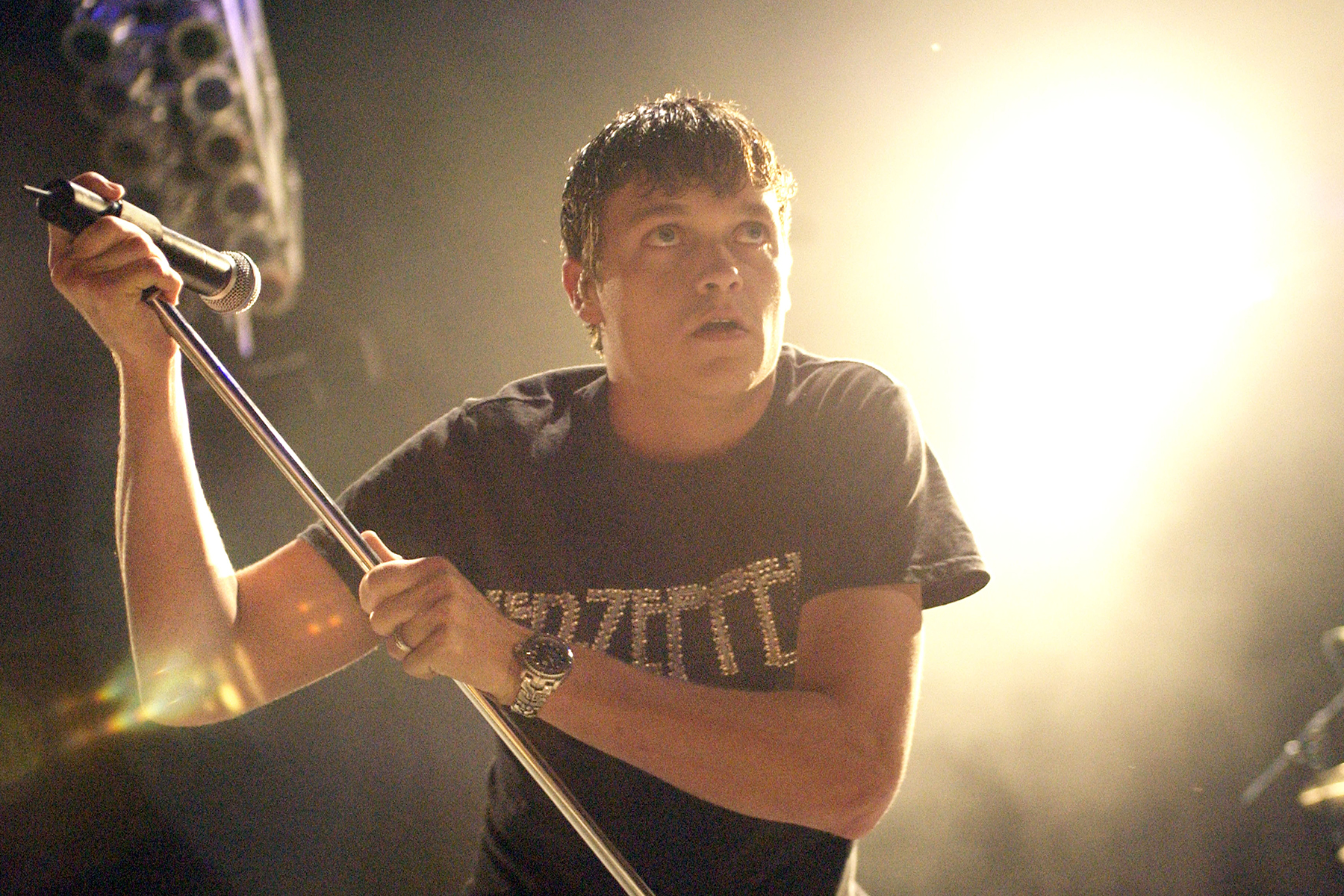
HangupsMusic.com – Escatawpa, Mississippi,
The music world mourned the passing of Brad Arnold, the indelible frontman of 3 Doors Down, who succumbed to renal cell carcinoma on February 7th at the age of 47, following a nine-month battle with a stage IV diagnosis. His death sent ripples of sorrow through the industry and among countless fans, prompting a cascade of tributes that painted a picture of an artist whose impact transcended his chart-topping hits. From fellow musicians to devoted listeners, the overwhelming sentiment was one of loss for a man remembered not just for his distinctive voice and poignant lyrics, but for a profound ability to connect with people from all walks of life, often described as a unifying force.
Arnold’s journey from small-town Mississippi to global rock stardom was vividly encapsulated by a memorable afternoon in May 2001. Clad in a simple black Led Zeppelin tee and jeans, the then-emerging rock star commanded the vast expanse of Washington, D.C.’s RFK Stadium. An estimated 60,000 strong crowd watched as he gripped the microphone, launching into the driving riffs of "Duck and Run," 3 Doors Down’s third consecutive No. 1 Mainstream Rock radio single. This performance at HFStival, sharing the bill with rising acts like Coldplay and Linkin Park, and established names such as Weezer, marked a pivotal moment. Yet, the celebration backstage wasn’t fueled by typical rock and roll excess, but by quiet camaraderie with family who had traveled from Escatawpa for Memorial Day weekend. Just three days later, their debut album, The Better Life, achieved Platinum status, eventually soaring to seven million units sold in the U.S., cementing their place in rock history.
The news of Arnold’s passing unleashed an emotional torrent across social media and live stages. Country music sensation Hardy paid homage by singing the chorus of 3 Doors Down’s 2003 smash hit "Here Without You"—a track that soared to No. 5 on the Billboard Hot 100—during his London, Ontario, performance. Tributes poured in from contemporaries including members of Creed, Seether, Three Days Grace, and Shinedown, all acknowledging Arnold’s genuine warmth and impact over his quarter-century in the limelight. Kenny Vest, a long-standing friend and the radio programmer at Biloxi, Mississippi’s WCPR-FM who famously broke "Kryptonite" and helped the band secure their record deal, fondly recalled Arnold: "He was just one of those individuals everyone gravitated towards. Brad was a humble country kid with an innate gift for songwriting, and I don’t think he ever fully grasped the magnitude of his talent."
Indeed, the band’s initial success with "Kryptonite" was a testament to Arnold’s raw, unpolished talent. The track, initially a demo, resonated deeply with listeners, propelled by its relatable themes and catchy, yet powerful, instrumentation. It signaled a new wave in post-grunge, a sound that blended hard rock’s aggression with alternative’s melodic sensibility. 3 Doors Down, under Arnold’s leadership, would go on to sell over 30 million albums worldwide, solidifying their legacy as one of the most successful and enduring acts of the post-grunge era. Their music, characterized by Arnold’s distinctive vocal delivery and introspective lyrics, became the soundtrack for millions, speaking to feelings of introspection, longing, and resilience.
However, the band’s trajectory was not without its profound challenges and heartbreaks. Alongside their triumphs, 3 Doors Down endured a series of personal tragedies, some self-inflicted. In 2013, co-founding bassist Todd Harrell faced vehicular homicide charges following a fatal accident near Nashville, admitting to driving under the influence. Harrell departed the band the following year and was subsequently sentenced to two years in prison in 2015. His legal troubles continued, leading to another ten-year sentence in 2018 for possession of a firearm as a convicted felon, casting a shadow over the band’s otherwise celebrated career.
Tragedy struck again around the same period when original guitarist and co-founder Matt Roberts, who had left 3 Doors Down in 2012 due to undisclosed health issues, tragically died of an accidental drug overdose in 2016 before a scheduled performance in Wisconsin. These events undoubtedly took a toll on Arnold and the remaining band members, forcing them to navigate immense personal loss and public scrutiny while striving to maintain their musical output and connection with fans. Through it all, Arnold remained a steadfast presence, grappling with these difficulties while continuing to evolve personally and artistically.
Arnold’s personal evolution included a profound spiritual awakening and a journey to sobriety. In May 2023, he publicly announced his stage IV kidney cancer diagnosis, facing it with unwavering faith. "We serve a mighty God, and he can overcome anything. So I have no fear," he shared on Instagram, a sentiment that underscored the deep Christian faith that increasingly defined his later years. This spiritual anchoring became particularly pronounced after he achieved sobriety in 2016, a triumph he openly credited to divine intervention, with an earthly assist from Country Music Hall of Famer Charlie Daniels, who had become a mentor and friend. This personal transformation imbued his already heartfelt lyrics, which often explored themes of self-doubt, longing, and perseverance, with an even deeper resonance for his audience.
Beyond his music and personal struggles, Arnold and his bandmates were also notable for their publicly expressed right-leaning political views, deeply rooted in their rural Mississippi upbringings. While 3 Doors Down typically refrained from overtly political statements on stage, their alignment with conservative viewpoints was clear. They cultivated a dedicated fanbase within the Armed Forces and at NASCAR events. The band filmed the music video for their 2002 hit "When I’m Gone" aboard the USS George Washington and began performing for troops stationed overseas through the USO the same year. Their participation extended to the 2012 Republican National Convention and, most notably, Donald Trump’s first inauguration in 2017, alongside Toby Keith and Lee Greenwood. This particular appearance drew significant media attention and polarized some segments of their fanbase.
Arnold, however, consistently framed his involvement as an act of patriotism, rather than political endorsement. "Man, it’s all about America. We’re proud to be here," he told TMZ outside the Lincoln Memorial prior to the 2017 performance. While he did not explicitly comment on the sitting administration, his alignment with the MAGA movement became increasingly evident in later years. In 2022, he shared a photo of himself holding an assault-style rifle customized with a "MAGA-zine" featuring Trump’s face, exclaiming, "Is that not the greatest ever?!?" Two years later, following an assassination attempt on then-candidate Trump at a Pennsylvania rally, Arnold posted his support for the 2024 election, captioning a widely circulated image of Trump with a raised fist, "Trump 2024."
Despite these strong political declarations, those closest to Arnold maintained that his convictions never translated into animosity or division. "I remember him saying once that everyone has the right to their own perspective, and he wished people weren’t so harshly judged for their views, whether left or right," Vest recounted. "He simply believed we are all Americans. He would never allow differing beliefs to diminish his regard for a person or a fan." This sentiment was a recurring theme in the recollections of his friends, painting a picture of a man who genuinely respected individual autonomy, even when his public persona might suggest otherwise.
This unifying spirit shone brightest in his interactions with fans. In the days following his death, social media overflowed with personal tributes, including heartwarming videos of Arnold connecting with individuals facing hardship. One video, predating his own diagnosis, captured him encouraging a young fan battling cancer, offering words of hope and compassion. In another touching instance, he serenaded a fan with "Your Arms Feel Like Home" from 3 Doors Down’s 2008 self-titled album, after her cancer diagnosis prevented her from attending a concert. These moments underscored his authentic empathy and the personal touch he brought to his role as a public figure.
Arnold’s generosity extended to the music scene of his native Mississippi Gulf Coast. In the late nineties, 3 Doors Down had cultivated such a devoted local following that label executives Monte Lipman of Universal and Jason Flom of Lava/Atlantic personally journeyed to meet them. Once the band achieved mainstream success and gained influence over their opening acts, they consistently championed emerging regional talent. They brought bands like Louisiana’s 12 Stones (known for Paul McCoy’s feature on Evanescence’s "Bring Me to Life") and South Mississippi’s Atomship and Fall As Well along for the ride. Under the guidance and financial support of Harrell and guitarist Chris Henderson, Fall As Well secured a single deal with Universal for "Lazy Eye," which found its way onto rock radio charts.
Mikey Boucher, bassist for Fall As Well, fondly recalled their touring experiences: "When we opened for them, they were always there on the side of the stage, watching us. It wasn’t the typical rock-star pretension. It was more like, ‘Come on, let’s hang out and have a good time – we can’t even believe we’re here, so come on.’ Brad was a truly down-to-earth guy." Jason Robbins, Fall As Well’s drummer, echoed this sentiment, adding, "Some of my greatest memories, things normal people don’t get to experience – like touring, having songs chart, playing huge shows – he was a major reason all that happened."
In an interview promoting the 20th anniversary of The Better Life, Arnold offered a profound insight into his philosophy on music and creativity, explaining why he encouraged fellow musicians and fans to pursue their passions with vigor and "for the right reasons." "You hear a lot of people say, ‘I started playing guitar for the girls.’ I never did that. I played the drums because I never remember not beating on something," he shared with a chuckle. He then added, "If someone is truly passionate, don’t worry about how many people ever hear it. If you love it, and if it acts as a pressure valve inside you… to put it on paper, or let it out, or sing it in a note, you are succeeding… If people like it, fantastic. If they don’t, the right person just hasn’t heard it yet." This deeply personal view underscored his belief in the intrinsic value of artistic expression, independent of commercial success.
In his final conversation with Kenny Vest, Arnold’s lifelong friend, the two reminisced about the band’s humble beginnings. The Christian faith that had guided Arnold since his youth was a prominent theme, especially after his triumph over alcoholism—a victory he attributed to divine grace, bolstered by the mentorship of Charlie Daniels. This spiritual grounding, Vest observed, had reshaped the interpretation of the plain-spoken lyrics Arnold had written about self-doubt, yearning, and perseverance, giving them a new depth for millions of fans.
To the very end, Brad Arnold retained the wide-eyed wonderment that had characterized his early days on stage. "The last time I actually spoke to him, we were talking about ‘Here Without You’ reaching a billion views on YouTube," Vest recalled. "He thought that was the coolest thing ever." It was a fitting final reflection for an artist who, despite achieving monumental success and navigating profound challenges, never lost touch with the simple joy of creating music and connecting with people, leaving behind a legacy as a powerful voice and a genuine spirit.