
 By admin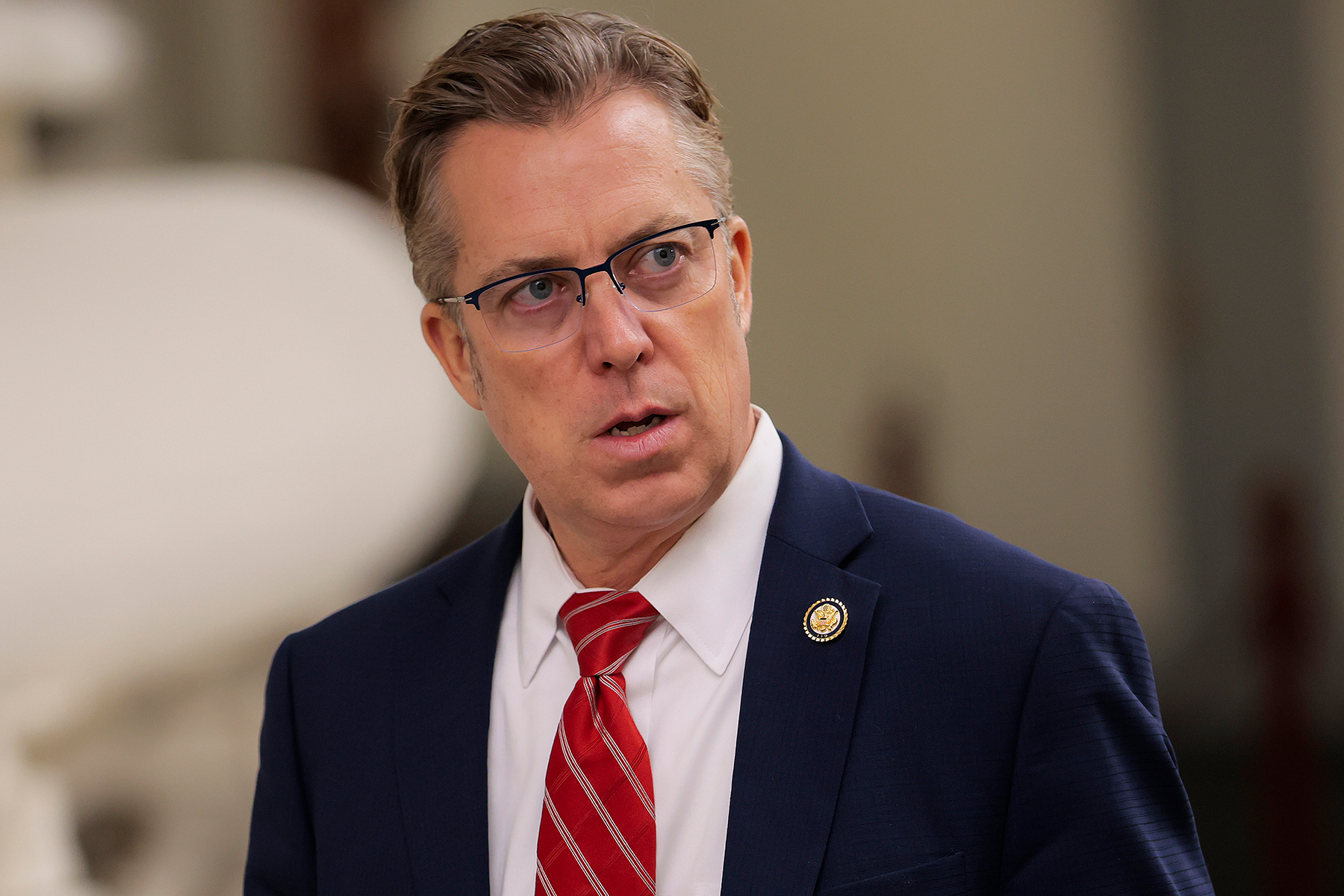
HangupsMusic.com – The political landscape in Washington D.C. and across the United States is currently marked by a striking and concerning trend: an apparent escalation in anti-Muslim sentiment and rhetoric emanating from segments of the Republican Party. As the nation grapples with declining presidential approval, persistent economic pressures impacting American households, and the continued engagement in protracted conflicts abroad, a growing number of Republican figures appear to be leveraging overt Islamophobia as a strategic tool. This approach, reminiscent of post-9/11 anxieties, seeks to galvanize a politically fatigued base, suggesting a tactical return to a familiar, albeit divisive, playbook from earlier decades, now amplified by the ubiquitous reach of online platforms.
This week, the spotlight fell sharply on Capitol Hill following a series of inflammatory anti-Muslim pronouncements by Representative Andy Ogles of Tennessee. Known for his staunch "MAGA" hardliner stance, Ogles has cultivated a public persona less focused on traditional legislative duties and more on deploying provocative "culture war" statements designed to capture media attention. His recent social media activity represents a significant intensification of this strategy. On Monday, Ogles provocatively asserted, "Muslims don’t belong in American society. Pluralism is a lie," a statement that immediately drew widespread condemnation.
This post was not an isolated incident but rather the latest in a pattern of Islamophobic content shared by the congressman. His social media profile on X (formerly Twitter) recently featured a pinned poll questioning users on whether "Islamic immigration is a threat to the United States." Earlier this month, he penned another post declaring "America and Islam are incompatible," advocating for "a Muslim ban." Further fueling the controversy, a graphic shared by Ogles on Monday depicted Islam as a religion synonymous with "rape," "pedophilia," "beheadings," "female genital mutilations," and "jihad," employing extreme and generalized stereotypes. Throughout these incidents, Ogles has received vocal support from other conservative voices, who have defended his remarks against accusations of bigotry.
Regrettably, Ogles is not an anomaly but rather part of an expanding group within the Republican Party that has embraced Islamophobic narratives. This strategy serves a dual purpose: it effectively stokes fear of non-white communities and perceived "cultural otherness," while also diverting attention from other politically sensitive issues, such as the widely unpopular mass deportation policies of the previous Trump administration. Indeed, reports suggest that the White House has even advised Republicans to temper their public discussions around mass deportations, indicating a recognition of their electoral liability.
Last month, Florida Republican Representative Randy Fine also sparked outrage with a public declaration stating that if compelled to choose between "dogs and Muslims," his decision would be "not a difficult one." He subsequently introduced legislative proposals ostensibly aimed at "protecting puppies from Sharia" – a concept that lacked clear definition or practical application. More recently, Fine appeared on Newsmax, where he called for the deportation of New York City Mayor Zohran Mamdani, who is Muslim. "I have one word: deport," Fine stated emphatically, adding, "The fact of the matter is Mamdani hates America. He should be stripped of his citizenship and deported. Everybody apparently forgot 9/11 who voted for him." These comments reflect a willingness to directly link a politician’s faith to baseless accusations of disloyalty and past national tragedies.
Former President Donald Trump has also consistently leaned into disparaging rhetoric against Muslim communities and activists. During his administration, he targeted Somali-Americans in Minnesota, many of whom hold legal status, as part of his broader immigration crackdown. In a December Cabinet meeting, Trump infamously referred to Somalian migrants as "garbage" being allowed into the country. His administration also controversially revived the "Muslim ban," a policy that restricted immigration from several Muslim-majority countries, initially implemented during his first term. Furthermore, his administration has been criticized for targeting Palestinian immigrants and activists as part of broader enforcement efforts, particularly those critical of Israeli policies.
Beyond individual statements, the Republican Party is also seeing organized efforts to oppose Islam. Corey Saylor, the research and advocacy director at the Council on American-Islamic Relations (CAIR), noted to Rolling Stone that Ogles’ language closely mirrors that emanating from members of the "Sharia Free America Caucus," since its establishment in December. This caucus, founded last year by Texas Representatives Keith Self and Chip Roy, now boasts over 40 Republican members. Its legislative proposals have included measures that would effectively ban the practice of Islam in the United States and prohibit Muslims from immigrating to the country. Representative Self has previously asserted that Muslims are "tearing the fabric of American values like faith, family, and freedom," illustrating the caucus’s foundational ideology.
This institutionalized Islamophobia is not an abrupt development but rather the culmination of a simmering resurgence of anti-Muslim bigotry that has been brewing across the nation for some time. Edward Ahmed Mitchell, CAIR’s Deputy Director, observed the initial signs of this resurgence over a year ago. "We started seeing the claim that Muslims are trying to take over the country and impose Sharia law, that all American Muslims are part of the Muslim Brotherhood and a secret plot to take over America, that Muslim private schools have to be shut down, that mosques can’t be trusted, that Muslims are creating Sharia enclaves," Mitchell explained, highlighting a pattern of conspiratorial narratives designed to demonize Muslim communities.
In Texas, Republican Governor Gregg Abbott and state lawmakers launched a highly publicized anti-Muslim campaign that focused on a Muslim-centric community development near Dallas, labeling CAIR a "foreign terrorist organization." This campaign led to a wave of anti-Muslim legislative initiatives and established a blueprint, endorsed by figures like Steve Bannon, for other states seeking to exploit xenophobic sentiments ahead of potentially challenging midterm elections for the GOP.
"It’s an election year. Every election year we expect to see some rise in anti-Muslim rhetoric, because politicians in certain states and in certain races see the Muslim boogeyman as a helpful way to get votes," Mitchell further elaborated, connecting the trend to electoral cycles. He also pointed out that the ongoing conflict in Gaza has contributed to a significant increase in anti-Muslim bigotry. "People feel much freer to say what’s on their mind than they might have five years ago. Whether it’s [Rep.] Randy Fine, or [Rep.] Keith Self and others, the Republican Party is dominated by Trump, someone who has a history of anti-Muslim rhetoric," Mitchell concluded, underscoring the influence of the former president’s discourse.
A recent investigation by The Washington Post further solidified these observations, revealing that since the beginning of 2025, over 100 members of Congress have referenced Muslims or Islam in their social media posts. Alarmingly, the report found that "two-thirds of those posts have mentioned radical Islam, Sharia law, extremism or terrorism," indicating a pervasive conflation of the faith with threats to national security.
The public’s understanding of "Sharia law" in the United States is often profoundly influenced by post-9/11 anxieties surrounding Islamic extremism, leading to a significant divergence from its actual religious meaning. Mitchell clarified this misconception: "Sharia is an Arabic word that literally means the path. It refers to the rules that Muslims follow. So when Muslims pray five times a day, or fast in Ramadan, or don’t drink alcohol or don’t eat pork, we are all following Sharia. Just like a Jewish person who follows Halakha, or a Christian who attends mass and follows canon law."
While the United States operates as a secular nation, with governmental bodies not enforcing religious laws pertaining to criminal justice, trade, or commerce, Republicans frequently express exaggerated concerns about the supposed threat of Muslims imposing Sharia law. Ironically, the same party has simultaneously championed efforts to introduce the teaching of the Bible and the Ten Commandments into public, secular education systems. "I don’t think they really believe that Muslims are trying to impose Islamic law on everyone, nor do they think it’s possible, but it’s politically convenient for them to whip up the Muslim boogeyman," Mitchell asserted, suggesting a calculated political maneuver rather than genuine concern.
Despite months of similar inflammatory rhetoric from other lawmakers, which was largely met with silence from within the GOP, Ogles’ recent comments finally elicited a modicum of internal party pushback. Senator Thom Tillis (R-N.C.) told Huffpost that Ogles’ statements were "ridiculous," arguing that "once you cite one religion" for expulsion, "then you start citing multiple religions, right? That’s just not what America is." Representative Don Bacon (R-Neb.) echoed this sentiment to Axios, stating, "the Constitution says there can be no religious litmus test for those holding public office or government jobs, and I think that applies to citizenship as well."
However, predictably, certain factions within the MAGA base, and indeed the party’s leadership, have rallied to defend the indefensible. House Speaker Mike Johnson (R-La.) notably declined to condemn Ogles’ remarks, instead telling reporters that "there’s a lot of energy in the country, and a lot of popular sentiment, that the demand to impose Sharia law in America is a serious problem." This response from the Speaker effectively lends credence to the unfounded fear-mongering.
The notion that "Sharia law" poses a significant threat to American society is demonstrably false and has never been a genuine concern in the nation’s history. The true issue, according to Saylor, lies in the Republican Party’s sustained assault on a specific religion. He contends that "many people in the higher levels of the Republican Party would be willing to completely abandon the ideals of the founding fathers and go back to this notion that America is for people who think a certain way, look a certain way, worship a certain way, and trace their heritage to certain places." This stance reflects a fundamental departure from the pluralistic values upon which the United States was founded. It represents a cyclical struggle that American minorities have consistently faced since the nation’s inception, and the current trajectory of the Republican Party appears intent on dismantling any progress towards a more inclusive society.