
 By Azzam Bilal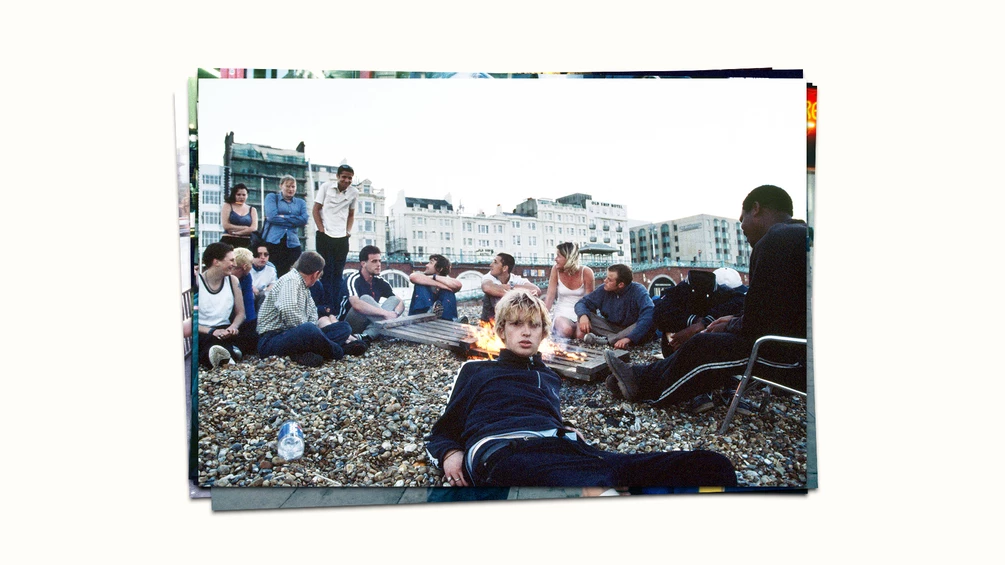
HangupsMusic.com – London, The summer of 1998 remains a pivotal chapter in the history of British nightlife, representing a period when the explosion of rave culture had matured into a diverse landscape of superclubs, niche underground residencies, and a nationwide obsession with the dancefloor. While the history of this era is often told through the lens of strobe-lit midnights and sweat-drenched warehouses, photographer Mischa Haller chose to document a different, more vulnerable side of the experience. His seminal work, Not Going Home, captures the fragile, euphoric, and often surreal hours between 4:00 AM and 8:00 AM—a time when the music has stopped, but the energy of the night refuses to dissipate. As the collection enters its third edition, the imagery serves as more than just a nostalgic retrospective; it acts as a sociological study of a pre-digital Britain caught in the "afterglow."
The genesis of the project was rooted in a professional assignment for Minx, a short-lived but spirited magazine often described as a female-centric counterpart to the "lad mags" of the era. Haller, a Swiss-born photographer, was tasked with covering the clubbing beat. However, he found himself drawn away from the peak-time chaos of the dancefloor and toward the quiet, eerie stillness of the Sunday morning streets. He began setting his alarm for the dead of night, stepping out into cities like London, Birmingham, and Brighton just as the sun began to threaten the horizon. Haller recalls these moments as possessing a unique, deserted beauty—a world where the usual urban hustle was replaced by a soft, breaking dawn and the scattered remnants of the night before.
The resulting photographs, shot exclusively on slide film, possess a distinct aesthetic quality that digital photography struggles to replicate. Slide film—which produces a positive image directly on the transparent base—yields a grainier, softer texture with a specific color saturation that mirrors the bleary-eyed state of Haller’s subjects. This technical choice enhances the atmospheric weight of the collection, wrapping the clubbers in a hazy, dreamlike light that feels synonymous with the "come-down" experience. In these frames, the harsh reality of a Sunday morning is filtered through the lingering warmth of a Saturday night, creating a visual language that is both gritty and ethereal.
One of the most striking aspects of Not Going Home is its documentation of the social rituals that defined the late-90s after-hours scene. In Birmingham, Haller followed two young men to a local institution known as Mr Egg. A legendary greasy spoon that specialized in egg and chips, Mr Egg served as a sanctuary for those whose nights had ended but whose appetites had just begun. Haller’s photograph of the pair interacting with a waitress captures a fleeting sense of community; the staff and the clubbers existed in a symbiotic relationship, both weary from the night’s work and play, sharing a quiet moment over cheap breakfast before the "real" world woke up.
In London, the search for sustenance took on a more nomadic quality. Haller recalls following a group of young women through the streets of the capital as they hunted for an open McDonald’s. After finding their first choice shuttered, they engaged with local street sweepers for directions—a scene that Haller captured with a sense of gentle humor. This interaction highlights a vanished era of navigation, where information was gathered through spontaneous conversation rather than a smartphone screen. Years later, one of the women in the photograph contacted Haller, expressing her joy at seeing her younger self immortalized in a moment of pure, unscripted camaraderie.
The collection also moves south to the coast, where Brighton’s beaches became a natural extension of the dancefloor. In 1998, the arches beneath the promenade were home to a thriving club scene, and when the lights came up, the crowd simply migrated to the pebbles. Haller’s shots of the Brighton beach are among the most iconic in the book, featuring large groups huddled around small fires in the early morning chill. One particularly resonant image features a young man sitting prominently at the front of a group, possessing an air of quiet defiance and ownership over the space. It is an image of youth at its most untethered—free from the constraints of work, responsibility, and the surveillance of the modern age.
This "pre-phone" element is central to the book’s enduring appeal. In the late 90s, the absence of mobile technology meant that clubbers were entirely present in their environment. There were no selfies to stage, no social media feeds to update, and no way to track friends other than by staying by their side. This lack of digital distraction allowed for a type of uninhibited behavior that Haller captured with precision. From a man passed out on a London-bound train—his head lolling against a window plastered with 90s-era newspapers—to a girl proudly displaying a "Strawberry Sundae" tattoo outside a Vauxhall club, the subjects are unselfconscious. They are not performing for a global audience; they are simply existing in the moment.
The book also touches on the aesthetic of the era’s "hard dance" scene. Outside the legendary Strawberry Sundae club night in Vauxhall, Haller encountered the devotees of a subculture that thrived on high-energy music and a fierce sense of loyalty. The woman showing off her tattoo was not just a casual attendee; the club was her lifestyle, a vital part of her identity. This level of devotion is a recurring theme throughout Not Going Home. Whether it is a group of ravers sitting outside a convenience store with a Teletubby doll or women in high-fashion club gear leaning against litter-strewn benches, there is a sense that these people have found a home in the night that the daylight hours cannot provide.
The presence of litter and urban decay provides a stark, realistic backdrop to the glamour of the clubwear. Haller notes that the specific visual of overflowing bins and scattered flyers is something only visible to those who inhabit the city between 4:00 AM and 5:00 AM, before the cleanup crews erase the evidence of the night’s excesses. This juxtaposition—the glitter and the grit—is perhaps best exemplified in a shot taken at a takeaway called Pizza Paradise. Haller describes the scene as "absolute mayhem," a 5:00 AM carnivalesque atmosphere where drunk and hungry revelers lost all inhibitions, some even licking the windows in a display of sheer, exhausted silliness.
As the third edition of Not Going Home reaches a new generation of readers, its status as a historical document grows. The fashion of 1998—the baggy fits, the sportswear, the experimental textures—has come back into vogue, making the book a point of reference for contemporary style. However, beyond the clothing, it is the spirit of the images that resonates. In an era of hyper-connectivity and curated digital personas, the raw, unfiltered authenticity of Haller’s subjects offers a refreshing contrast. It serves as a reminder of a time when the "afterglow" was a private space, shared only with those who were there to witness the sun coming up over the speakers.
Mischa Haller’s work suggests that the most interesting part of a night out isn’t always the peak of the party, but rather the slow, winding journey back to reality. By focusing on the "not going home" contingent, he captured the essence of a generation that found its freedom in the early hours. As these photographs continue to circulate nearly thirty years later, they stand as a testament to the enduring power of the UK’s clubbing heritage and the beautiful, blurry edges of the human experience. The third edition of the book is not just a collection of photos; it is an invitation to revisit a time when the morning light didn’t signal the end of the fun, but rather the beginning of a different kind of magic.