
 By Azzam Bilal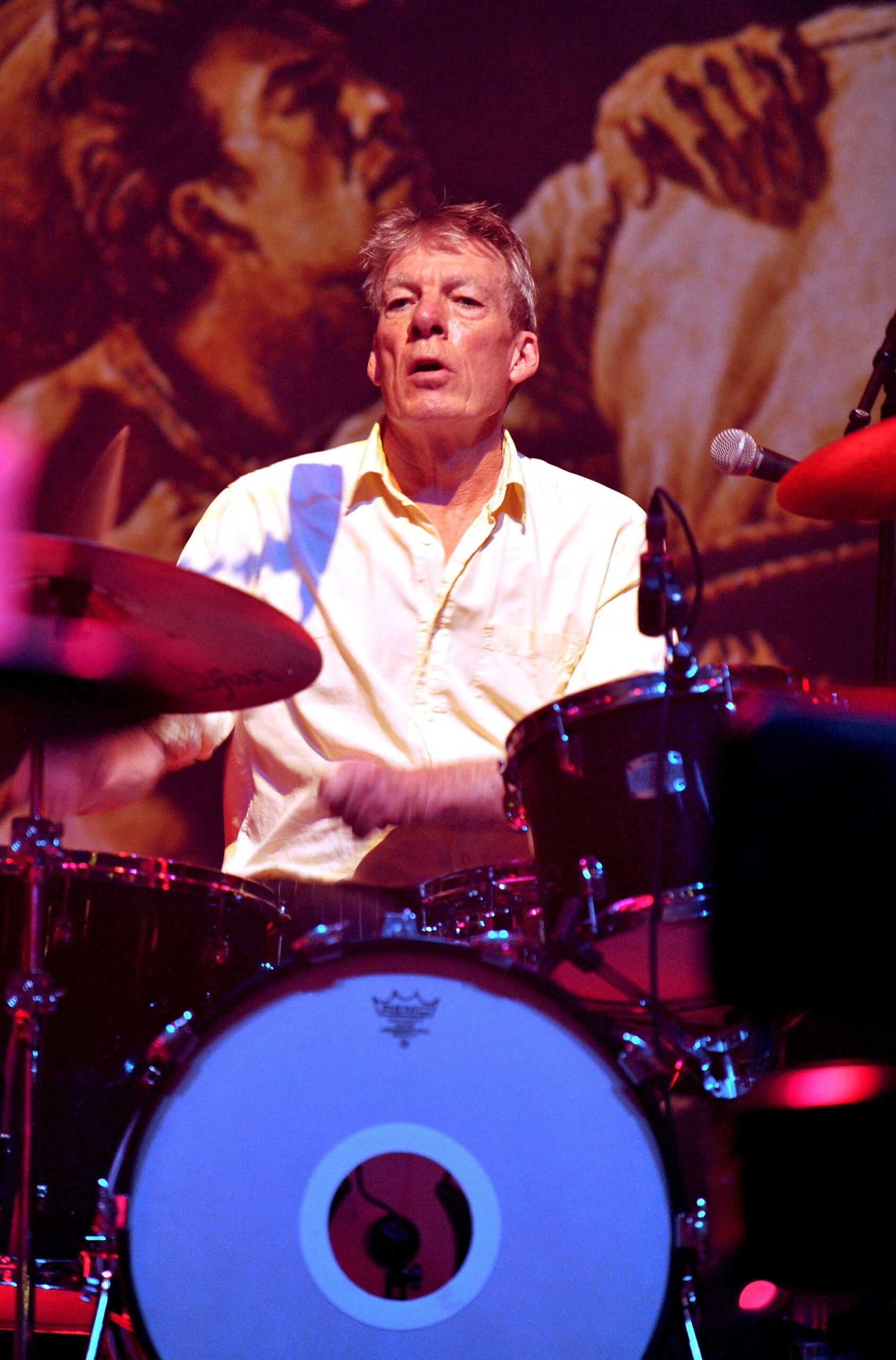
HangupsMusic.com – London, The music world is in mourning following the announcement that Andrew Ranken, the powerhouse drummer whose steady hand and relentless energy defined the sound of the Pogues, has passed away. Ranken, affectionately known to fans and bandmates alike as "The Clobberer," was 72 years old. His death was confirmed by the band on Tuesday, February 10, marking the end of an era for one of the most influential ensembles in the history of Celtic punk and folk-rock. While the specific cause of death has not been released, Victoria Mary Clarke, the widow of the late Shane MacGowan, noted in a heartfelt tribute that Ranken had succumbed after a courageous and protracted battle with illness.
Ranken’s passing comes at a time when the legacy of the Pogues is being revisited with renewed reverence, following the death of frontman Shane MacGowan in late 2023. As a founding member of the group, Ranken was far more than just a timekeeper; he was the structural "heartbeat" that allowed the band’s often-chaotic blend of traditional Irish instrumentation and visceral punk energy to coalesce into something transcendent. His contribution to the band’s discography and their legendary live performances cannot be overstated, as he provided the percussive "warrior beat" that drove their most iconic anthems.
Born in London, Ranken was part of the fertile musical landscape of the late 1970s and early 1980s. He officially joined the group in 1983, when they were still performing under the provocative name Pogue Mahone—an Anglicization of the Irish phrase póg mo thóin, meaning "kiss my arse." Ranken stepped into a lineup that already featured the formidable talents of MacGowan, Peter "Spider" Stacy, and Jem Finer. It was this core unit that would eventually drop the more controversial elements of their name and emerge as The Pogues, a band that would bridge the gap between the gritty streets of London and the rolling hills of Ireland.
Ranken’s arrival was a turning point for the group. While the early iterations of the band were characterized by a raw, acoustic folk sound, Ranken brought a sense of muscularity and discipline to the rhythm section. His style was unique—a hybrid of traditional marching band precision and the aggressive, unpolished spirit of the British punk movement. This duality was essential for the Pogues’ mission to reclaim and reinvent Irish folk music for a new generation. Without Ranken’s driving force, the band’s frantic tempos and raucous energy might have descended into incoherence. Instead, his drums anchored the melodies of the tin whistle, banjo, and accordion, creating a sound that was as sturdy as it was rebellious.
One of Ranken’s most significant contributions to the band’s lore came during the production of their seminal 1985 album, Rum Sodomy & The Lash. Produced by Elvis Costello, the record is widely considered a masterpiece of the genre, featuring classics like "The Old Main Drag" and "A Pair of Brown Eyes." It was Ranken who suggested the album’s title, drawing on a quote often attributed to Winston Churchill regarding the supposed traditions of the British Royal Navy. Ranken later remarked that the phrase seemed to perfectly encapsulate the internal dynamics and lifestyle of the band at the time—a mixture of maritime grit, camaraderie, and self-destructive tendencies. The title became iconic, mirroring the band’s refusal to conform to the sanitized expectations of the folk revival movement.
Throughout the 1980s and early 1990s, Ranken remained a constant presence through the band’s most turbulent and triumphant periods. He played on every record during the band’s "first phase of infamy," including the critically acclaimed If I Should Fall from Grace with God (1988) and Hell’s Ditch (1990). While MacGowan’s lyrical genius and Stacy’s whistle-playing often took center stage, Ranken’s role was foundational. He was the "warrior" in the back, ensuring that the band’s "battle-ready" rhythm never wavered, even when the members themselves were navigating the excesses of fame and the rigors of the road.
Beyond his duties behind the drum kit, Ranken was an occasional songwriter and vocalist, lending his distinct voice to the band’s diverse tapestry. His contributions allowed the group to explore different textures, moving beyond the central narrative voice of MacGowan. His versatility was further evidenced by his work outside of the Pogues. Following the band’s initial dissolution in 1996, Ranken continued to be a vibrant part of the music scene. He lent his talents to various projects, including the Mysterious Wheels and the hKippers, the latter being a quirky, theatrical ensemble that showcased his ability to blend humor with musicality.
When the Pogues reunited in 2001, Ranken was there to reclaim his seat. The reunion years, which lasted until 2014, saw the band performing to massive crowds across the globe, proving that their music had lost none of its potency. For many fans, seeing the original lineup back together—Ranken included—was a testament to the enduring bond of the musicians who had survived the storms of the 1980s. Ranken’s drumming during these later years was as sharp as ever, providing the necessary backbone for a band that had become an institution.
The tributes that have poured in since the news of his death highlight the deep respect his peers held for him. Victoria Mary Clarke’s social media post was particularly moving, as she described the "warrior drumbeat" Ranken developed while playing in the "underground illegal drinking joints" of the band’s early days. She emphasized that the Pogues’ unique identity was inextricably linked to Ranken’s ability to brave the chaos of "beer-swilling, pogo-jumping" crowds. He was a musician who didn’t just play the music; he lived it, embodying the grit and resilience that the Pogues stood for.
Ranken’s legacy is also defined by his character. Often described as a steadying influence within a notoriously volatile group, he was the "Clobberer" not just because of the strength of his strike, but because of his unwavering presence. In a band known for its poetic descriptions of the marginalized and the downtrodden, Ranken was the physical manifestation of that struggle—a man who worked the drums with a workmanlike dedication that never sought the spotlight for its own sake, but rather for the sake of the song.
As the music community reflects on the loss of Andrew Ranken, it is clear that his influence extends far beyond the confines of the Pogues. He helped redefine what it meant to be a folk drummer, proving that tradition and rebellion could coexist on the same stage. His rhythms will continue to echo in the pubs of North London, the concert halls of Dublin, and wherever people gather to sing along to the timeless songs he helped create.
With Ranken’s passing, another light has gone out in the constellation of the original Pogues. However, the "heartbeat" he provided for over four decades remains audible in every recording and every memory of their storied career. He leaves behind a body of work that serves as a masterclass in rhythmic storytelling and a reminder of the power of a simple, honest beat to move the soul. Andrew Ranken may have played his final set, but the battle-ready rhythm he forged will never truly fall silent. He is survived by his family, his bandmates, and a global community of fans who will forever raise a glass to the man who kept the beat for the most beautiful, broken, and brilliant band of his generation.