
 By admin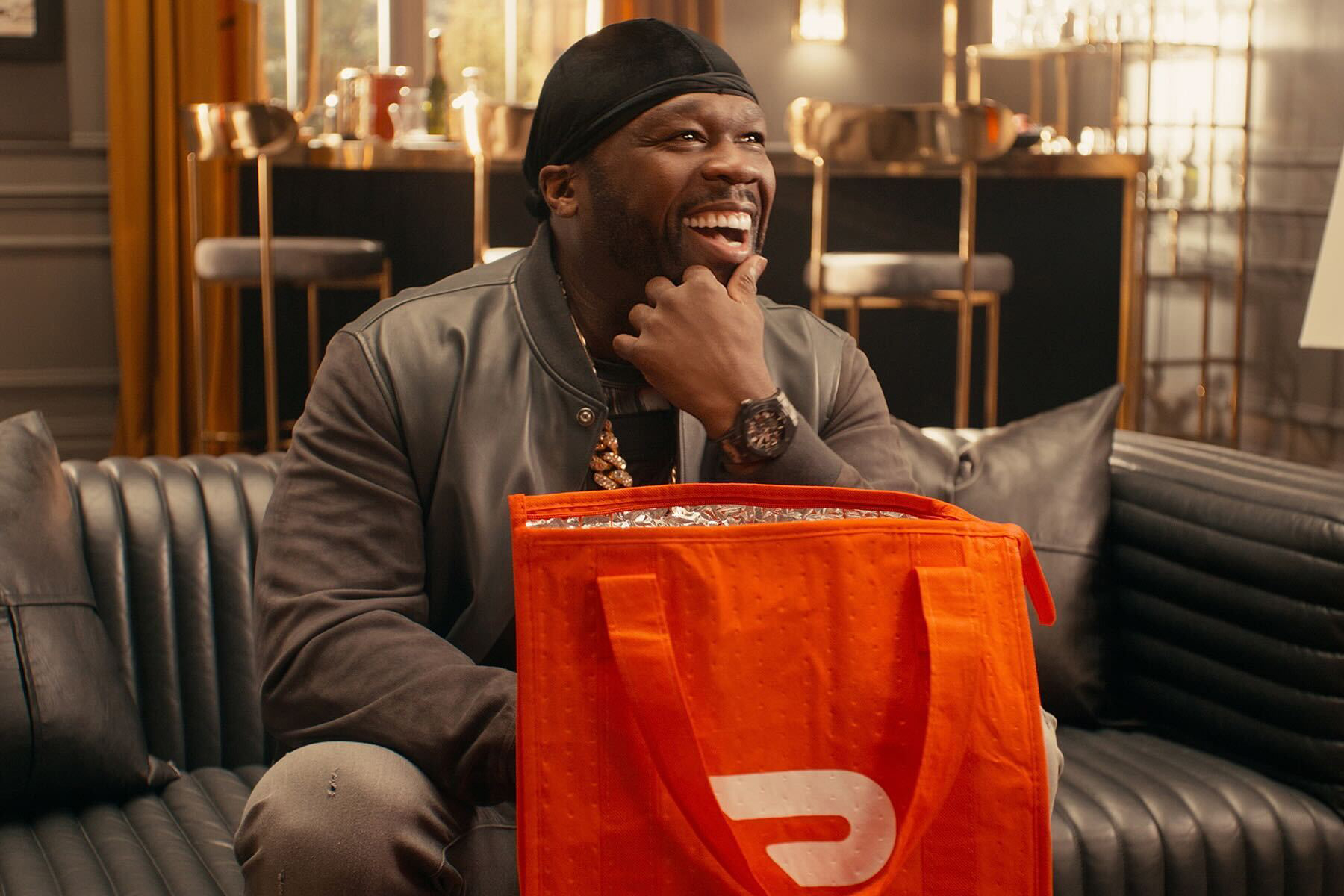
HangupsMusic.com – New York, Curtis "50 Cent" Jackson has long cemented his status as a titan of hip-hop, not just through his groundbreaking music, but by cultivating an unapologetically confrontational public persona. He thrives on verbal sparring, often articulating sentiments that others might silently harbor, constrained by concerns of reprisal or social disruption. This commitment to raw honesty and audacious defiance has been a cornerstone of his illustrious career. His recent involvement as executive producer and financier of Sean Combs: The Reckoning, a Netflix docuseries that meticulously detailed abuse allegations against his long-standing industry rival Diddy, stands as a prime illustration of this characteristic fearlessness.
Jackson’s penchant for engaging in public disputes, frequently preempting their full escalation, extends across both digital and traditional platforms. It’s a strategic approach that has become synonymous with his brand. This reputation for masterful provocation was precisely what DoorDash sought to leverage when they enlisted him for their high-profile Super Bowl advertising campaign. Gina Igwe, Vice President and Head of Consumer Marketing at DoorDash, articulated the synergy in a press release: "The Super Bowl is a day charged with intense emotions, fierce competition, and plenty of playful banter. We’re now amplifying that energy by engaging a cultural icon and undisputed expert in ‘beef,’ 50 Cent."
In a recent virtual discussion, Jackson delved into the specifics of this commercial partnership, offered insights into his expansive film and television ventures, mused on his musical trajectory, and shared broader perspectives on his enduring impact.
The annual Super Bowl, a colossal live spectacle, captivates even those outside the realm of dedicated football fandom. "It’s an electric atmosphere," Jackson remarked, "People tune in for the entire experience, not just the game. I’m particularly keen to see how the halftime performance unfolds with artists like Bad Bunny. My collaboration with DoorDash for this event has been exceptionally rewarding because they possess a nuanced understanding of contemporary culture. They grasp how audiences engage with content online and the dynamics of trending conversations. Many brands struggle to sustain public interest, but at its core, it’s about pure entertainment."
Jackson’s unwavering commitment to being outspoken and his readiness to challenge norms have been integral to his identity. He attributes this, in part, to the inherent competitive spirit of hip-hop. "The genre itself necessitates a certain level of battle," he explained. "At various junctures, a lyrical contest emerges, pushing artists to elevate their craft, to create their most compelling work with swift, incisive responses. The recent exchange between Drake and Kendrick Lamar offers a powerful contemporary example. Initially, it felt like a creative sparring match, devoid of genuine threat. But then, when language typically associated with real-world conflict and danger began to surface, it shifted. Still, in that specific instance, I never perceived any actual peril; it was largely an artistic back-and-forth, fascinating to observe."
While his outspokenness has largely propelled his career, there have been instances where it yielded unintended consequences. "I’ve engaged in rivalries with artists who weren’t on my level," Jackson acknowledged. "I’ve responded to provocations, accepting challenges from individuals whose success was nowhere near mine. In such scenarios, it inadvertently benefits them, granting them a significant surge in attention or cultural momentum. Some artists employ this tactic purely to elevate their own notoriety, and when I engage, it often works in their favor."
Beyond music, Jackson has forged an impressive empire in film and television. His Power franchise stands as a monumental success, with Power Book: Force recently concluding its run and Raising Kanan slated for a new season. Interestingly, the prequel series Raising Kanan draws its inspiration from The Kanan Tape, a mixtape Jackson released a decade ago. This cyclical influence prompts the question of whether fans can anticipate another musical offering. "I nearly dropped an entire project recently," he revealed, referencing a rap podcast incident where Jim Jones criticized his involvement in the Combs documentary. "My policy has always been to address individuals only if they’ve directly provoked me or if a genuine issue exists. Their response to my truthful observation about them not settling their debts was to engage in rap. And I thought, ‘Okay, because they’re rappers…’ "
He continued, reflecting on the evolving landscape of New York hip-hop: "The entire scene here is morphing into a podcast ecosystem. Soon, there won’t be anyone left for them to interview because they’re all podcasters themselves, constantly seeking out other podcasts to interview each other. This blurs the lines: Do I respect them as journalists or as artists? When they speak, they’re offering an opinion, often an unfiltered one. I might internally disagree, but I generally refrain from comment because we’re all artists. I don’t feel compelled to publicly dissect every cultural observation. When those boundaries become indistinct, it invariably generates a different kind of energy. Even if I were to respond to those records, I believe it would primarily serve their benefit. Considering their career achievements versus my own, there’s simply no basis for us to be in any form of competition. If your business is selling music, then the objective is to create commercially successful records. If that’s not the goal, then I don’t understand it. You can excel in every other aspect, but my sole interest has always been crafting impactful music that resonates and sells."
Jackson confirmed the existence of unreleased material. "I have music that I’ve held back, tracks I’ve set aside because I felt they weren’t right for a particular period, even though I created them," he shared. "When I play these for close associates in the studio, they often ask, ‘Why didn’t you release that?’ My response is, ‘For that specific time, it simply didn’t fit.’ Things like tempo can be crucial. I almost didn’t include ‘Many Men’ on Get Rich or Die Tryin’ because its slower pace contrasted with the prevailing boom-bap sound of the era, which favored faster tempos and harder-hitting drums. It was Tony Yayo who insisted that track make the cut."
When pressed on what it would take to unleash this vault of music, Jackson acknowledged the widespread fan desire. "I will make music again. I’m genuinely excited by the sentiment that people want to hear new material from me. However, I also believe that while you can craft exceptional verses, you shouldn’t necessarily aim to have the ‘best verse’ at fifty years old. Hip-hop is fundamentally intertwined with youth culture, and its power often lies in its simplicity. Take Moneybagg Yo’s line, ‘Yo, I cannot fk with these dog hoes/ That’s the bch come with her buddy.’ That line instantly grabbed me. It signaled, ‘Okay, I’m connecting with this right now.’"
He elaborated on the cyclical nature of an artist’s career, suggesting three distinct phases. "There’s the initial, organic phase where you’re new, growing naturally, and gaining an audience for the first time, often without the full infrastructure to support massive success. Then, you reach a point of establishment, consistently delivering hits. Radio stations immediately embrace your new tracks, putting them into heavy rotation because your voice signals a guaranteed hit. The third phase is where things shift. Regardless of how good a new song is, when people hear your voice, they say, ‘It’s cool, but it’s not like the first one.’ This is why artists in hip-hop often refer to their debut album as their best. We rarely get a second chance to capture that initial magic."
Challenging the notion of ageism in hip-hop, the interviewer brought up Nas, who has recently released critically acclaimed projects. Jackson conceded, "If you asked Nas to compare the reception of those recent projects to the impact of his debut album, he wouldn’t say it feels the same. It’s a different kind of appreciation. When you consistently release material, you’re often only as ‘hot’ as your last offering, or your ability to generate interest across other platforms. In my case, I’ve had four shows consistently ranked number one in African-American and Latino households for the past decade. The Power universe alone has maintained that top position for ten years. With that as my standard, I’m not fading from the cultural conversation. I’ll still be part of the awards show narratives, still feature in the jokes, even if I’m not physically present because I haven’t released music that year. When people express a desire to hear from me, they want to see me engage and compete. But even on my worst day, these newer artists can’t truly be compared to me."
He drew parallels to another hip-hop titan: "Consider Jay-Z; when was the last time he directly responded to anyone?" While Jay-Z might drop subtle, veiled references, Jackson noted, "That’s when he’s crafting a record for his own artistic expression. When I decide to release an album, you’ll hear everything I have to say then. But I’m not doing ‘street stuff’ anymore. I’m wealthy; I’m not engaging in foolishness that could land me in jail."
His current creative process is rooted in a different place. "We’re in a new content era, drawing inspiration from different sources," he explained. "What excites audiences now is often the mentality of ’02 or ’03 mixtape Fif, but I’m a different person. I couldn’t have achieved this level of success if I were still thinking the same way. You have to evolve with your material, grow into a new space, and offer something distinct."
On the topic of podcasts, Jackson sees his future in production. "I’ll end up producing podcasts," he stated. "Shows like Fat Joe and Jadakiss’s, which is a Roc Nation venture, illustrate how strategically placed voices can convey messages without direct involvement. Jay-Z, for instance, can have a presence through those channels. You can either be the subject of discussion or the platform itself. But if you listen to many of these podcasts, my name is rarely absent, because content revolving around me invariably boosts engagement. People click on YouTube tabs as soon as they see ’50 Cent’ in the title."
He believes his candidness has influenced the wider rap community. "It’s part of my natural character," he asserted. "It’s the raw energy you get from someone like Casanova, contrasted with the more internal, reserved demeanor of a Jay-Z or Fabolous. Even coming from different backgrounds, they share that trait. You could be in a room with them and not discern their true feelings. Individuals like myself or Casanova, even if they aren’t the biggest names in terms of current momentum, command a significant social presence. When they enter a room, their aura is palpable, and everyone takes notice. It’s an innate quality, not something forced or designed to create conflict." This natural magnetism, he added, is why he gravitates toward artists like DaBaby and the late Pop Smoke. "They possess that inherent presence that commands attention."
Looking ahead, Jackson’s slate of film, TV, and documentary projects is extensive. "There’s so much in the pipeline," he enthused. "Fans can expect an extension of Gilgo Beach Killer: House of Secrets on Peacock. Fightland is in development. I’ve completed a show with Taraji P. Henson, which is my first UK-based production. Then there’s The Accomplice, with Taraji leading the cast, which is soon heading into production. Street Fighter is slated for an October release. I even underwent significant training and lost weight for that role."
His commitment to empowering Black women in his productions is also notable, with stars like Mary J. Blige, Patina Miller, and Taraji P. Henson featuring prominently. Patina Miller recently earned an NAACP nomination for her role. "They have been phenomenal in these shows," Jackson remarked. "It’s one thing to work with them; it’s another to place them in roles of such power that they are impossible to overlook. Patina’s portrayal of Raq in Raising Kanan was incredibly strong. I even playfully pitted her against Taraji, comparing ‘Raq versus Cookie’ (Taraji’s character in Empire), to accelerate public recognition of their equal standing. Taraji has put in an immense amount of work, undeniably. I hadn’t had the chance to collaborate with her on a project until now. I was making these comparisons to gauge public reaction, speaking so highly of Patina’s performance that it became a compelling parallel. Patina initially misunderstood my intention and became upset, feeling the comparison wasn’t necessary. She didn’t grasp that I was trying to elevate her to a similar stature in the public eye, so I backed off. But Taraji has been grinding for years. She even auditioned for the girlfriend role in my 2005 film Get Rich or Die Tryin’. All the success she’s experiencing now is her well-deserved due, a testament to decades of dedication and talent finally receiving widespread recognition."
Reflecting on Street Fighter, a beloved "hood classic," Jackson shared his personal connection. "That’s precisely why I took the role. Street Fighter and Mortal Kombat were the quintessential arcade combat games we played growing up. I was drawn to it, especially Balrog, who I believe was inspired by Mike Tyson—the powerful boxer. I dedicated myself to training, shedding 20 to 26 pounds for the part. We filmed in Australia, and I thoroughly enjoyed the experience. I believe audiences will truly appreciate the character when they see it. I transformed more for that role than many others, even having to regain the weight for another project immediately after."
While he once boxed, a return to the ring for a celebrity match isn’t in his plans. "I enjoy boxing as a general discipline, for fitness, but I don’t need the money for a pay-per-view exhibition. When considering such things, you always weigh the risks versus the rewards. What do I stand to gain, and what could I lose? Given my brand, there’s little benefit. People suggest it when they perceive a mismatch; no one expects me to lose."
This year marks the 25th anniversary of G-Unit’s genesis around 2001, a milestone that prompts reflection on his journey. "It feels incredible," Jackson affirmed. "In the early days, I devoted significant energy to building G-Unit Records and developing other artists. Often, my voice would anchor the choruses on their tracks. I had to evolve from being just a skilled rapper to a proficient songwriter, focusing on song structure, selecting the right production, and crafting compelling hooks to maintain listener engagement. I provided that framework for the entire G-Unit roster. When you think of Tony Yayo’s Thoughts of a Predicate Felon, ‘So Seductive’ comes to mind. For Lloyd Banks’ The Hunger for More, it’s ‘On Fire.’ And of course, Young Buck’s album. Even The Game’s entire debut album benefited from this approach."
He further illuminated his behind-the-scenes influence, recounting an anecdote about LL Cool J’s "Paradise." "L.L. recently commented on me writing the chorus for ‘Paradise.’ Amerie’s vocals on that track were crucial to its hit status, but it took specific vision to get Amerie on board. I recorded the initial vocals, a reference track, then Charmaine re-recorded it so it was a female voice. This particular loop, ‘Rising To The Top,’ was already a classic, sampled by countless rappers, and Trackmasters had already produced it. I realized it would only work if the complete concept was presented to L.L. If you just played the beat, he’d recognize the Keni Burke sample. But with the full idea, he crafted the record, and it became a hit. He made it sound like my contribution was a negative, but I was simply providing the blueprint for success."
From his early days as a lyrical provocateur to his current reign as a multimedia mogul, 50 Cent’s trajectory is a testament to strategic audacity and an unyielding entrepreneurial spirit. His ability to navigate and redefine the cultural landscape, whether through music, television, or calculated public discourse, solidifies his legacy as a truly singular force in entertainment.