
 By admin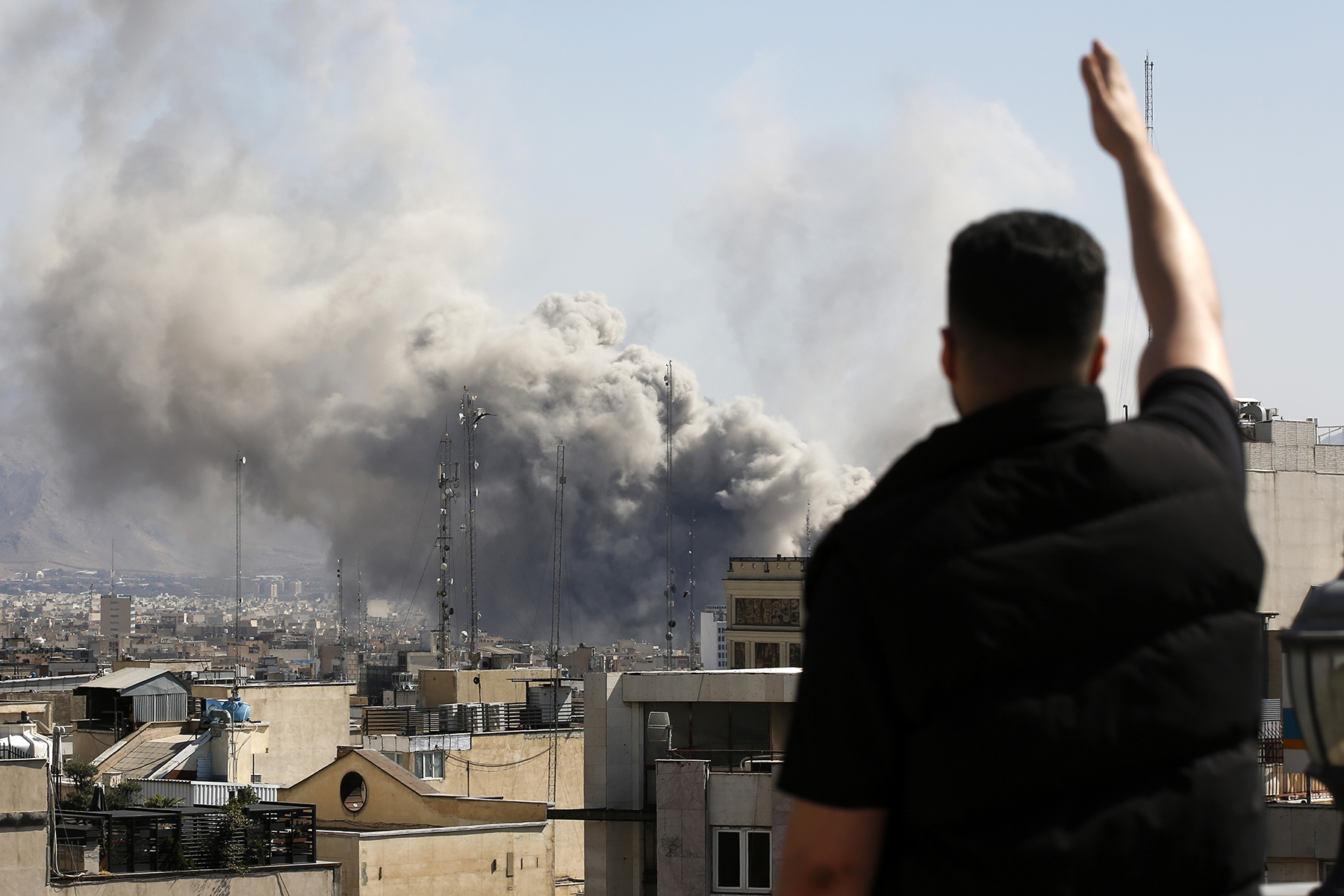
HangupsMusic.com – The sudden escalation of hostilities between the United States, Israel, and Iran over the past weekend has plunged the Middle East into a profound and unpredictable crisis. What began with targeted strikes by American and Israeli forces, notably resulting in the demise of Iran’s long-serving Supreme Leader, Ayatollah Ali Khamenei, has quickly revealed a disturbing absence of clear strategic objectives or a viable endgame from the White House, fueling concerns over the trajectory of this rapidly expanding conflict.
The immediate aftermath of the initial strikes was met with fervent celebrations from vocal proponents of military action, a chorus that echoed the historical observations of figures like World War I poet Robert Graves, who famously described such enthusiastic crowds as "the froth of the city" – those far removed from the brutal realities of combat, yet quick to acclaim its onset. This initial surge of jingoism has since given way to a more somber assessment as the true scope of the conflict begins to unfold.
For nearly five decades, the relationship between the Islamic Republic of Iran and the United States has been characterized by a complex, often clandestine, struggle. This rivalry has manifested in intermittent cycles of tension and violence, navigating the tenures of eight American presidential administrations. The recent actions, however, mark a critical shift, transforming this protracted shadow war into an overt and direct confrontation. Yet, within governmental circles, a cohesive strategy for navigating this open conflict, let alone achieving a definitive resolution, appears conspicuously absent.
Initial justifications for the military offensive quickly unraveled under scrutiny. The Trump administration’s primary rationale—an alleged "imminent threat" of Iranian missile strikes against American assets in the region—was soon contradicted. Congressional briefings reportedly exposed this claim as a misrepresentation, casting doubt on the immediate precipitating factors for the war. Further complicating the narrative, Defense Secretary Pete Hegseth subsequently offered an alternative casus belli, asserting that military action was necessary to dismantle a "conventional shield" protecting Iran’s nuclear program. This revised explanation raised further questions, given previous administration claims of having achieved "total obliteration" of Iran’s nuclear capabilities in earlier strikes. The shifting and contradictory justifications have fueled public skepticism, leaving many to wonder about the true motivations behind the rapid escalation.
Beneath these fluctuating pretexts lies a persistent strategic conviction within Washington, reportedly influenced by the Israeli government, that sustained aerial bombardment and targeted assassinations can transform Iran from a formidable adversary into a pliant, disarmed entity. This belief, perhaps bolstered by the perceived success of operations such as the capture of Venezuelan President Nicolás Maduro – despite his regime remaining intact – suggests a hubristic overestimation of aerial power to induce regime change through sheer force.
However, Iran presents a fundamentally different challenge than Venezuela. While the initial elimination of Ayatollah Khamenei was framed as a significant victory, the Islamic Republic’s governance structure is not merely a cult of personality. Its complex and often oppressive system is deeply entrenched and far less dependent on the life of a single individual. President Donald Trump’s public appeals to the Iranian populace, urging them to seize their freedom amidst falling bombs, reflect a belief that external pressure can catalyze internal revolution. His directive to "stay sheltered" while "bombs will be dropping everywhere" and then "take over your government" reveals a dangerous gamble on the immediate and widespread success of popular uprising.
This "magical thinking" has a troubling precedent. Earlier this year, Trump’s promise of "help" to anti-government protesters across Iran proved hollow. The absence of meaningful American military or logistical support left these demonstrators vulnerable, leading to a brutal crackdown that resulted in thousands of deaths, with some estimates reaching 30,000 casualties. While those protests highlighted genuine structural weaknesses and widespread social and economic grievances within the Iranian regime, the current US approach appears to offer little more than destructive bombardment as a catalyst for change, without a coherent plan for supporting or empowering anti-regime forces on the ground.
Any genuine challenge to "the System," as the Iranian government is known internally, must contend with a formidable and multifaceted security apparatus. This includes not only Iran’s conventional military but also the highly ideological Islamic Revolutionary Guard Corps (IRGC), responsible for protecting the regime, and its extensive network of volunteer paramilitaries, the Basij. The IRGC, having meticulously studied America’s 2003 invasion of Iraq, developed what is known as the "Mosaic Doctrine." As explained by Farzan Sabet, a researcher specializing in the Middle East, this doctrine was designed to ensure the regime’s survivability by decentralizing command and control. "They understood that the leadership could be decapitated either through assassination or precision strikes," Sabet noted, adding that the doctrine "created the capacity for IRGC regional and provincial headquarters to assume responsibility for local security, either in the case of a domestic emergency, or in the case of a foreign hostile threat."
This strategic foresight appears to be playing out in the wake of the "decapitation strike" against Khamenei and other senior leaders. Surviving IRGC and Basij units have reportedly dispersed, operating autonomously within their designated areas of responsibility, thereby complicating efforts to dismantle their command structures and maintaining their grip on internal control. While the CIA reportedly assessed that hardliners would likely assume control in such a scenario, the precise lines of authority and decision-making within Iran may remain opaque for some time, adding another layer of uncertainty to the conflict.
Despite President Trump’s indication over the weekend that he was open to renewed talks and a diplomatic off-ramp, public signals from some Iranian officials suggest a hardening stance and a readiness for a protracted struggle. While Iran’s conventional air force and navy cannot directly challenge the combined might of the US and Israeli militaries, Tehran possesses the capacity for "horizontal escalation" – striking a wide array of targets through its extensive network of proxies, as well as its own arsenal of missiles and drones.
The repercussions of this strategy are already evident, spreading chaos and destruction across the wider Middle East and beyond. Iranian munitions have reportedly impacted targets in at least eight countries, including a British airbase in Cyprus, military installations in Kuwait, critical energy infrastructure in Saudi Arabia, and even luxury hotels in Dubai. Maritime commerce in the Persian Gulf has been severely disrupted, with oil tankers and other vessels attacked, bringing shipping through the Strait of Hormuz – a vital chokepoint for 20 percent of the world’s oil supply – to a grinding halt.
On the ground, Iranian-backed militias in Iraq have launched attacks on facilities in Kurdish-controlled territories and assaulted Baghdad’s Green Zone, leading to clashes with security forces in the capital. The ripple effects have extended to Pakistan, where outrage over Khamenei’s killing has sparked protests and attacks on American consulates, resulting in dozens of fatalities. In Lebanon, Israeli airstrikes, conducted in retaliation for rockets fired by Iran’s proxy Hezbollah, have claimed at least 50 lives.
The human toll of this escalating conflict is rapidly mounting. In Iran, civilian casualties are reportedly in the hundreds, including a tragic incident where over 150 victims, many from a girls’ school, were killed in a strike attributed to the US, though conclusive details remain scarce. The reality of modern warfare dictates that sustained air campaigns, involving hundreds of daily sorties by US and Israeli forces, inevitably lead to significant civilian harm, particularly when targets are located within densely populated urban areas. Iran, for its part, has also inflicted civilian casualties, with at least 10 deaths reported in Israel and a handful in Gulf states from missile and drone attacks.
Military casualties are also climbing. At least six US service members have been killed, with over a dozen wounded in strikes. While Iran has not released its own military casualty figures, Israel estimates that more than 1,000 IRGC members have perished thus far. The Iranian regime, fighting for its very survival, appears determined to expand the regional conflagration, seemingly with the intent of inflicting sufficient pain to compel other nations to demand a ceasefire from the Trump administration.
This current bloodshed adds grim new entries to a historical ledger of death that spans decades. This includes 63 Lebanese and Americans killed in the 1983 US Embassy bombing in Beirut, 346 US Marines, French paratroopers, and civilians in twin truck bombings the same year, 290 passengers aboard Iran Air Flight 655 shot down by the USS Vincennes in 1988, and 176 passengers on Ukrainian Airlines Flight 752 mistakenly shot down by Iranian air defenses in 2020. The ledger also accounts for thousands of Americans and Iraqis killed or wounded by IRGC-proliferated Explosively Formed Penetrators during the US occupation of Iraq, along with countless Israelis, Syrians, and others caught in the crossfire of proxy conflicts. Furthermore, it encompasses the tens of thousands of Iranians tortured, imprisoned, and executed by the Islamic Republic since 1979, and those who suffered similar fates under the US-backed Shah’s Savak security service following the 1953 coup.
While the Iranian regime’s history of atrocities against its own people, its neighbors, and the United States is undeniable, and its eventual downfall may be a just outcome, the current administration’s approach raises serious questions. This administration, which campaigned on principles of common sense, "America First," and a rejection of "forever wars" and "nation-building," now appears to be pursuing a highly revisionist foreign policy. Operating with immense military power but a perceived lack of accountability and a simplistic "good-versus-evil" worldview, it risks entangling the nation in a protracted and devastating conflict without a clear path forward. Skepticism remains high that this new war, however justified its ultimate aims may be, will usher in an era of peace or that the current wave of death and destruction is a worthy price for a nebulous promise of a better future, particularly without a coherent roadmap to achieve it.