
 By admin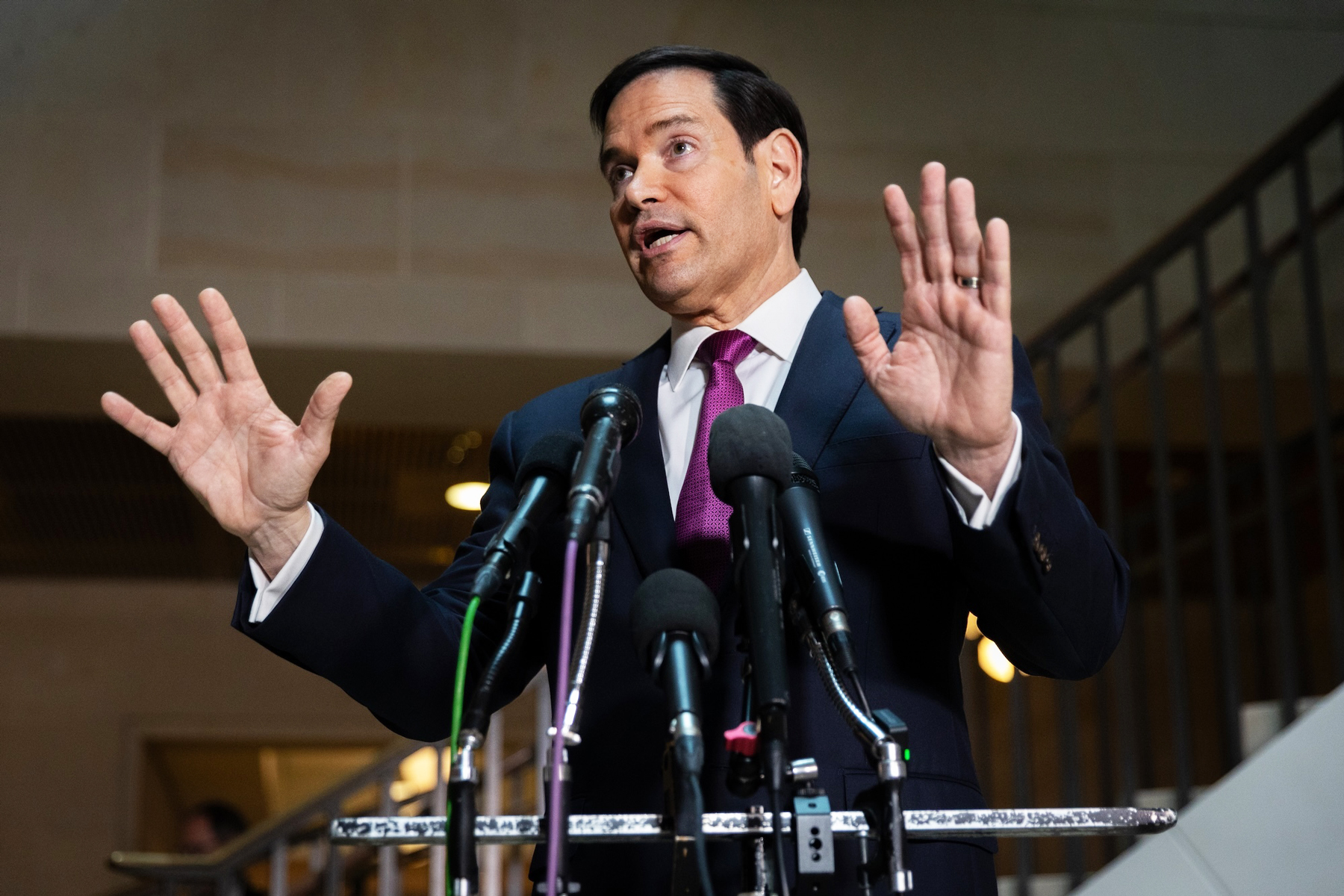
HangupsMusic.com – In the volatile aftermath of President Donald Trump’s directive for the U.S. military to launch strikes against Iran, a significant domestic political upheaval has begun to ripple through American conservative circles, notably among the president’s most ardent supporters. The decision, which included the targeting of Iran’s longtime leader, Ayatollah Ali Khamenei, and was described as a joint offensive with Israel, immediately raised questions regarding its justification and long-term implications. A striking silence from senior administration officials on Sunday talk shows fueled public speculation, particularly given Trump’s previous campaign rhetoric against "endless wars." This vacuum of official explanation left many searching for a coherent rationale behind such an extraordinary military escalation.
The lack of an immediate, unified public defense from the administration was conspicuously absent. Sunday morning news programs, traditionally a platform for high-ranking officials to articulate and defend major policy shifts, found themselves without a single Cabinet member willing or able to make the case for the newly initiated military campaign. This absence was particularly glaring considering the president’s prior populist stance, which often criticized foreign entanglements and promised to extricate the U.S. from costly, protracted conflicts. By Monday afternoon, the reasons for this strategic reticence began to emerge, revealing a narrative that many found deeply troubling.
It was Secretary of State Marco Rubio who ultimately stepped forward, offering an explanation that inadvertently peeled back the layers of diplomatic complexity and political expediency. Speaking to reporters, Rubio clarified the administration’s motivations and the timing of the attacks: "We knew that there was going to be an Israeli action [against Iran]… We knew that that would precipitate an attack against American forces, and we knew that if we didn’t preemptively go after them before they launched those attacks, we would suffer higher casualties." His words, intended to justify the preemptive strikes, instead illuminated a scenario where American military involvement appeared to be a direct consequence of an anticipated Israeli operation, rather than a standalone defense of immediate U.S. interests.
This candid admission profoundly reshaped the public understanding of the conflict’s genesis. It suggested that the United States had entered into a military engagement with Iran – an engagement that had already claimed the lives of over a hundred innocent school children and at least six U.S. service members in its initial phase – primarily because Israel’s planned actions necessitated an American preemptive response to protect its own forces from retaliatory attacks. The revelation sparked immediate controversy, casting the U.S. role as reactive to an allied nation’s strategic decisions, rather than proactive in its own national security.
The narrative gained further traction when Israeli Prime Minister Benjamin Netanyahu appeared on a prominent cable news program. When host Sean Hannity directly asked if he had "dragged Trump into this," Netanyahu dismissed the notion with a laugh, calling it "ridiculous." While intended to deflect, his casual response did little to quell suspicions, particularly among a segment of the American population already wary of foreign influence on U.S. policy. The perception that American blood and treasure were being expended on behalf of another nation’s agenda began to solidify.
The fallout within President Trump’s political base, often referred to as "MAGA," was immediate and intense. The core "America First" tenet, which championed non-interventionism and prioritized domestic concerns over international commitments, appeared to be fundamentally challenged by the Iran intervention. An "open revolt" began to brew across online platforms, with social media awash in critical memes and graphic visual metaphors depicting Trump in a subservient role to Netanyahu, signaling a profound sense of betrayal among those who had staunchly supported his anti-war rhetoric.
The criticism wasn’t confined to fringe elements; it permeated various strata of conservative thought. Megyn Kelly, a mainstream conservative commentator, voiced her strong disapproval on her show, declaring, "My own feeling is: no one should have to die for a foreign country. I don’t think those four service members died for the United States. I think they died for Iran or for Israel. Our government’s job is not to look out for Iran or for Israel. It’s to look out for us. And this feels very much to me like it is clearly Israel’s war." Her sentiment resonated with a significant portion of the base who felt that American lives were being sacrificed for interests not directly aligned with the U.S.
Joining the chorus of dissent was former Congresswoman Marjorie Taylor Greene, a once-steadfast Trump ally, who openly questioned the president’s "mental fitness" and demanded a "serious conversation about what the f— is happening to this country and who in the hell are these decisions being made for, and who is making these decisions." Her fiery rhetoric underscored the deep ideological fissures forming within the Republican party, challenging not only the policy itself but also the decision-making process at the highest levels.
Representative Thomas Massie (R-Ky.), known for his libertarian-leaning principles and previous clashes with Trump over issues like the Epstein files, reached a similar conclusion. He posted on X, stating, "The administration admits [Israel] dragged us into the [Iran] war that’s already cost too many American lives and billions of dollars. Before it’s over, the price of gas, groceries, and virtually everything else is going to go up. The only winners in [the U.S.] are defense company shareholders." Massie’s economic critique highlighted the tangible costs to American citizens and suggested that the conflict served the interests of military-industrial complex shareholders over the general public. His post echoed Matt Walsh of The Daily Wire, who had earlier written that Rubio’s statement was "basically the worst possible thing he could have said."
The conservative media landscape further fractured. Sean Davis, co-founder of The Federalist, articulated a widespread concern about the lack of strategic clarity, wondering, "Is the goal to eliminate the Iranian regime or free the Iranian people or degrade their nuclear capability or degrade the conventional weapons capability or eliminate their regional hegemony or to cut off their oil supply to China or to help Israel or what? The lack of any coherent message seems to suggest the lack of any coherent objective." This pointed critique underscored the absence of a clearly defined mission, which is crucial for public support and effective military strategy.
Perhaps the most visceral reactions came from figures on the far-right, whose previous support for Trump had been unwavering, even as they faced accusations of antisemitism and white nationalism from the broader Republican establishment. Nick Fuentes, a Holocaust-denying white nationalist whose influence in right-wing circles has grown, launched a scathing attack on Trump during a livestream. He declared the Iran war the "breaking point" for the GOP coalition, citing a litany of unfulfilled promises including the border wall, mass deportations, and middle-class tax cuts, alongside the alleged burying of the Epstein files. Fuentes, who famously hosted Trump at Mar-a-Lago, dramatically announced, "I’m out. I’m done. I am off the Trump train. I am not voting in ’26, [and] if Rubio or Vance are on the ticket in any form in ’28, I’m voting for a Democrat." His rhetoric, while extreme, reflected a deep sense of betrayal among a segment of the base who felt their "America First" principles had been abandoned.
Candace Owens, another prominent conservative figure whose past comments have drawn accusations of antisemitism, echoed Fuentes’s sentiment, questioning, "What does he think, we’re stupid? And the people online are trying to pretend like we’re the ones betraying Trump for holding him accountable for his promises he made to use when we voted for him and encouraged others to vote for him?" Owens directly linked the U.S. intervention to Israeli demands: "The reason America wants a regime change in Iran is because Bibi Netanyahu is demanding it… There was no imminent threat to the United States when Trump made this decision to do what Bibi wanted. I want to be clear here: This was not Trump’s decision, it was Bibi Netanyahu’s decision and that is the reason that he did it. We’re very aware that Israel is dictating our foreign policy and we would like that to stop." Tucker Carlson, a highly influential conservative media personality, joined this narrative, labeling it "Israel’s war" and even claiming Mossad agents were orchestrating false flag bombings in Gulf States.
Even Erik Prince, the founder of Blackwater and a figure who has cultivated close ties with Donald Trump, voiced his concerns. Prince, whose private military contractors were involved in controversial incidents during the Iraq War, stated, "Subjecting our foreign policy to Israeli foreign policy, I have a real issue with that. I said it before. This should not be the path forward. And the president chose to do it. I just wonder who pressured him that much to do it." Coming from a figure deeply embedded in the private security and Republican establishment, Prince’s criticism highlighted the broad discomfort even among those typically aligned with aggressive foreign policy stances.
Faced with this torrent of criticism from his own base, President Trump eventually attempted to reassert control over the narrative. On Tuesday, he denied that Israel had forced his hand. "No," he told a reporter asking point-blank about the alleged Israeli influence. "I might’ve forced their hand. It was my opinion that these lunatics were gonna attack first." This statement, however, struggled to fully counteract the detailed admission from his own Secretary of State and the widespread perception among his most loyal supporters that the "America First" principle had been compromised. The incident thus exposed a significant ideological fault line within the conservative movement, raising profound questions about the future direction of American foreign policy and the loyalty of a political base that feels increasingly disenfranchised by the actions of its chosen leader. The geopolitical maneuvers in the Middle East had, unexpectedly, created a seismic shift in domestic American politics.