
 By Rose Miami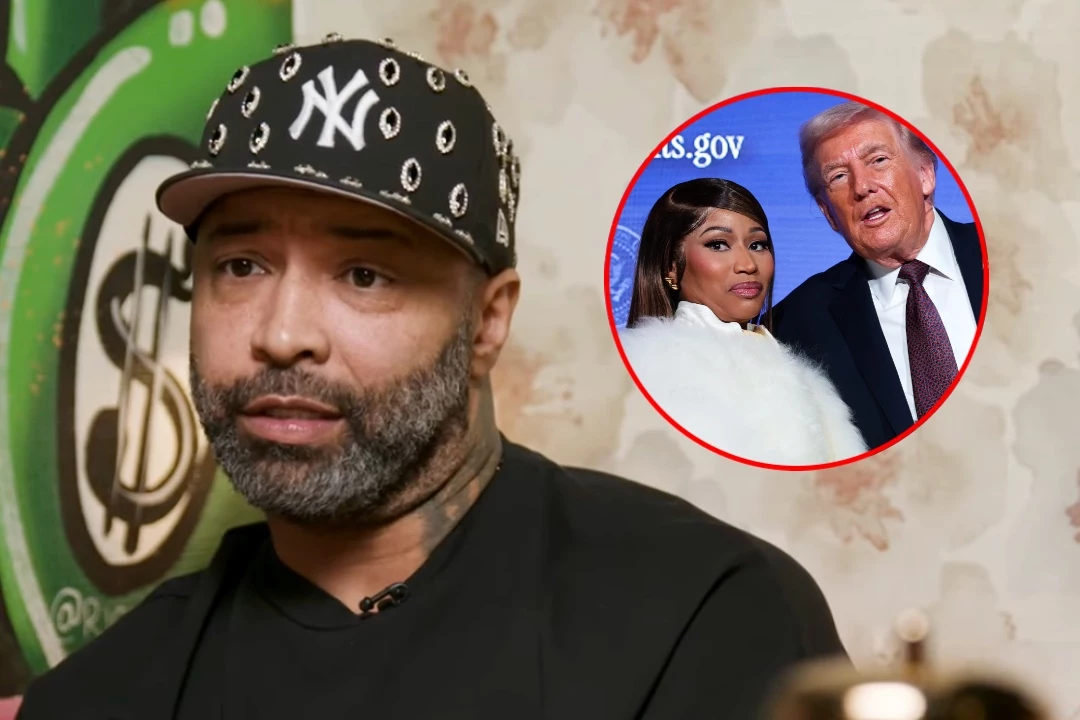
HangupsMusic.com – The political landscape has long been a complex terrain for artists, and for Joe Budden, rapper-turned-influential podcast host, Nicki Minaj’s recent public endorsements of President Donald Trump have sparked considerable concern and speculation. In a candid interview on the Club Shay Shay podcast, Budden articulated a perspective that suggests a potential financial incentive behind Minaj’s evolving political alignment, a notion he finds personally troubling given their shared roots in Black culture and entrepreneurship.
Budden’s commentary, delivered with his characteristic directness, pointed to the significant financial opportunities that he believes can be accessed by aligning with certain political factions. "A lot of money is over there," Budden stated, alluding to the resources potentially available to those who publicly support President Trump. He expressed a conviction that Minaj, like other celebrities before and likely after her, may be swayed by financial gain. "She won’t be the first or the last. There will be plenty more celebrities to take that check," he observed, acknowledging the allure of such opportunities.
However, Budden’s critique extends beyond a simple observation of financial opportunism. He drew a stark contrast between his own deeply ingrained values, shaped by his upbringing in Sumter, South Carolina, and what he perceives as a compromise of principles for personal benefit. "My views and how I was raised, and my family that I come from in Sumpter, S.C., no," he declared, emphasizing his personal inability to reconcile such a move with his moral compass. The concept of complicity weighed heavily on his mind, stating, "I can’t be complicit. Not and sleep and night."

The core of Budden’s disquiet appears to stem from his perception of a betrayal of the very foundations upon which many Black artists build their careers. He articulated a sense of disappointment when observing individuals he knows, with whom he has shared experiences and conversations, seemingly disavow the communities and consumer bases that have propelled their success. "I’ve seen people grow to become multi-million dollar brands from Black sh*t, and Black people and Black consumerism. So, to watch you take the equity and stand over there, I can’t jive with that," he explained, highlighting the perceived dissonance between profiting from Black culture and then aligning with a political movement that many within that culture feel is antithetical to their interests.
Nicki Minaj’s public embrace of President Trump has indeed intensified in recent months. Her presence at multiple MAGA and Trump-related events has become a notable aspect of her public persona, leading to increased scrutiny and discussion. Her appearance at Trump’s "Trump Accounts Summit" in Washington D.C. was particularly remarked upon, where she offered a strong endorsement, referring to Trump as "the greatest POTUS ever." This public declaration followed a period where she had shared information about receiving a Trump Gold Card, a promotional item presented as offering a pathway to citizenship for a significant financial investment. The White House, however, clarified that the card Minaj possessed was merely a "memento," a distinction that did little to quell the ongoing debate surrounding her political affiliations.
The dynamic of celebrity influence in politics is a perennial topic of fascination and contention. When figures with vast platforms and significant cultural sway shift their allegiances, particularly in ways that appear to contradict their established fan bases, it inevitably sparks a complex dialogue. Joe Budden’s remarks bring to the forefront the inherent tension between artistic freedom, personal conviction, and the often-lucrative, yet potentially ethically fraught, intersections of entertainment and politics. His perspective, rooted in a sense of cultural responsibility and a rejection of what he views as opportunistic opportunism, underscores the deep-seated concerns that arise when the perceived beneficiaries of a particular community begin to align with forces that may not serve that community’s best interests. The conversation surrounding Minaj’s political choices, as framed by Budden, highlights the broader societal questions about authenticity, loyalty, and the influence of financial incentives in the public lives of artists.
