
 By admin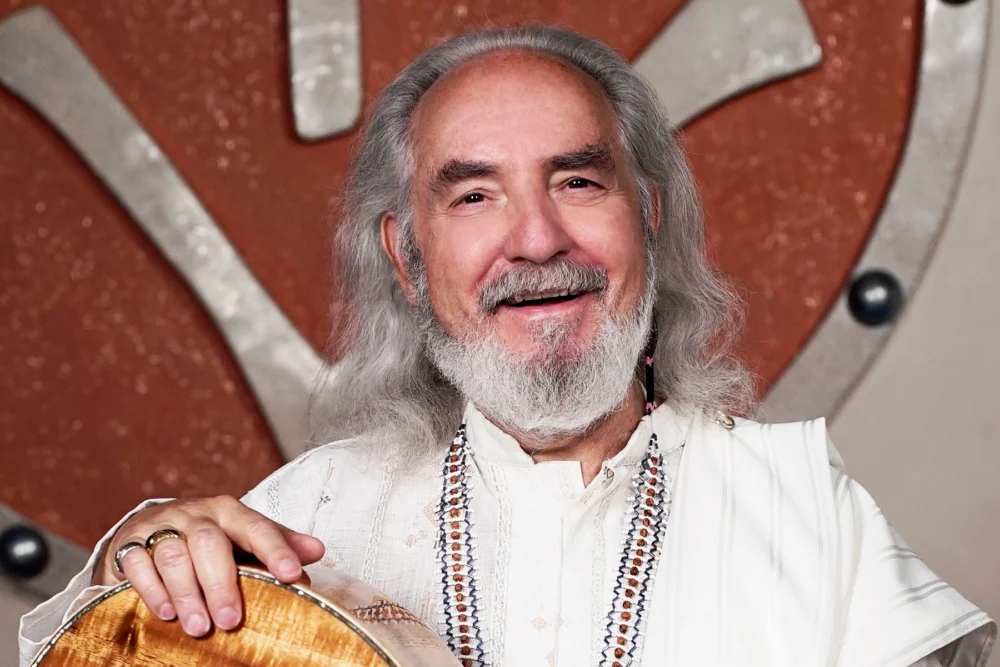
HangupsMusic.com – Tumacacori, Arizona – For decades, whispers and serious allegations have shadowed the enigmatic figure known as Van of Urantia and his spiritual collective, the Global Community Communications Alliance (GCCA). What began with cosmic prophecies and a unique musical vision now faces an existential threat, as a series of explosive legal filings lay bare accusations of forced labor, sexual abuse of minors, elaborate fraud, and racketeering. The death of Van of Urantia, born Anthony Delevin, in August 2025, following a final, dramatic doomsday prediction about Planet Nibiru in 2024, has not quieted the storm but rather intensified the reckoning for an organization long shrouded in controversy.
Anthony Delevin’s journey from a 1947 Pittsburgh birth to the self-proclaimed "Van of Urantia" was a remarkable transformation, punctuated by shifting identities and escalating spiritual claims. His pivotal moment arrived in Arizona in 1987 when, as chronicled in his autobiography, he purportedly made contact with a cosmic entity from the Pleiades. This being, he claimed, commanded a vast extraterrestrial fleet known as the Ashtar Command. Such celestial encounters laid the foundation for his evolving persona, which would see him adopt numerous aliases throughout his leadership. Following this initial contact, Delevin and his third wife, along with three young children under the age of two, reportedly spent two and a half months living in a tent in 1990, an ascetic period preceding the formal establishment of his community.
By the early 1990s, Delevin had re-emerged as "Gabriel of Sedona," attracting nearly 100 followers to his Aquarian Concepts Community in Sedona, Arizona. This enclave, envisioned as a "new Garden of Eden," rapidly amassed an estimated $1 million in assets. Adherents were reportedly encouraged to relinquish all personal possessions, financial holdings, and outside connections in exchange for basic necessities: food, shelter, clothing, healthcare, and education within the community. Delevin instilled a belief that extraterrestrial craft would provide salvation should a global catastrophe unfold. In 2007, the community relocated to its current 100-member campus in Tumacacori, Arizona, approximately 20 miles north of the U.S.-Mexico border, operating under the guise of a tax-exempt public charity on a securely fenced property.
Central to GCCA’s intricate cosmology is The Urantia Book, a sprawling 2,097-page volume anonymously published in 1955. This text synthesizes elements of Christianity, metaphysics, and esoteric spirituality, purportedly penned by celestial beings. Its unique blend of spiritualism has attracted a diverse readership, with notable figures in music like Jerry Garcia, Jimi Hendrix, Stevie Ray Vaughan, Carlos Santana, and Elvis Presley rumored to have been influenced by its teachings. Jimi Hendrix, in particular, was known to carry a copy alongside Bob Dylan’s songbook. Delevin’s ultimate honorific, "Van of Urantia," directly references a character from the book, described as the "titular head of all superhuman personalities functioning on the planet," a title that underscored Delevin’s supreme authority within the GCCA. Members were reportedly required to bow in his presence, a clear sign of the reverence he commanded.
Beyond his spiritual leadership, Anthony Delevin was also a recording artist, known as TaliasVan and later performing under his "Van of Urantia" moniker. His Spotify page currently features 16 releases, all produced by his "Global Change Music Label." Within the GCCA, members were actively involved in his musical pursuits, performing in his band and contributing to the group’s choir, creating a unique fusion of spiritual devotion and artistic expression. A striking example of this integration emerged in hidden-camera footage from a 1998 Dateline investigation, where Delevin, in a channeling session, delivered a message from a cosmic being. The entity reportedly began by commending Delevin’s music, then proceeded to sing one of his compositions, blurring the lines between divine revelation and self-promotion.
The current legal challenges stem from two pivotal documents: a lawsuit filed on behalf of an individual identified as Jane M. Doe, and a comprehensive Court-Appointed Advisor’s Final Report, compiled during a custody dispute between a GCCA member and a former member. These filings paint a stark picture of life within the compound, alleging a systemic pattern of coercion and exploitation. At the core of the accusations are claims of forced labor, the sexual abuse of minors, fraudulent practices, and a pattern of racketeering activity. The Advisor’s report names Daniel Steinhardt, son of billionaire philanthropist Michael Steinhardt, as a prominent GCCA member holding a position just below leadership. While Daniel claims compensation, he reportedly earns only $75 monthly, donating the remainder to the GCCA.
Former members, including Delevin himself in the Dateline segment, have corroborated that individuals joining the GCCA were compelled to surrender all personal assets. Upon entry, new names were often assigned, symbolizing a severance from their past identities. The legal documents further allege that members were pressured to sever all ties with their biological families, children were often removed from their parents’ homes and placed in communal care, and couples were frequently encouraged to separate after joining the group. Surveillance was reportedly pervasive, with internet use requiring strict supervision. Members were allegedly encouraged to apply for government assistance, while permission to consult outside medical or dental professionals was rarely granted, necessitating a formal application process through leadership. The documents also describe a culture of mutual surveillance, with members allegedly encouraged to "snitch" on one another. Within the strictly patriarchal framework, interviewees told the Advisor of instances where husbands and fathers routinely screamed at or physically assaulted their wives and children. Delevin’s doctrine explicitly demanded total submission of women to men, and disturbingly, he propagated a belief that sperm possessed spiritual healing properties for women.
The allegations regarding child welfare are particularly harrowing. According to the filings, all members, including children as young as six, were subjected to mandatory labor, often working 14 to 18 hours daily without compensation. Children were allegedly tasked with the majority of cleaning, cooking, gardening, and childcare and animal care duties. "Children’s primary role at GCCA was forced labor," states the lawsuit on behalf of Jane M. Doe, highlighting a childhood largely devoid of typical developmental experiences. "Schooling was minimal and sporadic, and when it did occur, it consisted primarily of indoctrination into GCCA doctrine." Adults within the group reportedly managed and instructed the children, while also working across the GCCA’s diverse array of associated businesses and non-profits. Documents indicate the existence of at least 10 such entities, including a real estate company where Daniel Steinhardt is a licensed agent, a lodging and rentals enterprise, a spa, and multiple agricultural operations, demonstrating a sophisticated business structure underpinning the community.
Adding another layer of historical context to GCCA’s operational tactics is the alleged influence of Linda Cunningham, a current GCCA leader. According to the complaint, Cunningham joined Delevin after spending time from 1973 to 1989 at Synanon, the infamous addiction-treatment-center-turned-cult. Her experience in Synanon, known for its confrontational "attack therapy" and coercive methods, is believed to have informed some of GCCA’s more controversial practices. Karen Barth Menzies, part of Jane M. Doe’s legal team, emphasizes that children within GCCA were effectively "groomed for forced labor." She explains to Rolling Stone, "It’s a way to condition those kids. This is what they know, this is all they know, and they have no idea that this is unusual in the outside world."
Jane M. Doe’s personal testimony within the lawsuit is a chilling account. Around 1999, at the age of four, she was reportedly diagnosed as clinically malnourished, weighing a mere 25 pounds. This critical discovery only came to light when her grandparents initiated neglect proceedings, leading to a doctor’s evaluation. Doe alleges her caretakers force-fed her in the days preceding this medical visit to conceal her condition. Furthermore, she claims to have endured sexual abuse 20 to 30 times between the ages of four and seven by a boy 12 years her senior. The lawsuit asserts that GCCA leadership was aware of the abuser’s expulsion from his previous school due to similar behavior, yet he allegedly faced no discipline and maintained access to children. While Menzies confirms he is no longer with the group, Doe recounts a subsequent attempt by him when she was 14. After reporting this to leadership, she was allegedly told she was being punished for "sins of her past lives" and accused of seducing him. In June 2015, as a teenager, Doe made a dramatic escape, scaling the compound’s wrought-iron fence and fleeing into the Arizona desert, where a former member awaited to take her to safety.
The Court-Appointed Advisor’s report corroborates a pattern of victim-blaming within GCCA. The Advisor spoke with several alleged victims, noting that every individual "who disclosed sexual assault while living in the GCCA compound said that the counselor told them the sexual assault was their fault. They each said that they were told they had been rebellious in a former life and this assault was foreseen and deserved punishment for that rebellion." Some victims additionally claimed that Linda Cunningham attributed their assaults to their "seductive" behavior, further entrenching a culture of blame.
Doe’s legal team is pursuing the GCCA as a "business enterprise," leveraging racketeering and RICO (Racketeer Influenced and Corrupt Organizations Act) claims among the lawsuit’s 21 counts. Menzies explains the significance of this approach: "The legislation is so much better now at recognizing that these aren’t just isolated events. It’s systemic across the organization. In fact, it’s the purpose of the organization." While a representative for GCCA has indicated plans to file a motion to dismiss the lawsuit in the coming weeks, the legal battle is set to be protracted.
Despite Delevin’s passing, the GCCA appears to have a succession plan in place. Two of Delevin’s own children, who had previously escaped the compound (one tragically died in a house fire at age 36 in March), remain outside the group, but two others are still within and reportedly being groomed for leadership roles. His 35-year-old son, Amadon, is widely regarded as the heir apparent. "This is set in place to continue to function well beyond [Delevin’s] death," Menzies observes.
However, the group’s future remains precarious. Jane M. Doe’s lawsuit seeks damages exceeding $7.5 million, a sum that could severely impact the organization’s financial viability. In the ongoing custody case, the Advisor’s report strongly recommends that the mother, now a former member, be granted "primary parenting-time parent" status for the two minors involved, advocating for them to reside primarily with her. (Representatives for the mother declined comment, citing ongoing legal proceedings, and Daniel Steinhardt’s representative did not respond to requests for comment.) Beyond financial restitution, Menzies emphasizes that her team seeks accountability. "For survivors, recognition that what happened to them was harmful goes a long way in the healing process," she concludes, highlighting the profound need for justice and validation for those who claim to have suffered within the Global Community Communications Alliance.
