
 By Azzam Bilal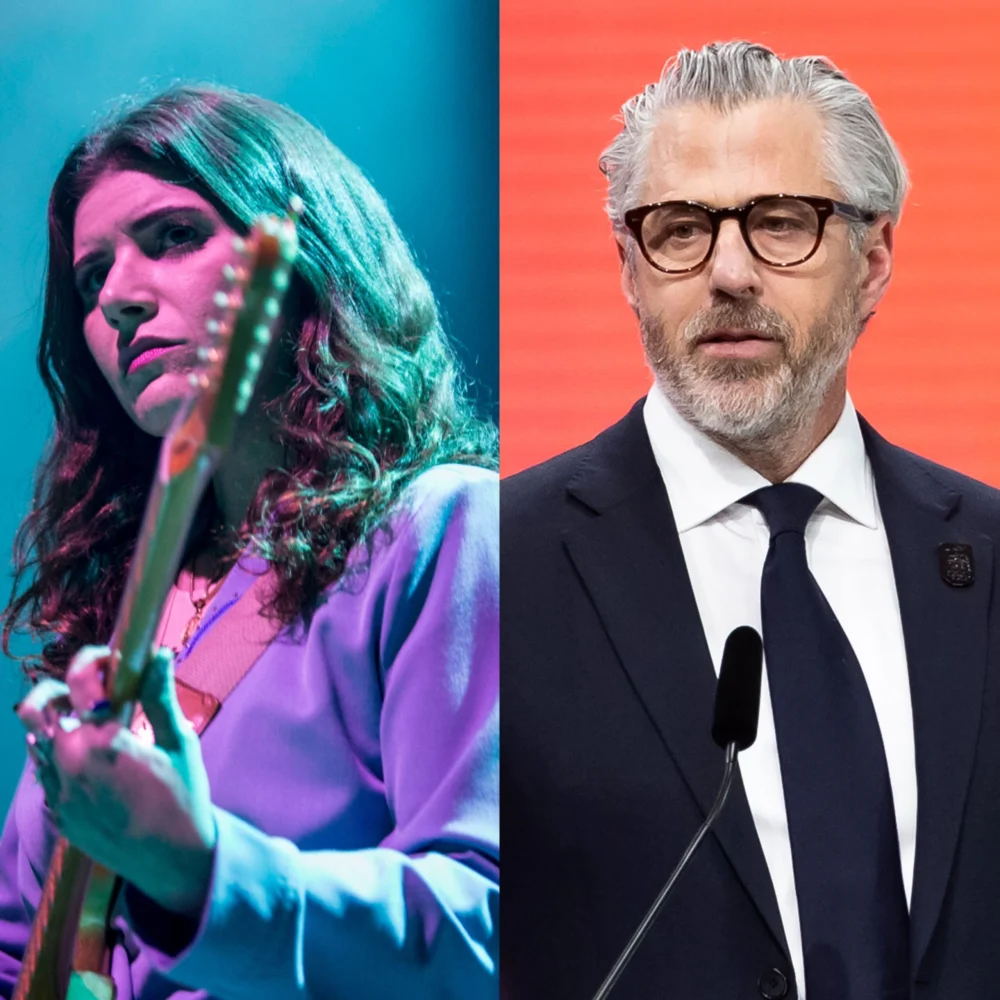
HangupsMusic.com – LOS ANGELES, The intersection of high-stakes entertainment management and international legal scandal has reached a boiling point this week as Bethany Cosentino, the acclaimed frontwoman of Best Coast, has publicly called for the immediate resignation of Casey Wasserman. The demand follows the unsealing of federal documents that link Wasserman, the CEO and founder of the powerhouse agency that bears his name, to the late Jeffrey Epstein and his convicted accomplice, Ghislaine Maxwell. In a detailed and emotionally charged open letter, Cosentino has not only requested her removal from the agency’s roster but has also called for a total rebranding of the organization, arguing that the leadership’s historical associations are incompatible with the values of the artists they represent.
The controversy stems from a trove of documents released by the Department of Justice on January 30, which included a series of electronic communications from 2003. These records, as initially detailed by The New York Times, illuminate a series of intimate and familiar exchanges between Casey Wasserman and Ghislaine Maxwell. Maxwell is currently serving a two-decade federal prison sentence for her role in a sex-trafficking conspiracy that victimized numerous underage girls. The revelation that a major power player in the music and sports world maintained such a rapport with Maxwell has sent shockwaves through the industry, prompting a fierce debate over accountability and the "vetting" of powerful executives.
In her public statement, Cosentino was unequivocal in her condemnation of the associations revealed in the files. She emphasized that Ghislaine Maxwell cannot be viewed as a peripheral or "neutral" figure in a complicated social circle, but rather must be recognized for her role as a convicted predator who facilitated the systemic abuse of minors. Cosentino, who has been represented by Wasserman Music since the agency’s significant expansion into the music sector in 2021, stated that she never consented to having her creative legacy or professional identity linked to individuals with such documented ties to exploitation. Her letter serves as a formal request to have both her solo name and the Best Coast moniker scrubbed from the agency’s official website and promotional materials.
The specific content of the emails has drawn particular scrutiny. Reports from Variety and other outlets indicate that the correspondence went beyond professional courtesy. In one exchange, Maxwell reportedly offered Wasserman a massage; in another, Wasserman allegedly wrote to Maxwell expressing that he thought of her "all the time" and inquired about seeing her in a "tight leather outfit." These communications occurred in the wake of a 2002 humanitarian flight to Africa, organized by the Clinton Foundation to address the HIV/AIDS crisis. That flight, which has been a subject of public record for years, included a roster of high-profile figures such as former President Bill Clinton, actors Kevin Spacey and Chris Tucker, and billionaire Ron Burkle, alongside Epstein and Maxwell. While the flight itself was a known event, the newly released emails suggest a level of personal intimacy between Wasserman and Maxwell that had not been previously understood by the public or the agency’s clients.
Wasserman has attempted to get ahead of the fallout by issuing a formal apology and clarification. In a statement released on February 1, he expressed deep regret for the correspondence, noting that it took place more than twenty years ago, long before the full extent of Maxwell’s and Epstein’s criminal activities were common knowledge. He further asserted that he never maintained a business or personal relationship with Jeffrey Epstein himself, characterizing his presence on the 2002 flight as strictly part of a humanitarian delegation. Despite these assurances, the "damage control" nature of the apology has failed to satisfy critics like Cosentino, who argue that regret without structural accountability is insufficient in an industry that has long protected powerful men from the consequences of their associations.
The timing of this scandal is particularly precarious for Wasserman, who serves as the chairman of the organizing committee for the 2028 Summer Olympics in Los Angeles. His role as the face of the city’s Olympic ambitions has placed him under a global microscope. While the International Olympic Committee (IOC) has thus far signaled its continued support—with President Kirsty Coventry stating she had "nothing to add" to Wasserman’s personal apology—the pressure from the domestic creative community is mounting. For an event that relies heavily on the image of progress, inclusivity, and safety, the presence of a leader linked to the Epstein files presents a significant public relations challenge.
Cosentino’s letter also touches upon a deeper, systemic frustration within the music business. She highlighted the power imbalance between artists—many of whom are survivors of sexual violence themselves—and the executives who control the flow of capital and opportunity. "Artists are not interchangeable assets," she wrote, reminding the industry that the performers are the primary drivers of revenue and culture. She made a point to distinguish between her long-term agent, Sam Hunt, whom she praised for his fifteen years of dedicated work, and the overarching corporate entity of Wasserman. By stating she is in the "Sam Hunt business" but not the "Wasserman business," Cosentino is highlighting a growing trend where artists attempt to decouple their professional relationships from toxic corporate leadership.
This is not the first time Wasserman’s leadership has faced scrutiny regarding the treatment of women. In 2024, the agency lost one of its most high-profile clients when Billie Eilish and her brother Finneas transitioned their representation to WME. That departure followed a report in the Daily Mail alleging that Wasserman had engaged in a series of inappropriate relationships with female subordinates within his company. While Wasserman and the agency declined to comment on those specific allegations at the time, the exit of a generational talent like Eilish was seen by many as a silent vote of no confidence. Cosentino’s current public stance suggests that the "quiet" departures of the past may be giving way to a more vocal and confrontational form of artist activism.
The scale of the Wasserman Music roster makes this situation particularly impactful. Since its 2021 launch—bolstered by the acquisition of Paradigm Talent Agency’s music assets—Wasserman has represented some of the biggest names in global music. The current roster includes Kendrick Lamar, Coldplay, Skrillex, Chappell Roan, and Wet Leg, among hundreds of others. If Cosentino’s call for a boycott or a change in leadership gains traction among these heavy hitters, it could threaten the very stability of the agency. The "Wasserman" brand, which was intended to signal a new era of talent-first management, is now inextricably linked to a name that Cosentino and others argue has become synonymous with a lack of moral oversight.
In the concluding remarks of her letter, Cosentino urged her peers to remember their own power. She reiterated that agencies work for the artists, not the other way around. By demanding that the agency change its name and that Casey Wasserman step down, she is calling for a "purification" of the systems that manage creative careers. Her statement also included resources for survivors of sexual misconduct, such as the RAINN hotline, signaling that her primary concern is the protection of vulnerable individuals over the preservation of corporate reputations.
As of this writing, neither Casey Wasserman nor the Wasserman agency has provided a follow-up response to Cosentino’s specific demands. The industry now waits to see if other high-profile artists on the roster will follow her lead or if the agency will attempt to weather the storm through silence. However, in an era defined by the "Me Too" movement and a heightened demand for transparency, the "business as usual" approach may no longer be a viable strategy. Cosentino’s refusal to "line the pockets" of those she deems ethically compromised marks a significant moment in the ongoing struggle for a more equitable and safe entertainment landscape. The ghost of the Epstein files continues to haunt the halls of power, and for Casey Wasserman, the professional cost of past associations may finally be coming due.
