
 By Rose Miami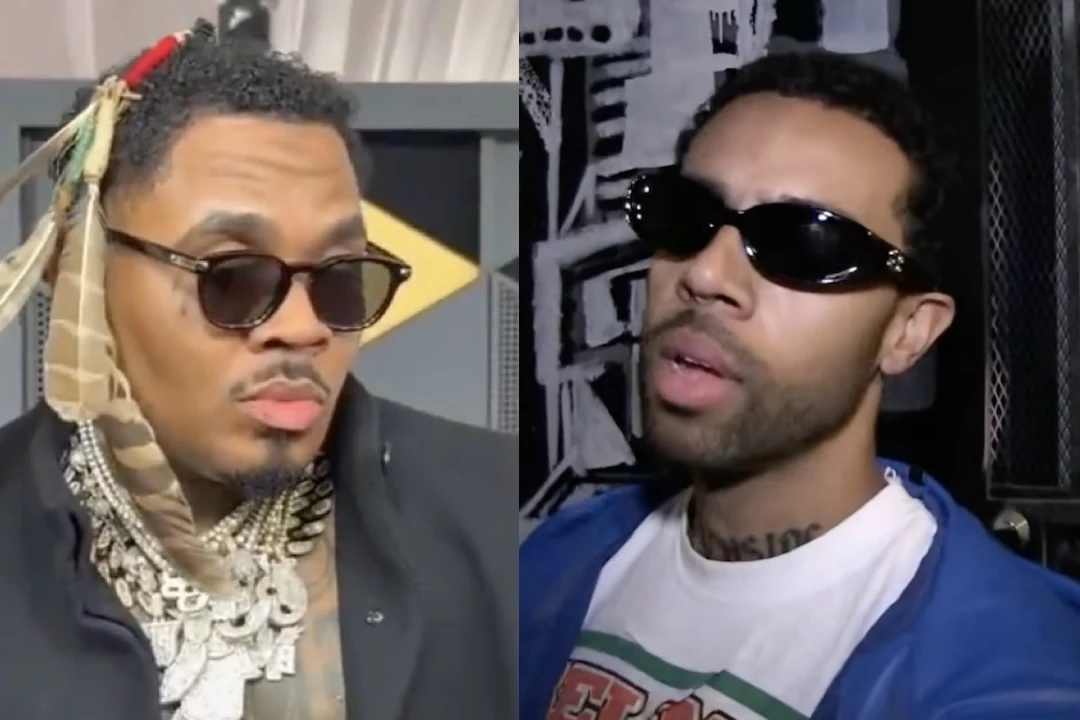
HangupsMusic.com – Amidst a period of heightened immigration enforcement across the United States, prominent figures in the hip-hop community have voiced starkly contrasting perspectives on the controversial Immigration and Customs Enforcement (ICE) raids. Rapper Kevin Gates, known for his direct and often introspective lyrical style, has indicated a preference for focusing on his personal and professional pursuits, while fellow artist Vic Mensa has emerged as a vocal critic, labeling the actions of ICE as "state-sponsored terrorism."
The differing stances were brought to light through recent media appearances. In an interview captured at the 2026 Grammy Awards and shared by Baller Alert, Kevin Gates was queried about the role of musicians in addressing the ongoing ICE operations and broader immigration policies. His response, delivered with his characteristic candidness, suggested a strategy of self-preservation and a dedication to his craft. "You want me to be honest," Gates stated, implying a desire for unvarnished truth. "This is what I do, the best advice. I mind the business that pays me. I get up in the morning, I pray and I workout." This statement suggests a philosophy of prioritizing personal well-being and professional endeavors, a sentiment that resonates with a desire to navigate complex societal issues by maintaining a focus on controllable elements of one’s life. For Gates, the immediate demands of his career and his personal spiritual and physical routines appear to take precedence over direct public engagement with the contentious immigration debate.
Conversely, Vic Mensa, a Chicago-based artist with a history of activism and outspokenness on social justice issues, has taken a far more confrontational stance. In a video interview with TMZ, Mensa, who had recently returned from Minneapolis, characterized the ICE raids in that city as an act of "state terrorism." His allegations are particularly alarming, as he claims that ICE agents are employing what he describes as "sonic weapons" against civilians in the Twin Cities. Mensa elaborated on the alleged use of these devices, identifying them as Long-Range Acoustical Devices (LRADs). He asserted that such weaponry can lead to severe and potentially permanent hearing loss and cause physical trauma, including nosebleeds, describing the situation as "straight state terrorism going on in Minneapolis."

The context provided by Mensa’s claims is further amplified by recent tragic events in Minneapolis. In January, two separate incidents involving ICE agents resulted in the deaths of individuals identified as Renee Nicole Good and Alex Pretti. Both of these fatalities have been officially classified as homicides, adding a grim gravity to the ongoing scrutiny of ICE operations. The first incident, occurring on January 7th, involved an ICE agent shooting and killing Renee Nicole Good. Reports indicate that Good was in her vehicle and was fatally shot after reversing and then moving forward when instructed to exit her car. The second fatal encounter took place on January 24th, when an ICE agent shot and killed Alex Pretti amidst a protest. According to accounts, Pretti was allegedly shoved by agents, pepper-sprayed, and then pulled into the street, which subsequently led to a violent altercation. These events, whether directly related to the alleged use of sonic weapons or not, highlight the volatile and dangerous nature of some ICE enforcement actions and contribute to the heightened tension surrounding the agency’s activities.
The divergence in viewpoints between Gates and Mensa underscores a broader societal debate. On one hand, there is a perspective that emphasizes personal responsibility, individual focus, and a strategic disengagement from issues that may not directly or immediately impact one’s own livelihood. This approach, as articulated by Gates, can be seen as a pragmatic coping mechanism in a complex and often overwhelming sociopolitical landscape. It suggests that by concentrating on what is within one’s control – one’s career, spiritual practice, and physical health – individuals can maintain a sense of stability and purpose.
On the other hand, Vic Mensa’s forceful denunciation of ICE actions reflects a deep-seated commitment to confronting perceived injustices and advocating for those he believes are being oppressed. His use of the term "state terrorism" is a powerful indictment, suggesting that the actions of government agencies can reach a level of severity that infringes upon fundamental human rights and safety. His specific allegations regarding the use of sonic weapons, if substantiated, would represent a grave escalation of concern and point towards a pattern of potentially excessive and harmful tactics being employed by law enforcement. The mention of LRADs, devices designed to project sound over long distances, raises questions about their application in civilian contexts and their potential for causing harm.
The broader implications of these contrasting viewpoints extend beyond the individual artists. They highlight the multifaceted nature of public discourse surrounding immigration and law enforcement. While some may choose to remain apolitical or focus on personal growth, others feel a moral imperative to speak out against what they perceive as systemic abuses of power. The tragic deaths in Minneapolis serve as a stark reminder of the human cost of these enforcement actions and the urgent need for transparency and accountability. As debates surrounding immigration policy continue to shape national conversations, the voices of influential figures like Kevin Gates and Vic Mensa, despite their divergent paths, contribute to the ongoing dialogue, offering different lenses through which to view and understand these critical issues. The public’s attention is drawn to these narratives, prompting reflection on the responsibilities of artists, the conduct of government agencies, and the impact of policy on communities across the nation.
