
 By Azzam Bilal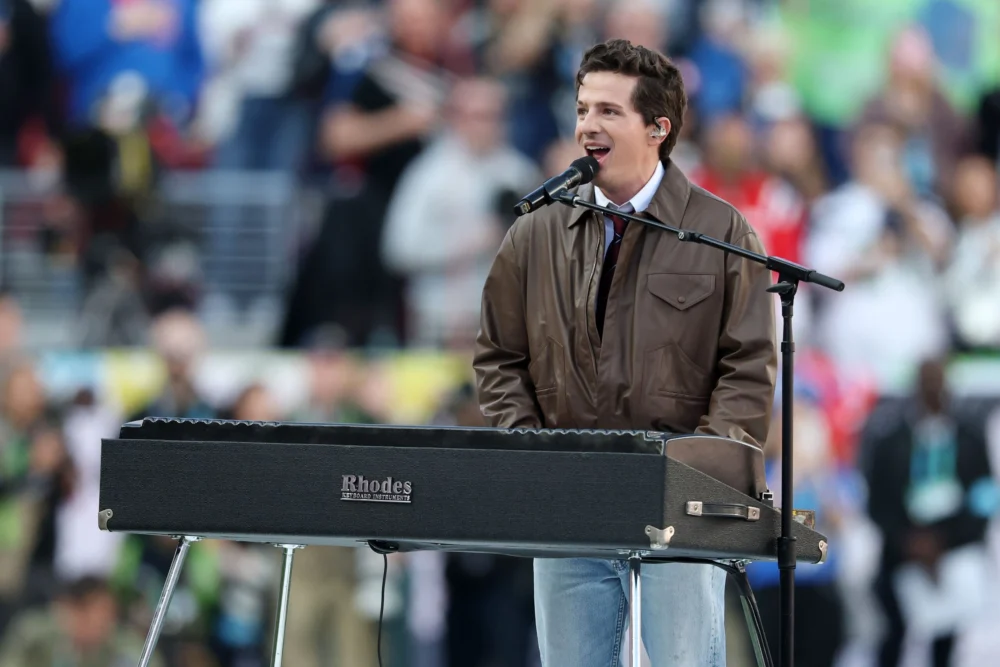
HangupsMusic.com – Santa Clara, The intersection of professional sports and elite musical performance reached a new pinnacle this evening as Super Bowl LX took center stage at Levi’s Stadium. Against the backdrop of Northern California’s premier sporting venue, a carefully curated selection of artists delivered a pregame program that balanced classic Americana with contemporary pop and R&B sensibilities. The evening’s festivities were headlined by Charlie Puth, who was entrusted with the delivery of the national anthem, a performance that signaled a departure from the high-octane vocal gymnastics often associated with the "The Star-Spangled Banner" in favor of a more nuanced, instrumental-led interpretation.
Charlie Puth, a musician known for his meticulous production style and viral presence, took the field with a setup that emphasized his roots as a classically trained pianist. Eschewing the traditional orchestral backing as the primary focus, Puth centered his performance around a Rhodes keyboard, an instrument renowned for its warm, bell-like tines and soulful resonance. This choice lent a vintage, almost jazz-inflected quality to the anthem, providing a grounded foundation for his vocal delivery. Puth’s aesthetic for the evening was equally deliberate, having been styled by the prolific producer and songwriter Jack Antonoff. Dressed in a tan leather jacket and classic denim jeans, Puth’s appearance suggested a nod to mid-century Americana, blending a rugged sensibility with the polished sheen of modern pop stardom. Supporting Puth was a large choir dressed entirely in white, whose ethereal harmonies filled the stadium, alongside a disciplined small orchestra that added swells of cinematic grandeur to the song’s climax.
The pregame ceremonies were not limited to the anthem alone, as the NFL continued its tradition of featuring multiple patriotic and culturally significant compositions. Brandi Carlile, a stalwart of the Americana and folk-rock scenes, offered a poignant rendition of "America the Beautiful." Known for her evocative songwriting and powerful, emotive voice, Carlile chose a minimalist approach, performing the song acoustically. The simplicity of her arrangement served as a stark contrast to the massive scale of the stadium, creating a moment of intimacy that resonated with the tens of thousands in attendance. Her performance underscored the enduring power of the song’s melody, stripped of excessive artifice.
Adding to the emotional depth of the afternoon, R&B powerhouse Coco Jones delivered a stirring version of "Lift Every Voice and Sing." Jones, whose career has seen a meteoric rise following her transition from child stardom to critically acclaimed recording artist, was accompanied by a sophisticated string ensemble consisting of two cellists and six violinists. The arrangement was both elegant and powerful, highlighting Jones’s impressive vocal range and the song’s historical significance as the "Black National Anthem." The inclusion of these three distinct voices—Puth, Carlile, and Jones—offered a multi-faceted musical tapestry that represented a broad spectrum of the American experience.
Before the formal ceremonies began, the atmosphere was electrified by the legendary punk rock trio Green Day. The band, which has maintained a position at the forefront of the rock genre for over three decades, opened the evening’s entertainment with a high-energy medley of their most iconic hits. Fans were treated to spirited versions of "Holiday" and "American Idiot," songs that have long served as anthems of youthful rebellion and social commentary. However, the performance was notable for its strategic omissions. Green Day, a band never shy about their political stances, chose to excise the more overtly political verses from both tracks. Most notably, the "redneck agenda" line from "American Idiot" was absent, a move likely intended to maintain the broad, inclusive appeal required for a Super Bowl broadcast. Despite these edits, the band’s raw energy remained intact, providing a jolt of adrenaline to the crowd before the kickoff.
As the game progressed, the anticipation for the official Apple Music Super Bowl Halftime Show continued to build. This year’s headliner, Bad Bunny, represents the global dominance of Latin music. The Puerto Rican superstar’s selection reflects the NFL’s ongoing commitment to diversifying its musical offerings and tapping into the international zeitgeist. With a discography that spans reggaeton, trap, and pop, Bad Bunny’s performance is expected to be a visual and auditory spectacle, further cementing the Super Bowl as a premier platform for global cultural icons.
The musical achievements of Super Bowl LX serve as a fascinating follow-up to the events of the previous year. Super Bowl LIX, held in the vibrant musical hub of New Orleans, set a high bar for live performance. Last year’s pregame lineup featured a masterclass in New Orleans heritage and contemporary gospel, with performances by Jon Batiste, Trombone Shorty, Lauren Daigle, and Ledisi. That ensemble brought the unique "Big Easy" spirit to the national stage, emphasizing brass traditions and soulful vocal artistry. Furthermore, Lady Gaga added a touch of cinematic drama to the 2025 festivities by performing "Hold My Hand," her power ballad from Top Gun: Maverick, in the streets of New Orleans, bridging the gap between the stadium and the city’s historic architecture.
The 2025 halftime show, headlined by Kendrick Lamar, remains a point of comparison for all future performances. Lamar’s set was a masterstroke of curation and hometown pride, featuring guest appearances by SZA and cameos from cultural titans like Serena Williams and Samuel L. Jackson. The sheer scale and narrative depth of Lamar’s performance underscored the halftime show’s evolution from a simple musical intermission into a complex, high-concept piece of performance art.
For Charlie Puth, the journey to the Super Bowl field in Santa Clara is a testament to the changing landscape of the music industry. As documented in various industry analyses, including those focusing on the intersection of social media and marketing, Puth has navigated the complexities of the modern era with unique savvy. His ability to leverage platforms like TikTok to showcase his technical proficiency and songwriting process has transformed the way audiences engage with pop stars. By deconstructing the "labyrinthian game" of music marketing, Puth has built a brand centered on musicality and accessibility, qualities that were on full display during his performance of the national anthem.
The logistical coordination required for these performances is staggering. From the precision of the choir’s movements to the sound engineering necessary to balance a Rhodes keyboard against the acoustics of an open-air stadium, the production values of Super Bowl LX represent the cutting edge of live entertainment technology. The collaboration between Puth and Antonoff, in particular, highlights a trend of "prestige pop" collaborations where high-level production talent is brought in to curate the visual and sonic identity of even the briefest performances.
As the sun set over Levi’s Stadium, the collective impact of the pregame performances lingered. The combination of Carlile’s folk sensibilities, Jones’s R&B elegance, Puth’s modern pop-craft, and Green Day’s rock-and-roll defiance provided a comprehensive soundtrack to one of the world’s most-watched sporting events. While the game itself remains the primary draw for many, the musical component of the Super Bowl has arguably become its own distinct cultural institution, capable of sparking conversation, celebrating diversity, and defining the sound of the year. With Bad Bunny’s performance still to come, the musical legacy of Super Bowl LX is already shaping up to be one of the most memorable in recent history, proving once again that the stadium is not just a field of play, but a world-class stage.
