
 By admin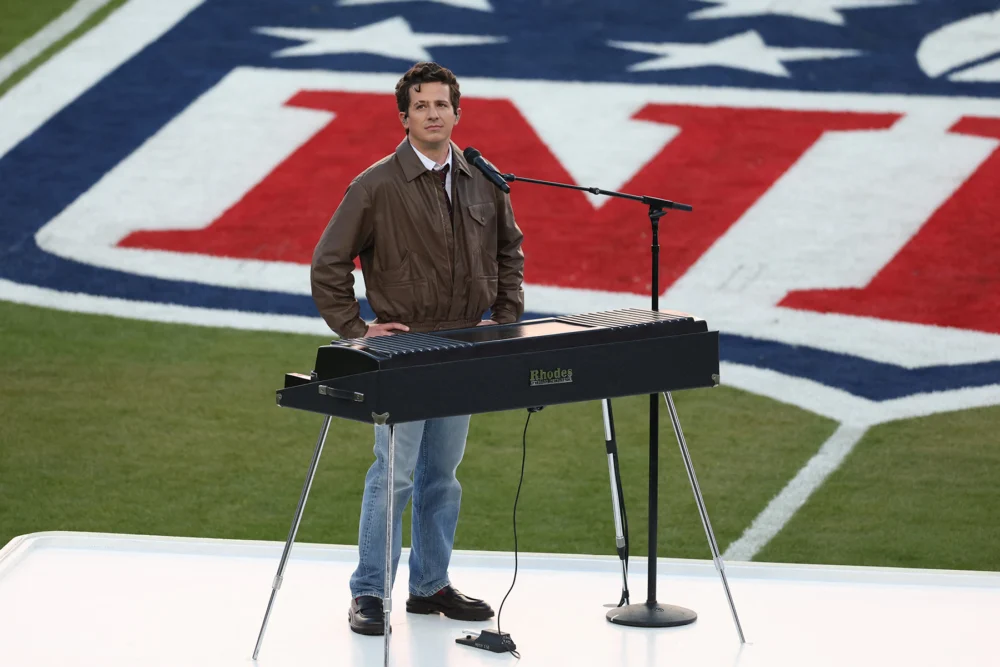
HangupsMusic.com – Santa Clara, California – The roar of over 70,000 fans at Levi’s Stadium, combined with the anticipation of millions watching worldwide, reached a fever pitch as Super Bowl LX prepared to kick off its monumental clash between the New England Patriots and the Seattle Seahawks. In a moment that transcends sport, Grammy-nominated singer-producer Charlie Puth stepped onto the colossal stage, ready to deliver a rendition of "The Star-Spangled Banner" that would etch itself into the annals of Super Bowl history. His performance, a sophisticated blend of raw vocal talent and intricate musicality, offered a fresh, almost ethereal take on the notoriously challenging anthem, solidifying his status as a multifaceted artist far beyond the realm of pop radio hits.
From the very first notes, Puth distinguished his approach. Seated at a pristine Rhodes keyboard, an instrument renowned for its warm, electric piano tones, he embarked on a journey through the national anthem that was both reverent and innovative. His interpretation was not merely a vocal delivery but a masterclass in arrangement, a testament to his innate ability to craft complex sonic landscapes. The iconic melody, often belted out with unadorned power, was imbued with a nuanced choral elegance, a characteristic Puth touch that hinted at his deep understanding of harmony and vocal layering. The soft, shimmering textures of the Rhodes provided a delicate foundation, allowing his clear, precise tenor to float above, guiding the listener through the anthem’s sweeping emotional arc.
As Puth’s voice resonated through the stadium, a meticulously assembled choir and a full orchestral ensemble swelled behind him, adding layers of grandeur and emotional depth. This was not simply a backing group; it was an integral part of Puth’s vision, amplifying his vocals and transforming the familiar tune into a majestic, almost cinematic experience. The choral harmonies were rich and complex, weaving intricate counter-melodies that showcased Puth’s prowess for composing arrangements that are both accessible and profoundly sophisticated. Each crescendo felt earned, each diminuendo purposeful, reflecting the meticulous attention to detail that defines his production work. Clad in a stylish yet understated brown leather jacket and dark jeans, Puth exuded a relaxed confidence, a stark contrast to the immense pressure of the moment, making him appear entirely at home in the spotlight.
The performance served as a powerful declaration of Puth’s versatility, pushing past perceptions that might pigeonhole him solely as a chart-topping pop sensation. His background, steeped in classical training and jazz theory from a young age, has always hinted at a broader musical lexicon. This Super Bowl stage provided the perfect canvas for him to paint a fuller portrait of his artistic identity. The decision to infuse the anthem with a "choral spin" was not merely an aesthetic choice but a deliberate artistic statement, one that underscored his commitment to musical innovation and his desire to present "The Star-Spangled Banner" as a piece of living, breathing art.
As the final, sustained note of "the home of the brave" hung in the crisp Santa Clara air, a breathtaking tradition unfolded overhead. U.S. Air Force jets roared past in a perfectly synchronized flyover, their thunderous passage a powerful exclamation mark to Puth’s poignant performance. Looking skyward, Puth allowed himself a moment of quiet reflection, a visible intake of the magnitude of the occasion. It was a gesture that spoke volumes – a blend of personal triumph, profound respect for the tradition, and an artist’s deep connection to the moment. This fleeting glimpse into his personal experience resonated deeply, reminding everyone that even on the grandest stages, human emotion remains at the core of every unforgettable performance.
This momentous occasion was a long-held aspiration for the New Jersey native. In a revealing interview with Rolling Stone earlier in the year, Puth had articulated his earnest desire to undertake this very challenge. "I’ve actually always wanted to do this," he confided, his voice betraying a mix of excitement and earnest ambition. He spoke candidly about his motivation, expressing a desire to broaden the public’s perception of his vocal capabilities. "I just want to show people that I can do it," he stated, adding, "I feel like people don’t really think of me as a standalone vocalist at times." This candid admission shed light on the personal stakes involved, revealing a drive to transcend his reputation as a brilliant producer and songwriter, and to be recognized fully for his powerful and precise voice.
Puth also acknowledged the immense pressure that accompanies such a high-profile performance, particularly one as scrutinized as the Super Bowl National Anthem. He admitted to anticipating the "pressure the week leading up to it and the hour leading up to it." Yet, with characteristic self-assurance, he also predicted his demeanor once on stage: "But once I’m there, it’s going to feel so comfortable and it’s going to sound so good." His unwavering belief in his own preparation and musical instincts proved prescient, as his live delivery radiated an effortless grace that belied the immense challenge. This blend of vulnerability and confidence offered a compelling glimpse into the mindset of an artist prepared to meet a career-defining moment head-on.
The musical prelude to the Super Bowl LX festivities was rich with diverse talents, setting a tone of patriotic reverence and artistic excellence. Prior to Puth’s stirring rendition, acclaimed singer-songwriter Brandi Carlile delivered a soulful and intimate acoustic performance of "America the Beautiful." Carlile’s raw, emotive vocals and stripped-down arrangement provided a poignant contrast, building a tapestry of sound that honored America’s musical heritage. These pre-game performances served as a powerful opening act for the highly anticipated main event: the Super Bowl halftime show, headlined by global superstar Bad Bunny. The eclectic lineup underscored the NFL’s commitment to showcasing a wide spectrum of contemporary musical artistry, ensuring that the entertainment matched the sporting spectacle.
Earlier in the week, Puth had joined Bad Bunny and other Super Bowl LX performers at the official Apple Music halftime show press conference, offering further insights into his artistic philosophy. Engaged in conversation with Apple Music’s Zane Lowe, Puth delved into the intricacies of his creative process. "The arrangement is everything for me," he emphasized, underscoring the foundational role of musical architecture in his work. He elaborated on his unique methodology, explaining, "I always reverse engineer how I hear my own music in my head, and then it’s just pulling it apart and making it a feasible product to hold." This peek behind the curtain revealed the analytical yet intuitive approach Puth employs, breaking down complex sonic ideas into tangible, performable pieces. When questioned about his ultimate hopes for the audience’s takeaway from his anthem performance, Puth offered a heartfelt and expansive vision. "I want them to feel inspired," he declared. "I want everybody to know that music is such an amazing thing and can change so many people’s lives." His words resonated not just as an artist promoting his work, but as a genuine advocate for the transformative power of music itself.
Charlie Puth’s Super Bowl LX National Anthem was more than just a musical performance; it was a testament to artistic evolution, personal ambition, and the enduring power of music to unite and inspire. By infusing a hallowed tradition with his signature blend of technical mastery and emotional depth, Puth not only delivered on his promise but also solidified his position as one of contemporary music’s most versatile and compelling talents. It was a moment that transcended the gridiron, reminding millions that at the intersection of sport and art, true magic can happen.
