
 By admin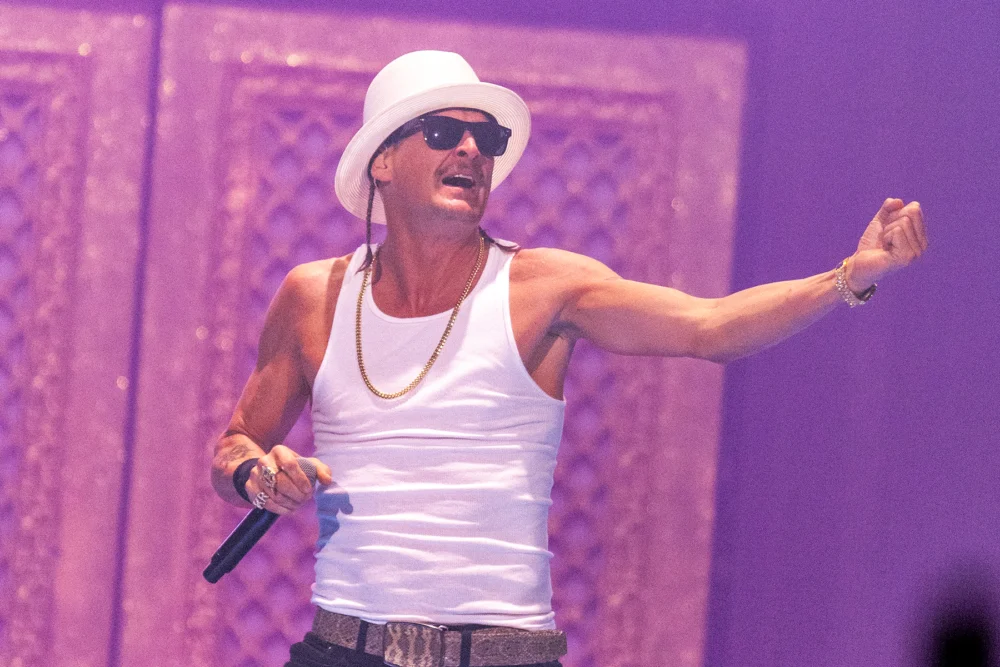
HangupsMusic.com – Phoenix, AZ – As millions tuned into the NFL’s championship game, a parallel cultural event unfolded, designed explicitly as a counter-narrative to the official Super Bowl halftime spectacle. Billed as the "All-American Halftime Show" and orchestrated by the conservative youth organization Turning Point USA, this alternative broadcast positioned itself as a stark ideological and aesthetic contrast to the mainstream entertainment. While the Super Bowl’s main stage celebrated the global artistry of Puerto Rican superstar Bad Bunny, TPUSA’s event aimed to deliver what its proponents envisioned as an authentic portrayal of American identity and values, presented with a decidedly patriotic, often defiant, flair. The result was a heavily produced, pyrotechnics-laden production that, for many observers, resonated more as a passionate declaration of cultural grievance than a mere musical performance.
The genesis of the "All-American Halftime Show" lay in a broader cultural conversation, or rather, a simmering culture war. For a segment of the American population, the selection of artists for major national platforms like the Super Bowl halftime show has become a flashpoint in ongoing debates about national identity, immigration, and artistic expression. Bad Bunny, known for his Spanish-language lyrics, reggaeton sound, and outspoken progressive stances, was perceived by many conservatives as an emblem of a cultural shift they found increasingly alienating. The alternative show, therefore, wasn’t just about music; it was a carefully constructed response, a sonic manifestation of the sentiment that "in America, we speak English," and a reaffirmation of what its organizers considered traditional American virtues.
Concurrent with the official Super Bowl halftime break, TPUSA’s event streamed across multiple digital platforms, primarily its YouTube channel, but also syndicated through other conservative media outlets like The Daily Wire. Despite facing an unexpected hurdle when its planned broadcast on Elon Musk’s X (formerly Twitter) was cancelled due to "licensing issues" shortly before kickoff, the show managed to attract a significant audience. The main YouTube feed alone garnered approximately 16 million total views, peaking with around 5 million concurrent users. While these numbers represent a substantial digital reach for a niche, politically charged event, they remained a fraction of the record-breaking 133.5 million viewers who tuned into the official Super Bowl halftime show the previous year, a disparity that underscored the challenge of competing with mainstream cultural juggernauts.
The "All-American Halftime Show" was an auditory and visual smorgasbord, steeped in Americana, country rock, and Christian praise music. Guitars were prominent, fireworks lit the digital stage, and the overall aesthetic leaned heavily into an image of rugged patriotism. The event also featured heartfelt tributes to conservative principles and the American spirit, resonating with the ideological framework championed by Turning Point USA’s founder, Charlie Kirk, and other conservative thought leaders. The production aimed to create an immersive experience that mirrored the values and frustrations of its target audience, offering a communal space for those who felt increasingly marginalized by mainstream cultural narratives.
Despite being billed as the headline act, Kid Rock, a longtime vocal supporter of conservative causes and a fixture in the MAGA movement, played a surprisingly minimal role. His appearance was limited to a mere two songs at the tail end of the 30-minute set. One notable performance saw him lip-syncing his 1998 hit "Bawitdaba," a moment that drew scrutiny for its noticeable lack of synchronization. He then transitioned to an acoustic cover of Cody Johnson’s "’Til You Can’t," performing under his given name, Robert Ritchie. Kid Rock’s relatively brief and somewhat disjointed contribution raised questions about the strategic use of his celebrity, perhaps suggesting his role was more symbolic—a powerful draw for the target demographic—than a central musical showcase.
Instead, the bulk of the musical performance was carried by a roster of country and country-rock artists, many of whom are staples in the conservative music circuit. Brantley Gilbert, a prominent figure in the country rock genre, delivered his track "Real American," an anthem designed to celebrate military personnel overseas and the steadfast individuals maintaining homes on the domestic front. The song’s lyrics and performance tapped directly into a vein of traditional patriotism and appreciation for service, aligning perfectly with the show’s overarching themes.
Lee Brice, another well-known country artist, performed his recent single "Country Nowadays." This song, in particular, resonated with the event’s underlying cultural critique. Its lyrics lament a perceived societal shift, with Brice singing about the difficulty of explaining traditional gender roles to his daughter and the challenges of navigating a "cancel your ass world." His performance underscored the anxieties prevalent among certain conservative demographics regarding evolving social norms and the perceived pressures of contemporary "wokeness."
Adding a touch of mainstream recognition, albeit with a conservative bent, was Gabby Barrett, an "American Idol" alumna and a successful country music artist. Barrett performed two of her award-winning songs, "The Good Ones" and "I Hope." While "The Good Ones" is a tender ballad celebrating enduring love, "I Hope" is a powerful, cathartic track about heartbreak and the desire for an ex-lover to experience similar suffering. The inclusion of Barrett, whose music often carries themes of faith and traditional romance, further solidified the show’s family-friendly and values-driven image. An interesting footnote to Barrett’s performance was the revelation that a bonus recording of "I Hope" features Charlie Puth, an artist who, coincidentally, sang the national anthem at the very Super Bowl the "All-American Halftime Show" was positioned against. This unexpected connection highlighted the porous boundaries between different musical spheres, even amidst attempts at cultural separation.
The "All-American Halftime Show" was more than a concert; it was a cultural statement, a carefully curated response to what its organizers and audience perceived as a hostile cultural landscape. It leveraged music as a vehicle for political expression, transforming the Super Bowl halftime slot into a battleground for competing visions of American identity. The event capitalized on the growing trend of digital-first media, allowing a politically aligned organization to bypass traditional gatekeepers and directly engage its audience.
In stark contrast, the official Super Bowl halftime performance by Bad Bunny unfolded as a vibrant, multifaceted celebration of Latin American culture and its global influence. His dynamic set, featuring a blend of reggaeton, trap, and Latin rhythms, was widely acclaimed for its artistry, energy, and spectacle. Critics and general audiences alike, largely unburdened by predetermined political grievances, lauded the performance for its high production value and Bad Bunny’s undeniable stage presence. His show, far from being a divisive statement, was seen by many as a powerful testament to the interconnectedness of cultures across the Americas, highlighting a rich tapestry of shared experiences and musical traditions.
The divergence in reception between the two events was palpable. While the "All-American Halftime Show" solidified a particular narrative for its loyal viewership, Bad Bunny’s performance garnered broad critical praise. Perhaps no sentiment encapsulated this divide more succinctly than that expressed by Grammy-winning country artist Kacey Musgraves. Taking to social media, Musgraves shared with her fans that Bad Bunny’s performance "made me feel more proudly American than anything Kid Rock has ever done." Her comment, coming from within the country music genre, underscored the notion that patriotism and American identity are not monolithic concepts, and that cultural pride can be found in a multitude of artistic expressions, even those that challenge traditional conservative frameworks.
Ultimately, the "All-American Halftime Show" served as a significant cultural counterpoint, a carefully orchestrated moment of musical and political defiance. It underscored the deepening fissures in American society, where even a widely anticipated sporting event can become a stage for competing ideologies. While it may not have rivaled the viewership of the official Super Bowl halftime show, its robust digital audience and the passionate engagement it elicited demonstrated the potent influence of alternative media in shaping narratives and mobilizing communities in the ongoing American culture wars.
