
 By admin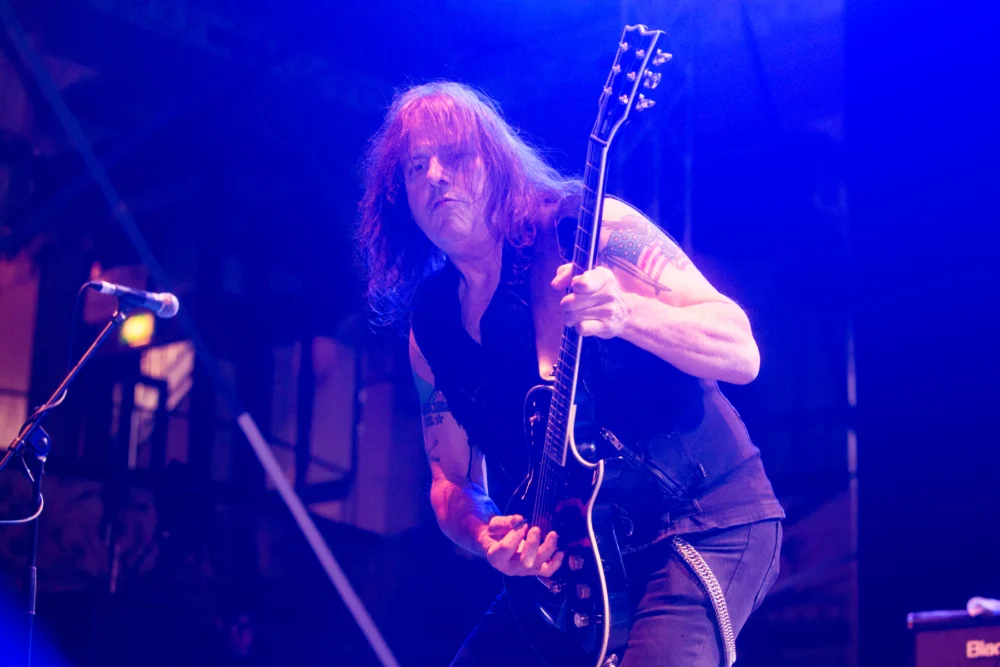
HangupsMusic.com – The world of hard rock and heavy metal is grappling with somber news as legendary guitarist Ross "the Boss" Friedman, an instrumental figure in both the birth of punk and the rise of epic metal, has publicly announced his diagnosis with Amyotrophic Lateral Sclerosis (ALS), often referred to as Lou Gehrig’s disease. The revelation, made on Monday, February 9th, has sent ripples of concern and an overwhelming wave of support through the global music community, highlighting the profound impact Friedman has had on generations of musicians and fans alike.
In a poignant statement accompanying the announcement, Friedman conveyed a mix of stoicism and deep gratitude. He acknowledged the inherent uncertainty that lies ahead, expressing profound sorrow at the prospect of no longer being able to wield his iconic instrument with the same force and precision. "It deeply affects me to realize my guitar playing might be curtailed," he shared, "yet the outpouring of affection and encouragement has been truly monumental. I am utterly overwhelmed by the love and solidarity shown by my family, cherished friends, and devoted followers. My heartfelt thanks go out to each and every one of you." This sentiment underscores not only the personal challenge he faces but also the unbreakable bond between an artist and his audience.
The journey to this diagnosis was protracted and perplexing. For several months, Friedman experienced a series of physical symptoms that, at first glance, seemed disconnected. These included a noticeable decline in strength within his hands and legs. Initially, he speculated these might be residual effects from a series of minor cerebrovascular incidents. Consequently, he embarked on a regimen of dietary adjustments, increased physical exercise, and dedicated physical therapy, hoping to counteract the progression of his symptoms. Regrettably, these efforts yielded no discernible improvement, failing to either halt the decline or restore his diminishing strength, ultimately leading to the definitive ALS diagnosis. ALS is a progressive neurodegenerative disease that affects nerve cells in the brain and spinal cord, leading to muscle weakness, paralysis, and eventually, the inability to speak, swallow, and breathe. The disease currently has no cure.
Born in the Bronx, New York, Ross Friedman’s musical odyssey began in the crucible of the early 1970s New York City underground. It was here, amidst the gritty energy and nascent rebellion of the burgeoning punk scene, that he co-founded The Dictators in 1973. Alongside childhood friends Andy Shernoff and Scott Kempner, Friedman helped forge a sound that was both raw and sophisticated, blending the primal energy of garage rock with sharp-witted lyrics and a proto-punk sensibility. The Dictators carved out a unique niche, distinct from the more artsy or politically charged punk bands, by embracing rock and roll hedonism, pop culture references, and a genuine love for classic American rock.
Their debut album, The Dictators Go Girl Crazy! (1975), while initially overlooked, is now lauded as a seminal work in punk history, influencing countless bands that followed. It showcased Friedman’s driving guitar work and the band’s irreverent humor. Their subsequent release, Manifest Destiny in 1977, garnered more commercial attention, making an appearance on the prestigious Billboard 200 Albums chart – a rare feat for a band operating on the fringes of the mainstream at the time. The Dictators’ original run solidified Friedman’s reputation as a formidable guitarist and a pioneer in the punk rock movement, demonstrating a versatility and power that hinted at his future endeavors.
Following his groundbreaking work with The Dictators, Friedman embarked on an entirely different sonic path, co-founding the heavy metal behemoth Manowar with bassist Joey DeMaio. This transition marked a dramatic shift from punk’s stripped-down aesthetic to the grandiose, operatic scale of traditional heavy metal. Manowar quickly established a fervent following by championing a singular philosophy: "Death to False Metal." Their music was characterized by thunderous rhythms, soaring vocals, and epic, sword-and-sorcery lyrical themes, all delivered with an unparalleled commitment to volume and spectacle.
Manowar’s live performances became legendary, not just for their musical intensity but for their sheer decibel levels. They famously earned a place in the Guinness World Records as "the loudest band in the world," a testament to their uncompromising pursuit of sonic dominance. Friedman’s tenure with Manowar throughout the 1980s was highly prolific, yielding six studio albums that are now considered cornerstones of the heavy metal genre. These include classics such as Battle Hymns (1982), Into Glory Ride (1983), and the critically acclaimed Hail to England (1984). The latter, a powerful declaration of metal supremacy, earned a spot on Rolling Stone‘s esteemed list of the 100 Greatest Metal Albums of All Time, solidifying Friedman’s legacy as a true metal titan. His distinct guitar style, characterized by its melodic yet aggressive nature, was integral to Manowar’s iconic sound, inspiring a generation of power and epic metal guitarists.
After his departure from Manowar, Friedman’s career continued its vibrant trajectory, showcasing his remarkable adaptability and passion for music. He fronted his own project, the Ross the Boss Band, where he continued to explore his signature heavy metal sound, touring and releasing new material to dedicated fans. Beyond his solo efforts, Friedman lent his talents to a diverse array of musical endeavors. He collaborated with the French rock group Shakin’ Street, adding his distinctive flair to their sound. He also contributed to Death Dealer, a supergroup project that brought together an impressive roster of metal musicians, further cementing his status within the heavy metal pantheon. His work with The Spinatras and The Brain Surgeons further demonstrated his willingness to explore different facets of hard rock and metal.
His enduring influence and indelible contributions to music were formally recognized in 2017 when Ross "the Boss" Friedman was inducted into the Metal Hall of Fame. This honor celebrated a career spanning decades, marked by innovation, dedication, and an unwavering commitment to the power of rock and metal. The induction served as a powerful acknowledgment of his pioneering role in both punk and heavy metal, genres that might seem disparate but were connected by Friedman’s singular vision and powerful guitar work.
As the music world rallies around Ross "the Boss" Friedman, the poignant reality of his condition casts a long shadow. The image of a guitarist, whose hands have crafted some of the most memorable riffs in punk and metal history, facing a future where playing becomes increasingly difficult, is heartbreaking. Yet, the overwhelming outpouring of love, encouragement, and solidarity from his global fan base, fellow musicians, and industry peers stands as a powerful testament to the profound impact of his artistry and spirit. It underscores the deep, often unspoken connection between creators and those moved by their creations, affirming that while the road ahead is uncertain, Friedman does not walk it alone. His legacy, etched in the annals of rock and metal, will continue to inspire, and his battle will undoubtedly be met with the collective strength of a community he helped build.
