
 By Azzam Bilal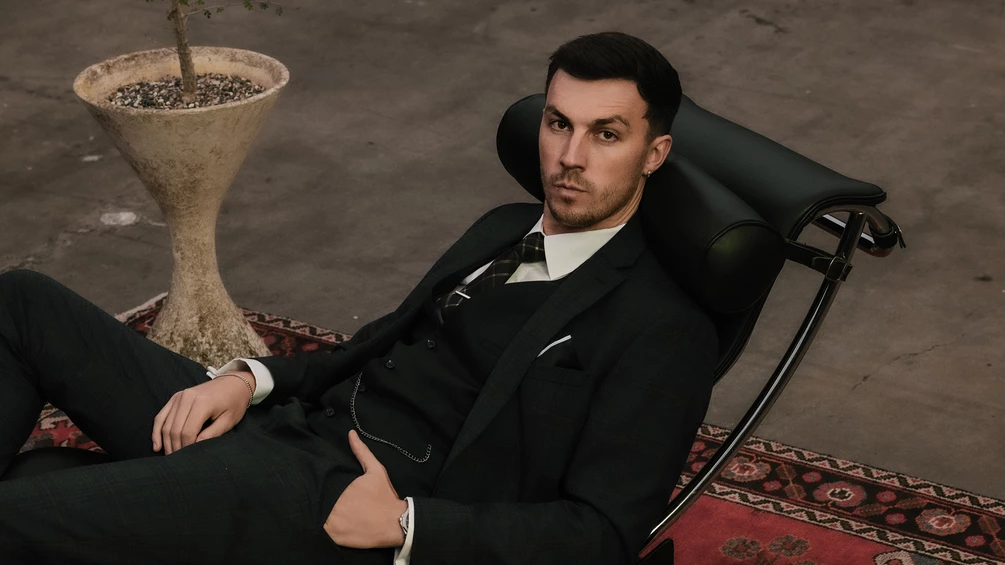
HangupsMusic.com – Los Angeles, California, is often characterized as a sprawling metropolis that consumes the aspirations of many who arrive looking for fame. For David Bissett, the British producer known globally as Cloonee, the initial perception of Southern California was one of skepticism. Before his relocation in 2021, Bissett viewed the city through a lens of common stereotypes: a place defined by superficiality, a relentless pursuit of wealth, and a social hierarchy built on ladder-climbing. However, after four years of residency, his perspective has shifted toward a more nuanced appreciation of the city’s creative energy. While he acknowledges that the "fake" side of Hollywood certainly exists, his personal experience has been defined by a welcoming community and an unprecedented professional expansion that likely would not have been possible had he remained in the United Kingdom.
The transition from the small town of Bewdley in Worcestershire to the palm-lined streets of Los Angeles was not a calculated move born of vanity, but rather a response to a seismic shift in the electronic music landscape. Bissett’s ascent is a testament to the power of intuition. During the post-pandemic reopening of the global club circuit, he noticed that the energy surrounding tech-house in the United States was reaching a boiling point that eclipsed the more reserved, "moody" atmosphere of the British scene. This realization, catalyzed by an invitation from fellow producer and mentor Chris Lake, prompted Bissett to pack a single suitcase and relocate across the Atlantic, a move that would ultimately redefine his sound and his career trajectory.
Bissett’s musical foundations are far removed from the polished house tracks that now dominate his discography. Growing up in the West Midlands, his primary influence was nu-metal. Accompanied by his father, he attended his first concert at the age of 12 to see Killswitch Engage, a formative experience that introduced him to the raw, communal energy of the moshpit. This background in aggressive, high-energy performance remains a vital part of his creative DNA. He notes that the transition from metal to electronic music was bridged by the "mechanized violence" of the 2010-era dubstep scene. For a teenager raised on the breakdowns of Limp Bizkit and System of a Down, the aggressive drops found on UKF Dubstep compilations felt like a natural evolution. The intensity of the crowd’s reaction was the common thread; whether it was a guitar riff or a bass drop, Bissett was drawn to music that elicited a visceral, physical response.
This penchant for high-intensity environments made his first major American shows a revelation. After signing with a management team that also represented Chris Lake, Bissett was invited to support Lake at massive venues in San Diego and Brooklyn. Standing before crowds of over 6,000 people, he witnessed a level of enthusiasm that felt more akin to a rock concert than a traditional house set. He describes the audience as a literal "sea of people" jumping in unison, a sight that made the UK’s more "cliquey" and introverted club culture feel distant. The scale grew rapidly; within months, he was playing for 12,000 fans at a baseball stadium, an experience he describes as both terrifying and transformative. The immediate feedback loop—both in person and via a skyrocketing social media following—confirmed that the United States was the most fertile ground for his specific brand of high-octane house music.
Living in Los Angeles has not only scaled his business but has also fundamentally altered his palette as a producer. The city’s cultural mosaic, particularly its deep-rooted Latin influences, began to seep into his work. Before moving to California, Bissett admits he was unfamiliar with the nuances of reggaeton or dembow. However, the rhythms of the city eventually got "under his skin." This organic immersion led to a series of successful experiments with Latin sounds, resulting in global hits like "Vamos A La Playa" featuring Miranda, and collaborations with artists such as Alvaro Diaz and El Bogueto.
This musical pivot has not been without its challenges. Bissett is acutely aware of the complexities involved in a white British artist utilizing Latin rhythms and vocalists. He addresses the potential for backlash with a level of transparency that is rare in the industry, acknowledging that Hispanic communities have every right to be protective of their cultural exports. To ensure his engagement is one of genuine appreciation rather than exploitation, Bissett has made a point of working directly with Latin American artists, employing a Mexican tour manager, and utilizing his platform for philanthropic efforts. His fundraisers for Para Los Niños—a community organization in Los Angeles—and his significant donations to wildfire relief efforts demonstrate a commitment to the city and the cultures that have fueled his recent success.
While his music has taken on a global flavor, Bissett’s work ethic remains rooted in the routine he developed back in England. He maintains a disciplined schedule, rising at 6:30 AM for long runs before spending the day in his studio. This structure provides a necessary anchor against the chaos of a global touring schedule. His home life on the Westside of Los Angeles reflects this desire for stability. Residing in a quiet, tree-lined neighborhood that feels more like a film set than a "bachelor pad," he lives with a childhood friend and keeps his freezer stocked with Yorkshire puddings and crumpets—small culinary links to his upbringing in Worcestershire.
The growth of his "Hellbent" brand is perhaps the most significant indicator of his long-term vision. Bissett realized early on that branding himself as an individual DJ had its limits. Instead, he focused on building Hellbent as an ecosystem that encompasses a record label, a high-demand merchandise line, and a specific visual identity. Influenced by the elaborate stage productions of bands like Slipknot and AC/DC, Bissett has brought a rock-star level of spectacle to the tech-house stage. This includes his now-infamous use of a vintage Mustang suspended by chains over the DJ booth and massive inflatable structures that create a distinct, immersive world for his audience.
Hellbent also serves as an incubator for emerging talent. Bissett is vocal about his desire for the label to be a platform for smaller artists rather than a "trophy cabinet" for established names. He signs tracks based on their impact on the dancefloor rather than the reputation of the producer. This philosophy is shared by his business partner, Shayan, who began as a design intern and now co-runs the Hellbent merchandise brand from an office in Long Beach. Together, they have created a brand that many fans identify with independently of Bissett’s own sets, a rare feat in the personality-driven world of electronic dance music.
As he looks toward the future, Bissett continues to evolve. His recent release, "How Deep Are Your Dreams," suggests a move toward a darker, more groove-centric sound that pays homage to the UK house scene of the mid-2010s. It represents an artistic full-circle moment, blending his British roots with the sophisticated production techniques he has honed in America. Despite the sunshine and the professional milestones, he still finds himself missing the simple comforts of a traditional English pub and the dry, sarcastic humor of his compatriots—elements of his identity that the relentless optimism of Los Angeles cannot quite replicate.
David Bissett’s journey from a "tiny little village" to the heights of the international music scene is a story of adaptation and authenticity. By embracing the scale of the American market while remaining tethered to the work ethic and musical curiosity of his youth, he has carved out a unique space in the industry. Whether he is hanging a car from a ceiling or raising tens of thousands of dollars for local families, Cloonee remains a producer driven by the same primal urge that first drew him to a moshpit: the desire to create a moment of collective, ecstatic energy. In the ever-evolving landscape of global house music, his "Hellbent" vision appears not just as a label, but as a blueprint for modern stardom.
