
 By Rose Miami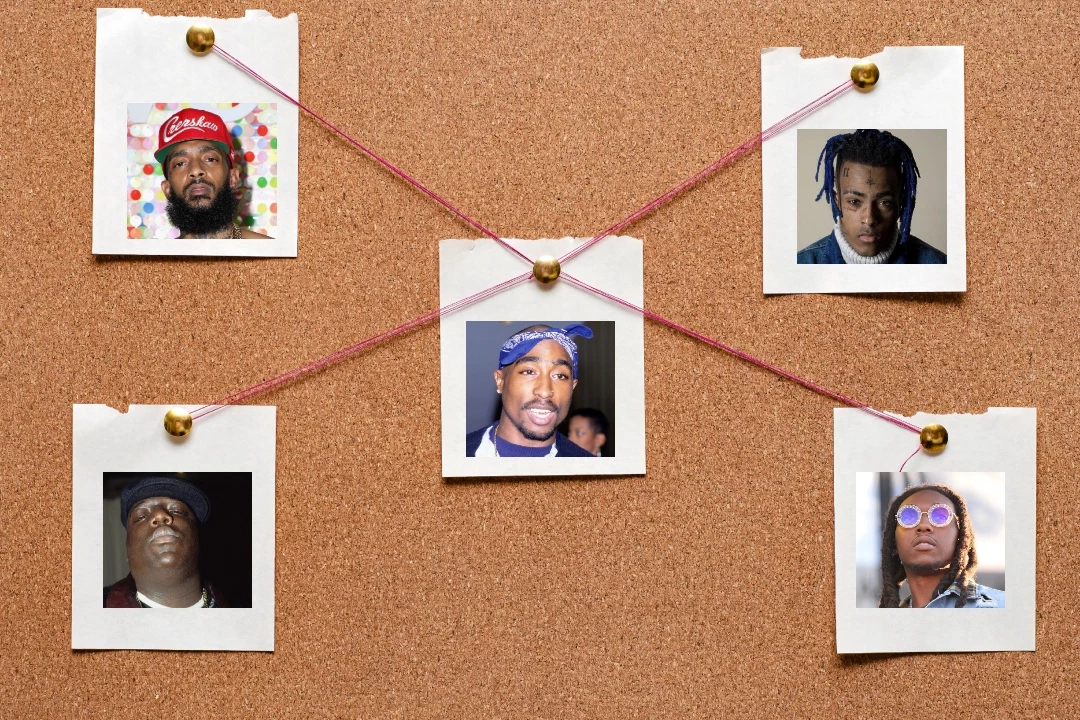
HangupsMusic.com – The vibrant pulse of hip-hop, a genre born from the streets and fueled by raw expression, has been tragically punctuated by loss. The unsolved murders of its artists represent a dark undercurrent, a stark reminder of the violence that has too often intersected with the creative lives of these cultural pioneers. From the foundational days of the genre to its global dominance, the narrative of hip-hop is inextricably linked with the stories of those whose voices were silenced prematurely, leaving behind a trail of unanswered questions and unfulfilled potential.
The genesis of this somber chapter can be traced back to a pivotal moment in August 1987. In the very borough that birthed hip-hop, the Bronx, Scott La Rock, a foundational member of Boogie Down Productions, was tragically killed. His life was cut short at the age of 25, a victim of gun violence that shattered the burgeoning optimism surrounding the genre. La Rock’s murder wasn’t merely the loss of a talented DJ and producer; it marked a perceived loss of innocence for hip-hop, a stark confrontation with the harsh realities that had been a backdrop to the music’s lyrical narratives. This event, while devastating, was unfortunately not an isolated incident, but rather the harbinger of a disturbing trend that would continue to plague the hip-hop community for decades to come.
Over the ensuing decades, the landscape of hip-hop has seen numerous luminaries fall victim to violence. While some high-profile cases, such as the murders of XXXTentacion and Jam Master Jay, have seen justice served with perpetrators brought to account, many others remain tragically unresolved. The recent killing of Takeoff, a respected member of the Migos trio, in 2022, exemplifies this ongoing struggle, with suspects currently awaiting trial. This persistent cycle of violence underscores a critical issue within the genre: despite hip-hop’s inherent connection to documenting the struggles and realities of inner-city life, its artists have disproportionately become targets, with law enforcement often finding themselves unable to definitively identify and prosecute those responsible. The legacy of Scott La Rock’s unsolved murder continues to resonate, a testament to the numerous hip-hop artists whose lives were extinguished without closure for their families and fans.
A comprehensive review of documented hip-hop homicides reveals a sobering statistic. In the nearly four decades since Scott La Rock’s death, an alarming number of rappers have met untimely ends due to violence. This translates to an average of two artists per year, sometimes more, whose creative journeys were abruptly halted. The disheartening reality is that only a small fraction of these cases have been definitively solved. Many others remain active investigations, meaning that a significant number of rappers’ lives have ended without the perpetrators facing justice. This persistent lack of resolution casts a long shadow over the genre, raising questions about the effectiveness of investigations and the broader societal factors contributing to this cycle of violence.
To contextualize this issue, it’s important to consider national homicide clearance rates. While overall murder case clearance rates in the United States have shown some improvement in recent years, reaching over 60% in some analyses, these figures do not fully reflect the disproportionately low success rate in resolving homicides involving hip-hop artists. Iconic figures like The Notorious B.I.G., Big L, and Mac Dre, whose deaths occurred decades ago, remain among the many whose cases have never been officially solved. These high-profile, enduring mysteries contribute to a pervasive sense of injustice and leave a void in the collective memory of the hip-hop community.
The persistent association of rap music with violence has, at times, led to unfair generalizations and backlash against the genre. As Scotty Morris, Scott La Rock’s manager, poignantly stated in the wake of his client’s death, "In some respects, rap music and violence seem to go hand in hand. But it’s not the music itself, it’s the environment. Violence was here long before hip-hop." This observation highlights a crucial distinction: the music often reflects the environment from which it emerges, rather than being the direct cause of the violence. The socioeconomic conditions, systemic issues, and pervasive presence of crime in certain communities are the true breeding grounds for violence, and hip-hop, in its raw honesty, has often served as a mirror to these realities.
This ongoing chronicle aims to provide a detailed overview of the current status of the cases involving the 93 hip-hop murders documented over the past 38 years. By examining each case, we seek to shed light on the progress, or lack thereof, in achieving justice for these fallen artists. This effort is a testament to the enduring impact of these artists and a call for continued attention to the unresolved tragedies that have marked hip-hop’s vibrant and complex history. The stories of these artists deserve to be remembered, and the pursuit of justice for them remains a vital undertaking for the entire music community and beyond.
