
 By admin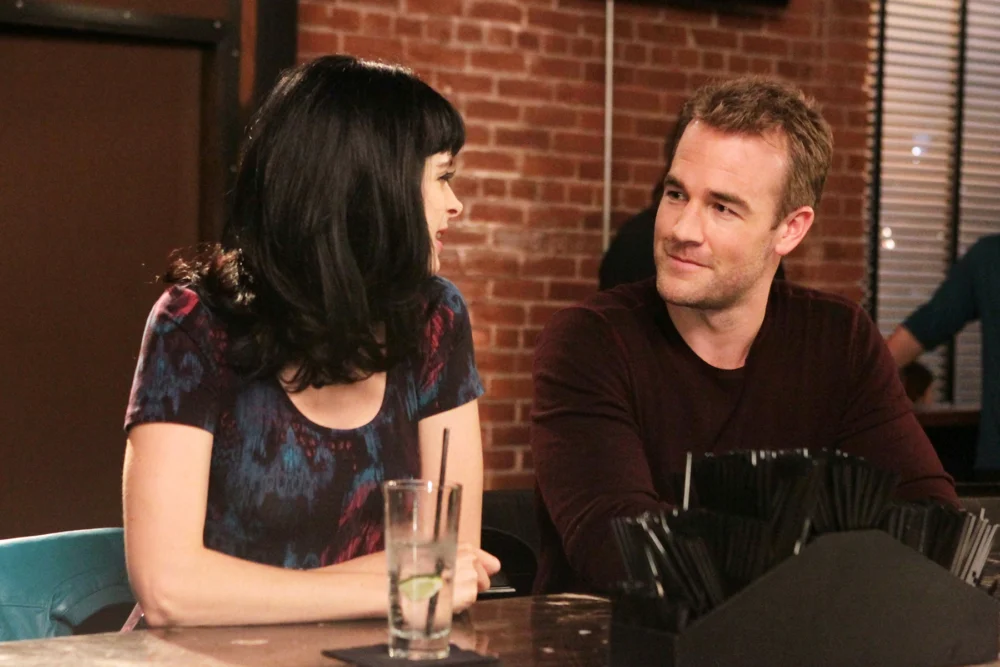
HangupsMusic.com – For many actors, a defining role can be both a blessing and a curse. James Van Der Beek, who rose to global fame as the introspective and often melodramatic Dawson Leery in the iconic teen drama Dawson’s Creek, experienced this duality firsthand. After the series concluded its six-season run in 2003, the actor found himself navigating the treacherous waters of Hollywood, seeking to forge an identity beyond the earnest, angst-ridden character that had made him a household name. The journey was not immediate or without its detours, but it ultimately led to a remarkable career renaissance built on an unexpected foundation: a willingness to satirize his own public persona.
The immediate years following Dawson’s Creek saw Van Der Beek taking on a variety of projects, each seemingly an attempt to distance himself from the creek-side romantic. His filmography from this period included a string of direct-to-video horror features, such as 2006’s The Plague, produced by horror maestro Clive Barker, which centered on a mysterious epidemic causing children to fall into comas. Another entry, the equally obscure Final Draft, saw him play a struggling writer descending into madness while crafting a script about a killer clown. On television, he explored more serious dramatic roles, portraying a doctor in the short-lived medical drama Mercy and a chillingly complex psychotic killer with multiple personalities in an episode of the popular CBS procedural Criminal Minds. While these roles showcased his versatility and depth, they didn’t quite capture the widespread attention or critical acclaim needed to fully recalibrate his public image. Audiences, it seemed, were still struggling to see him as anyone other than Dawson.
The tide began to turn when Van Der Beek demonstrated a surprising aptitude for self-deprecating humor. This shift became noticeable in a series of comedic appearances that allowed him to playfully acknowledge his past fame rather than run from it. His memorable cameo in Kesha’s 2010 music video for "Blow," where he engaged in a whimsical laser gun fight with the pop star, offered a glimpse of his comedic timing and willingness to be in on the joke. Similarly, his collaborations with Funny or Die, including the viral "DILF Khakis" skit, showcased a newfound ease with parody and a refreshing shedding of any perceived self-seriousness that might have clung to his teen idol past. These early forays into comedic self-awareness proved to be crucial stepping stones, paving the way for a role that would redefine his career trajectory.
The true "Van Der Beek-aissance" began with the raunchy ABC sitcom Don’t Trust the B—- in Apartment 23. Nahnatchka Khan, the show’s creator, had a specific vision for one of the main characters: a famous actor of a similar age to the titular "B," Chloe (Krysten Ritter), playing a fictionalized version of himself. When the casting director presented a list of potential names, James Van Der Beek’s immediately stood out. Khan confessed her initial skepticism, telling an interviewer at the time, "I never thought that James would even be close to being available, so I could never have even imagined that he would want to do it." Her surprise turned to delight when Van Der Beek not only expressed interest but was genuinely captivated by the script.
The premise of Don’t Trust the B—- in Apartment 23 revolved around June (Dreama Walker), an earnest Indiana transplant who moves to New York City and unexpectedly finds herself sharing an apartment with the wild, manipulative, and utterly charming Chloe. Van Der Beek’s character, a heightened, exaggerated version of himself, was written as Chloe’s best friend, a former flame who had settled into a platonic, albeit often chaotic, "straight-gay BFF" dynamic with her. This character provided the perfect vehicle for Van Der Beek to lean into, and then brilliantly subvert, public perceptions of his celebrity. Reflecting on this pivotal moment in his career, Van Der Beek humorously remarked to NBC New York in 2012, around the show’s premiere, that his ability to mock his Dawson’s Creek legacy only truly felt permissible "once the [Dawson’s Creek] residual money ran out." He expressed profound gratitude for the opportunity, acknowledging, "Thankfully they’ve kept me around Hollywood long enough to kind of have a second coming."
The fictionalized James Van Der Beek presented in Don’t Trust the B—- in Apartment 23 was a masterclass in comedic self-parody. He portrayed a wildly self-absorbed, often inappropriate, yet oddly endearing version of a faded teen idol, perpetually seeking relevance and validation. This "James" was a charmingly delusional horndog, not above exploiting his past fame for personal gain, even donning his iconic flannel shirt to impress a date. His antics were a constant source of humor, ranging from outlandish claims of partying with B-list celebrities like Kevin Sorbo, to showcasing action figures of himself from his Dawson days, and launching a disastrous line of impossibly tight jeans that made walking a challenge. One of the show’s recurring gags involved a fabricated rivalry with fellow former teen idol Dean Cain, culminating in a hilariously competitive stint on Dancing With the Stars. This persona allowed Van Der Beek to lampoon the very notion of celebrity, the pitfalls of typecasting, and the absurdities of Hollywood with sharp wit and unbridled enthusiasm.
Audiences and critics alike quickly embraced this bold new iteration of Van Der Beek. His obvious joy in both acknowledging and dismantling his teen-soap fame, while simultaneously crafting a character so distinctly non-Dawson, resonated deeply. Despite being placed in a challenging mid-season time slot on Wednesdays at 9:30 p.m., Don’t Trust the B—- in Apartment 23 quickly garnered a devoted cult following, leading to its renewal for a second season. The show’s unique blend of edgy humor and a genuinely likable ensemble cast, anchored by Van Der Beek’s fearless performance, proved to be a winning formula.
Van Der Beek himself relished the creative freedom the role afforded him. He conveyed his profound enjoyment of the experience, stating, "This has been the most fun I think I’ve ever had doing anything." He further elaborated on the evolving nature of the character, noting, "By Episode 3, I thought it bore less and less resemblance to me, which just made it even more fun." This sentiment underscored the comedic brilliance of his portrayal: while it started as a wink to his past, it quickly blossomed into a fully-fledged, distinct comedic character, allowing the actor to showcase a range and comedic timing previously unseen by many.
In stark contrast to the outlandish, hedonistic fictional persona he embodied on screen, the real James Van Der Beek’s life during this period was marked by stability and profound personal growth. In August 2010, he married Kimberly Brook, and just a month later, they welcomed their first child. The couple would go on to build a large family, becoming parents to six children. This significant shift in his personal life provided Van Der Beek with a grounding perspective that ironically empowered his professional leap into self-parody. He shared with The Hollywood Reporter that becoming a father had profoundly reshaped his priorities: "The reason I could do Apartment 23 is I’ve had a kid. It’s changed my life in the best possible way and totally rearranged my priorities." He reflected on how this personal foundation made it "much easier to go out and have a laugh at your own expense when suddenly something comes into your life that shows you what’s really important." Van Der Beek expressed immense gratitude for the show’s success and reception, attributing some of it to "dumb luck" but acknowledging the profound impact it had on his career, allowing him to demonstrate a versatility that opened doors to diverse roles in subsequent years, including his acclaimed performance in Varsity Blues and later, Pose.
James Van Der Beek’s journey from teen idol to self-aware comedic actor stands as a compelling testament to resilience and adaptability in the notoriously fickle entertainment industry. By embracing his past rather than running from it, and by bravely turning his celebrity into a canvas for satire, he not only found his footing but also carved out a unique and enduring niche. His "second coming" was not just a career revival; it was a masterful reinvention, proving that sometimes, the best way to move forward is to look back with a knowing smile and a healthy dose of humor.
