
 By admin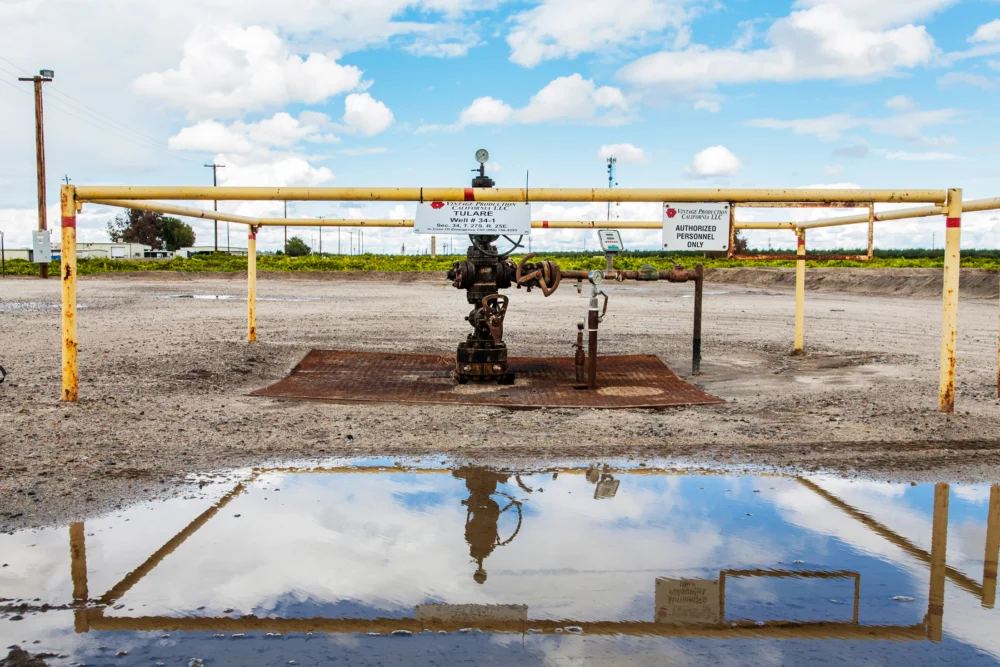
HangupsMusic.com – Recent revelations from a comprehensive cache of government documents, spanning nearly a century, are casting a stark, unsettling shadow over the oil and gas industry’s primary method for managing its colossal volume of toxic wastewater: deep underground injection. These historical records indicate that federal agencies were aware as early as the 1970s that this practice, while convenient, was at best a provisional measure. Yet, the U.S. Environmental Protection Agency (EPA) never enforced its own stipulation that such wells should serve as "a temporary means of disposal" until "a more environmentally acceptable means… [became] available." The implication of these findings is profound, suggesting that official and industrial assertions of safety may lack significant scientific foundation, thereby imperiling drinking water sources, vital mineral resources, local economies, and public health nationwide.
The sheer scale of this waste stream is staggering. According to 2021 data compiled in a 2022 report by the Groundwater Protection Council, the U.S. oil and gas industry generates an astounding 25.9 billion barrels (or approximately 1.0878 trillion gallons) of wastewater each year. To put this into perspective, that volume would create a continuous line of waste barrels stretching to the moon and back 28 times. A vast majority of this liquid, around 96% or 24.8 billion barrels, is currently disposed of by injecting it back into the Earth’s depths. In 2020, the nation housed 181,431 such injection wells—often referred to as saltwater disposal (SWD) wells—a number so immense that it outstrips the presence of Starbucks locations across the country by an 11-to-1 margin. If one were to drive coast-to-coast, a new wastewater injection well would appear every nine-tenths of a second.
This wastewater, variously labeled by the industry as "produced water," "brine," "salt water," or simply "water," emerges naturally during the extraction process of hydrocarbons. It is far from benign. This complex cocktail frequently contains dangerously high concentrations of salt, various carcinogenic substances, and heavy metals. Crucially, it often harbors levels of the radioactive element radium significantly exceeding the EPA’s threshold for defining it as radioactive waste. Radium is notoriously a "bone-seeker," mimicking calcium and, once absorbed, integrating into skeletal structures. This insidious property was tragically demonstrated by the "Radium Girls" of the early 20th century, factory workers who suffered fatal illnesses after ingesting radium-based paint while illuminating watch dials. "These contaminants pose serious threats to human health," emphasizes Amy Mall, director of the fossil fuels team at the Natural Resources Defense Council (NRDC), underscoring the daily generation of "billions of gallons of this dangerous wastewater" by the industry. While other sectors, including pharmaceuticals, steel manufacturing, slaughterhouses, and pesticide production, also utilize injection wells for hazardous waste, the sheer volume from oil and gas is unparalleled.
Despite ongoing claims from both industry and government regulators regarding the safety of these wells—even as the U.S. Geological Survey (USGS) has linked them to damaging earthquakes—the newly unearthed historical documents paint a picture of long-standing skepticism. Stanley Greenfield, then EPA Assistant Administrator for Research and Monitoring, delivered a remarkably candid assessment at a December 1971 symposium on "Underground Waste Management and Environmental Implications" in Houston, Texas. He declared deep-well injection to be "a technology of avoiding problems, not solving them in any real sense." Greenfield openly admitted, "We really do not know what happens to the wastes down there. We just hope."
The saga of wastewater management has plagued the petroleum industry since its inception in western Pennsylvania over 150 years ago. For its initial century, drillers crudely channeled wastewater into makeshift pits, or directly discharged it into ditches, streams, swamps, and bayous. A particularly alarming anecdote from 1920s Mississippi describes wastewater being held in a wooden children’s swimming pool. The first official mention of underground injection as a disposal method appeared in a 1929 report from the U.S. Department of the Interior. While it noted the technique’s feasibility in "isolated instances," the report immediately followed with a grave caution: "Not only is there danger that the water will migrate to fresh-water sands and pollute a potable water supply, but also there is an ever-present possibility that this water may endanger present or future oil production."

By the mid-20th century, the industry discovered an ancillary benefit to injecting wastewater: using it for "waterflooding" or "enhanced oil recovery" to force residual oil to the surface from challenging rock formations. This technique significantly contributed to U.S. oil production from the 1950s to the early 1990s. The true explosion in underground disposal, however, was spurred by the 1972 passage of the Clean Water Act. This landmark legislation compelled industries to cease dumping their effluents into rivers, which had resulted in poisoned wildlife, contaminated freshwater, and even flammable surface slicks. The EPA documents from that era clearly illustrate this paradigm shift. A 1974 EPA report on injection wells noted, "Little attention was given this technique until the 1960s, when the diminishing capabilities of surface waters to receive effluents, without violation of standards, made disposal and storage of liquid wastes by deep well injection increasingly more attractive."
The growth was exponential. From a mere four industrial injection wells in the United States in 1950, the number climbed to 110 by 1967, and then swelled more than a thousandfold in subsequent decades. This expansion occurred despite early prominent critics. In October 1970, David Dominick, then commissioner of the Federal Water Quality Administration (which soon merged into the EPA), warned that injection was merely a short-term solution, to be used with extreme caution "only until better methods of disposal are developed."
The December 1971 "Underground Waste Management and Environmental Implications" symposium, organized by the American Association of Petroleum Geologists and the USGS, featured a mix of views. While some, like USGS research director Vincent McKelvey, expressed optimism about the Earth’s "underutilized resource," many more voiced profound reservations that, in hindsight, proved chillingly accurate. A Utah geologist predicted that injecting chemical-laden waste could compromise rock integrity, leading to earthquakes and fractures that would allow waste to escape. A Department of Energy researcher highlighted radioactive liquid wastes as "a particularly vexing problem." A Wyoming law professor offered a grim legal forecast: "If you goop up someone’s water supply with your gunk; if you render unusable a valuable resource a neighboring landowner might have recovered; or if you ‘grease’ the rocks, cause an earthquake, and shake down his house – the law will make you pay." USGS hydrologist Robert Stallman accurately conjectured that large-scale liquid waste injection would result in groundwater and surface water pollution, altered rock permeability, cave-ins, seismic activity, and contamination of existing oil and gas deposits.
None critiqued the practice with the meticulous foresight of USGS hydrologist John Ferris. He asserted that "the term ‘impermeable’ is never an absolute. All rocks are permeable to some degree." Ferris predicted the inevitable escape of wastewater from injection zones, describing it as "engulf[ing] everything in its inexorable migration toward the discharge boundaries of the flow system," such as water wells, springs, or abandoned oil and gas wells. He concluded that while initial surges of freshwater might occur, contamination would eventually "become apparent at ever-increasing distances from the injection site." Orlo Childs, a Texas petroleum geologist, pondered in his closing remarks, "Where will the waste reside 100 years from now? We may just be opening up a Pandora’s box." Theodore Cook of the American Association of Petroleum Geologists, in his 1972 roundup of symposium presentations, affirmed, "It is clear that this method is not the final answer to society’s waste problems."
Initially, the EPA appeared to heed these grave warnings. A 1974 policy proposal echoed Dominick’s concerns, with an internal memo declaring deep-well injection "a temporary means of disposal" until a "more environmentally acceptable means" became available. However, when the EPA began regulating injection wells under the Underground Injection Control (UIC) program in June 1980, the agency effectively legitimized a disposal technique it had previously critiqued. This move was immediately met with lawsuits from powerful industries—oil and gas, mining, and steel—which decried the regulations as excessively costly and complex. An 1981 Oil & Gas Journal article observed, "Industry attacked the rules on the grounds that they were too complex and too costly." The subsequent settlement significantly watered down testing requirements and reduced the frequency of industry reports. Crucially, industry successfully lobbied to transfer regulatory authority from the EPA to individual states, a move that has seen 33 states, including Ohio, Texas, and Oklahoma, now granted permission to oversee their own injection wells. Ted Auch, a researcher with the oil and gas watchdog Fieldnotes, who has extensively investigated the industry’s waste production, critically notes, "I think at best they had a back-of-the-envelope calculation as to the capacity of these formations to take this waste, at worst it was just a rubber stamp."
Despite the Reagan administration’s generally pro-industry stance in the 1980s, some critical government research on injection wells emerged. A 1987 report from the EPA’s Kerr Environmental Research Lab in Ada, Oklahoma, highlighted the complexity of hazardous waste mixtures and the long timeframes required for subsurface environments to reach chemical and biological equilibrium, rendering it "difficult to predict exactly the action or fate of wastes after their injection," if not "nearly impossible." Another 1987 report, a joint effort by the EPA and the Department of Energy, detailed several pathways for waste to escape its injection layer and contaminate shallower groundwater. These included waste-induced rock fracturing, corrosive degradation of the injection wells themselves, and migration through older, abandoned oil and gas wells, providing "an escape route whereby the waste can enter an overlying potable ground water aquifer."

The early 2000s ushered in the fracking boom, a technological revolution that unlocked previously inaccessible oil and gas reserves, often located near or directly within communities, such as the Denver-Julesburg formation in Colorado or the Marcellus and Utica Shale formations in Pennsylvania and Ohio. This new era not only intensified the existing problem of produced water, laden with naturally occurring salts, carcinogens, metals, and radioactivity, but also introduced a novel waste stream: "flowback." This is the toxic slurry of sand and chemicals regurgitated after being injected at high pressure to fracture rock formations. Anthony Ingraffea, an engineering professor emeritus at Cornell University and a long-time oilfield researcher, points out the profound unknown: how these highly reactive fracking chemicals interact and transform within the high-pressure, high-temperature subterranean environment of the injection zone. This ever-increasing "tsunami" of wastewater continues to be directed largely to injection wells. Ingraffea dismisses the notion that modern well designs offer superior protection, stating, "One might be tempted to believe that well construction designs, materials, and techniques on wells constructed decades ago were vastly different than those of today. This is false."
Remarkably, America’s leading environmental regulator, the EPA, continues to vigorously defend the use of injection wells, stating on its website that they have "prove[n] to be a safe and inexpensive option for the disposal of unwanted and often hazardous byproducts." When questioned about the agency’s historical concerns regarding long-term injection, EPA Press Secretary Brigit Hirsch responded that the agency "is committed to supporting American energy companies and industry that are seeking permits for underground injection of fluids associated with oil and natural gas production" to "[advance] progress on pillars of its Powering the Great American Comeback initiative."
After 90 years of burying wastewater, including the past 13 years as the world’s leading oil and gas producer, the United States is now confronting a profound pollution crisis, with the industry and its regulators facing a reckoning in both the courts and public opinion. The prescient warnings from decades past are now tangible realities.
In May 2022, Bob Lane, a rural Ohio oil and gas operator, filed a lawsuit in Washington County Court against local injection well operators. He alleged that these companies "infiltrated, flooded, contaminated, polluted" his wells and property with waste containing "known or reasonably anticipated to be human carcinogens," thereby "harming the commercial viability" of his oil and gas reservoirs. The case, now before the Ohio Supreme Court, is being closely watched. Tallgrass spokesperson John Brown stated his company adheres to Ohio Department of Natural Resources (ODNR) rules and that its injected wastewater remains contained, not impacting drinking water. He emphasized that "underground injection is a long-established and proven method of disposal for many U.S. industries."
However, ODNR spokesperson Karina Cheung confirmed the agency has suspended operations at six injection wells posing "an imminent danger to the health and safety of the public" and likely to cause "immediate substantial damage to the natural resources of the state." A 2023 ODNR report described this leakage as "potentially catastrophic" and warned of "extensive environmental damage and/or aquifer contamination," admitting that Ohio’s extensive history of oil and gas drilling has left "numerous penetrations that may serve as pathways for fluid to migrate." In November, the Buckeye Environmental Network filed a lawsuit against ODNR for permitting two DeepRock injection wells near Marietta’s drinking water source. Marietta City Council President Susan Vessels voiced strong concern, stating, "I can think of nothing more important than to protect the city’s water… I want to help our city avoid an environmental catastrophe, which I believe is eventually going to happen if we continue down this path." The council passed a resolution urging a three-year moratorium on new injection wells in Washington County.
Meanwhile, in Oklahoma, an October expose by ProPublica and The Frontier documented a "growing number of purges," where high-pressure injection has cracked deep underground rock, allowing wastewater to travel uncontrolled for miles, sometimes resurfacing through abandoned wells. One incident saw brine from a defunct well contaminate a livestock watering hole, killing at least 28 cows. Whistleblower Danny Ray, a former state regulator, expressed concern over Oklahoma’s vast number of unplugged wells, fearing more disasters. The Oklahoma Corporation Commission, the state’s oil and gas regulator, discounted Ray’s concerns, stating it is "committed to protecting Oklahoma and supporting the state’s largest industry to perform its role in a safe and economic manner," believing these goals are "not mutually exclusive."

In West Texas, a September Bloomberg report revealed a proliferation of "zombie wells"—over 2,000 defunct oil and gas wells—unpredictably spouting geysers of fracking waste. One blowout in Crane County in 2022 shot wastewater 100 feet into the air, releasing approximately 24 million gallons of toxic fluids before being capped two weeks later. The Railroad Commission of Texas, the state’s oil and gas regulator, reported implementing new protective rules but acknowledged "the physical limitations of the disposal reservoirs" and risks to oil production and freshwater. Just last month, Inside Climate News reported on a new lawsuit by a Crane County landowner alleging "catastrophic impacts" from injection well blowouts.
The scale of the issue is now visible from space. A 2024 study by Southern Methodist University scientists, utilizing satellite observations and published in Geophysical Research Letters, found that so much wastewater has been injected underground in one area of the Permian Basin that the land has risen by 16 inches in just two years. This has created a high-pressurized underground lake, predicted to lead to more sky-high wastewater gushers. The authors concluded, "We have established a significant link between wastewater injection and oil well blowouts in the Permian Basin."
What was once "a little cottage industry of mom and pops" has morphed into "a much bigger business," according to Kurt Knewitz, a consultant running the injection well information site BuySWD.com. He cites Pilot Water Solutions, a division of Berkshire Hathaway Inc.’s Pilot Travel Centers, as a prime example. Knewitz observes, "You look at the Permian Basin and you think it’s a huge oil play, but it produces three to four times as much produced water as oil. So the Permian is really a produced water play that on the side produces some oil and gas."
Despite the overwhelming evidence and mounting crises, the industry continues to defend its preferred waste disposal method. A recent report from the American Petroleum Institute (API), the nation’s largest oil and gas lobby, asserts that injection wells are "safe and environmentally reliable" and "serve a vital role by supporting the responsible and sustainable development of O&G resources." The API did not directly address specific questions regarding the validity of early critiques but stated, "Our industry is committed to the responsible management of produced water. Operators continuously invest in advanced treatment technologies, recycling, and reuse practices to minimize freshwater use, protect ecosystems, and ensure safe operations." The USGS and DOE did not respond to inquiries for this story.
Advocacy groups tracking the EPA’s oil and gas waste regulations for decades highlight that the U.S. fracking industry’s business model is fundamentally dependent on inexpensive waste disposal. "The inadequate regulation and enforcement of waste disposal wells across the country represents a financial giveaway to the oil and gas industry," states the NRDC’s Mall, reiterating that "Experts have known for generations this method threatens the environment." The long-term costs of this "temporary means of disposal" are now becoming terrifyingly clear, a ticking subterranean clock threatening the nation’s most precious resources.
