
 By admin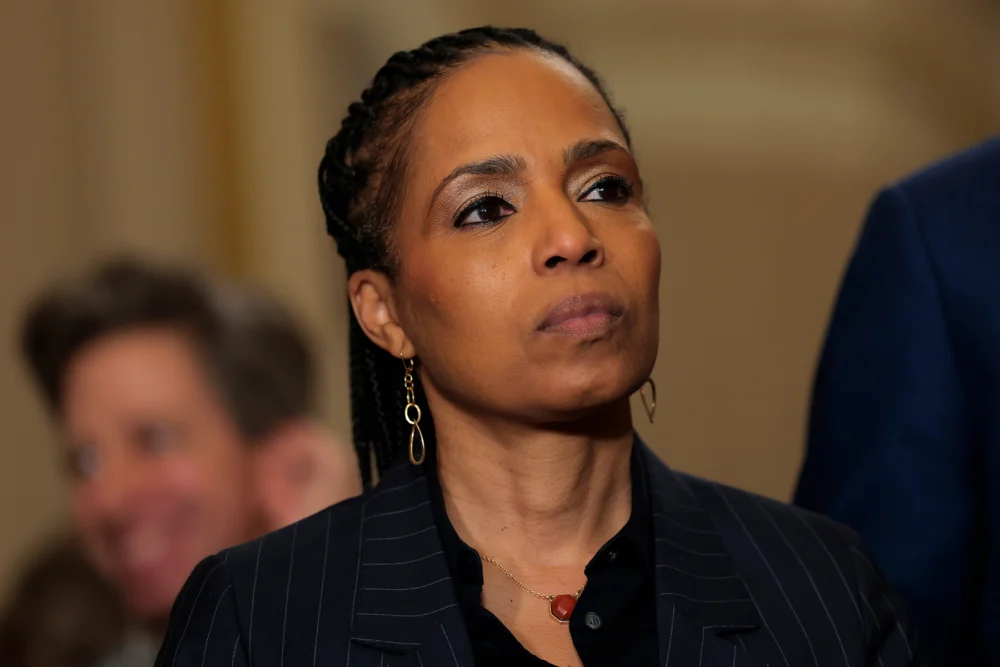
HangupsMusic.com – The nation’s public health infrastructure and policies have become a focal point of intense debate as Robert F. Kennedy Jr. marks his first year as Secretary of Health and Human Services. Amidst a backdrop of escalating public health crises and significant shifts in federal health strategy, Senator Angela Alsobrooks (D-MD) has emerged as a prominent voice of opposition, articulating profound concerns regarding the direction of the Department under Secretary Kennedy’s leadership. Her assessment, stark and unreserved, labels his leadership as "absolutely disastrous," signaling a deeply entrenched ideological divide within the political landscape concerning the future of American healthcare and scientific integrity.
The evidence cited by critics of Secretary Kennedy’s tenure paints a concerning picture of a public health system in flux. A significant measles outbreak in South Carolina, now approaching 1,000 reported cases, underscores a dramatic resurgence of a previously well-controlled disease. This development coincides with a federal directive to reduce the recommended childhood vaccination schedule from seventeen to eleven inoculations, a decision made despite strong objections from leading medical organizations across the country. Further alarming signs include reports of pioneering research projects being summarily terminated, numerous clinical trials brought to a halt, and a substantial reduction in the workforce across national health agencies, with thousands of experienced personnel reportedly departing or being dismissed. The American Academy of Pediatrics, a highly respected professional body, has positioned itself as a vocal opponent of these changes, emphasizing the critical role of evidence-based medical practice.
Senator Alsobrooks, a seasoned former prosecutor and Prince George’s County Executive, has made the removal of Secretary Kennedy her primary legislative objective since the earliest days of his appointment. As an influential member of the U.S. Senate Committee on Health, Education, Labor and Pensions (HELP), her direct and often confrontational exchanges with the Secretary during hearings have garnered widespread public attention, frequently going viral across social media platforms. Her determined stance is rooted in a fundamental belief that Kennedy’s approach undermines the scientific foundations of public health.
The confirmation process itself was fraught with tension, particularly for Senator Bill Cassidy (R-LA), the HELP committee chairman. As a physician and liver specialist, Senator Cassidy publicly grappled with the ethical implications of his vote. He ultimately extracted assurances from Kennedy regarding the preservation of the nation’s vaccine infrastructure before casting the deciding vote that advanced the nomination. This pivotal decision thrust Maryland’s recently elected junior senator, Alsobrooks, into a more prominent role in the unfolding controversy. Many of her constituents are scientists and researchers employed at the National Institutes of Health (NIH), headquartered in Bethesda, Maryland. As reports of dismissals and operational disruptions within these agencies began to surface, Senator Alsobrooks’ office became a hub for whistleblowers, with her phone, as she described it, "jumping off the hook."
In May, Senator Alsobrooks initiated a formal resolution of no confidence against Secretary Kennedy, a bold move that initially garnered support from only four of her Senate colleagues. Undeterred, she and Senator Ron Wyden (D-OR) have diligently compiled a comprehensive record of what they term the "Costs, Chaos and Corruption" associated with Kennedy’s leadership. This detailed accounting, presented in a 71-page report released today, is intended to serve as a strategic framework for reversing the perceived damage once Kennedy’s tenure concludes. The campaign has since gained considerable traction, with twenty-eight senators now co-sponsoring the no-confidence resolution and aligning with Alsobrooks’ "Sick of It" initiative. This campaign is premised on the urgent assertion that Kennedy’s removal from office is paramount to safeguarding the health and well-being of the American populace.
In response to the mounting criticism, Andrew Nixon, a spokesman for Secretary Kennedy, issued a robust defense of his leadership. Nixon asserted that the Department of Health and Human Services (HHS) is "exercising its full authority to deliver results for the American people," and has "confronted long-standing public health challenges with transparency, courage and gold-standard science." He highlighted several initiatives, including increased investments in rural healthcare, efforts to reduce prescription drug prices, and the elimination of petroleum-based dyes from the food supply. Nixon concluded by affirming that HHS intends to "carry this momentum into 2026 to strengthen accountability, put patients first, and protect public health."
In an exclusive discussion, Senator Alsobrooks elaborated on the motivations behind her unwavering campaign against Secretary Kennedy. Reflecting on his year in office, she unequivocally stated, "His leadership has been absolutely disastrous, and it has almost single-handedly worked to dismantle the public health system in our country and many of the gains that we’ve made in research, science, and medicine. America’s exceptionalism really rests on our prowess in the areas of science, research, and medicine. And what he has done will really set our country back in terms of our [worldwide] standing."
Her early apprehension about Kennedy’s suitability for the role was solidified during an initial meeting with him prior to his confirmation. Alsobrooks recounted directly challenging him on his qualifications, given his lack of professional background in research, science, or medicine. She specifically asked if he intended to override the judgment of established scientists and doctors. Kennedy’s immediate and unhesitating response – "I will replace bad scientists with good scientists" – solidified her conviction that his leadership would pose a significant threat. "I knew then that we were really in a lot of trouble. So, that’s how it started," she explained.
A particularly notable moment that brought their conflict into sharp public focus occurred during Kennedy’s confirmation hearing before the HELP committee. During this hearing, Kennedy made a contentious claim asserting that African Americans possess a distinct immune system, implying a need for a different vaccination approach. Senator Alsobrooks, with pointed directness, challenged him, asking, "Should someone like me get different vaccines?" She subsequently condemned his response as "very dangerous." She elaborated on the dangers she perceived at that moment, highlighting that Kennedy had grossly misrepresented a published study to support his claim. Immediately following the hearing, the physician who authored the study publicly refuted Kennedy’s interpretation, stating that his assertions were not supported by the research or by scientific consensus.
Alsobrooks emphasized the profound responsibility of the Secretary of Health and Human Services to provide reliable information, particularly to parents. "I have a daughter, and I know there are a number of younger parents who need to be able to rely on the information and advice that comes from the Secretary of Health and Human Services," she stated. "And to hear him give information like that, information that was refuted immediately by the doctor who actually wrote that study? It has been my real mission to make sure parents understand they can’t trust anything that comes out of his agency leadership and that the misinformation he has continued to spread is very dangerous to them and the health of their children, and they should be checking with their doctors and pediatricians."
When pressed on whether she views Kennedy as intentionally misleading the public or simply misinformed, Alsobrooks asserted, "I think he definitely has an ideological agenda, and I think that agenda is for him to be proven correct about these theories that he claims. But I also believe that if you tell a lie often enough, then you might even believe it."
The senator also reflected on the vote cast by HELP committee chairman Senator Cassidy, questioning whether he regrets his decision and if it constituted a violation of his Hippocratic oath. She noted that Senator Cassidy, as a liver doctor, holds the hepatitis vaccination in high regard. His support for Kennedy, she suggested, appeared conditional upon assurances made by the Secretary during the hearing—assurances she believes Kennedy has since failed to uphold. Alsobrooks firmly believes Kennedy should be held accountable for his actions and the promises he made.
Detailing the evolution of her "Sick of It" campaign and the no-confidence resolution, Alsobrooks explained that while initial support was minimal, the growing "mayhem and chaos" within federal health agencies galvanized her efforts. She recounted receiving alarming reports from inside the NIH, including instances where employees were forced to ration basic supplies like gloves and bleach, and even to tear paper towels in half due to scarcity. The reported dismissal of approximately 20,000 employees from health agencies, a number she suspects is incomplete given pending data requests, further underscored the severity of the situation. "We knew that the decisions he made were going to make Americans sick," she concluded, underscoring the urgency of her campaign.
Considering the persistent measles outbreak in South Carolina, Alsobrooks was asked if such a crisis might compel Republicans to join calls for Kennedy’s resignation. Her response was resolute: "I think whatever it is, we’ve already crossed the line." She believes that the numerous physicians on the health committee, regardless of party affiliation, recognize the inherent dangers posed by the resurgence of measles, the recent severity of the flu season, and other previously contained illnesses. "There’s nothing partisan about the health of our country," she stated, appealing to a common ground of public well-being.
Finally, the recent public statement by Dr. Mehmet Oz, advocating for measles vaccinations, was discussed. Senator Alsobrooks interpreted this as a clear signal that others within the administration, including potentially the White House, disagree with Kennedy’s stance and perceive his failure to vocally support vaccination as problematic. "I think they obviously disagree with the direction that he’s taking the agency," she commented. "If you’re asking people to vaccinate, it’s acknowledgement that this is an issue that needs to be addressed. It also speaks to the urgency of it." She reiterated the critical importance of her continued advocacy and the need for parents to consult with their healthcare providers, emphasizing, "It is a matter of life and death."
