
 By Azzam Bilal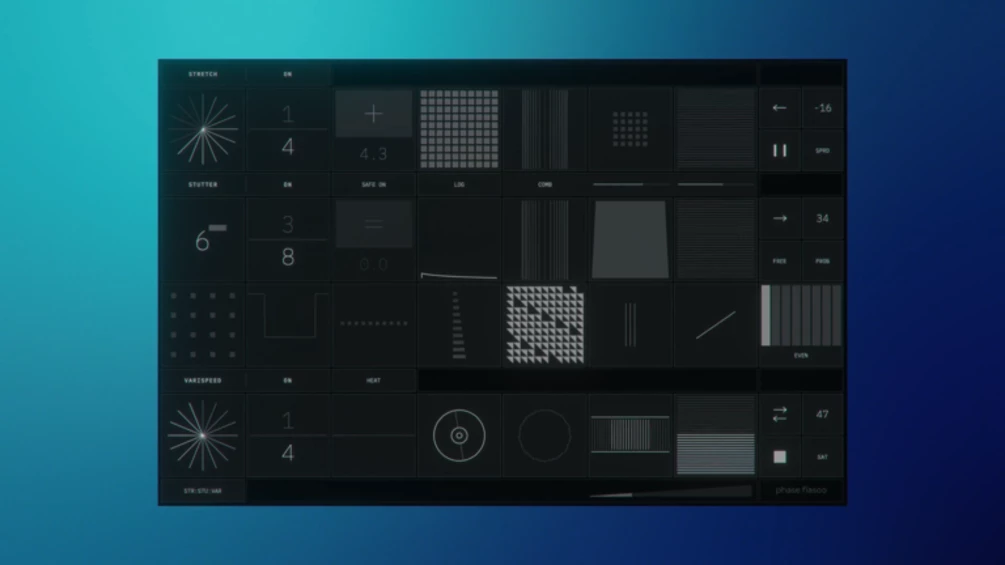
HangupsMusic.com – In an era where digital audio workstations are often saturated with overly complex and expensive processing suites, the arrival of a streamlined, creatively focused utility can be a transformative event for independent producers. Software developer and designer Jonas Eriksson has recently stepped into this space with the release of Tape Fiasco, a multi-effect plugin that challenges the traditional boundaries of time-based processing. By merging the unpredictable nature of vintage hardware with the precision of modern digital design, Eriksson has provided the music production community with a tool that is as visually striking as it is sonically versatile. Tape Fiasco is not merely a utility; it is an invitation to experiment with the beauty of audio degradation.
The architecture of Tape Fiasco is built upon three primary pillars: a granular time-stretching engine, a tape-style varispeed module, and a rhythmic stutter effect. While these components exist in various forms across the software landscape, Eriksson’s implementation is unique due to its block-based interface. This design philosophy emphasizes modularity and visual clarity, allowing users to interact with the sound in a tactile, almost architectural manner. Rather than navigating through nested menus or cluttered dials, the producer is presented with a workflow that encourages the "banding together" of effects, creating a symbiotic relationship between the different processing stages.
The first of these modules, the Stretch component, utilizes granular synthesis to manipulate the temporal characteristics of an incoming signal. Granular synthesis works by capturing audio into a buffer and سپس dividing it into tiny, overlapping segments known as "grains." By controlling the playback speed and density of these grains, Tape Fiasco allows users to stretch a sound infinitely without necessarily altering its pitch, or conversely, to shift the pitch while maintaining the original timing. This module is particularly effective for creating ambient textures, elongated vocal pads, or "frozen" sonic landscapes. The ability to manipulate the overlap and size of the grains gives the user a high degree of control over the texture, ranging from smooth, cloud-like sustain to jittery, mechanical artifacts.
Complementing the granular engine is the Varispeed module, which pays homage to the physical mechanics of vintage tape machines. In the analog world, changing the speed of a tape reel inherently affects both the timing and the pitch of the recording. Tape Fiasco recreates this behavior with startling accuracy, offering a suite of controls that go beyond simple speed adjustments. Users can introduce "pitch wobble"—the characteristic instability found in aging playback heads—and perform dramatic "tape stops" and "scratches." Beyond these movement-based effects, the Varispeed module also injects the sonic "warmth" that has become a staple of modern production. This involves the subtle application of harmonic saturation and soft-clipping compression, mimicking the way magnetic tape rounds off transients and adds a pleasing grit to the low-mid frequencies. In a digital environment that can often feel sterile, this module provides the necessary "friction" to make a track feel organic and lived-in.
The third component of the Tape Fiasco trifecta is the Stutter effect. This module is designed for rhythmic disruption, capturing short slices of audio and repeating them in synchronized or free-running patterns. In modern electronic music, stuttering is frequently used to create tension before a drop or to add a glitchy, percussive layer to melodic parts. However, Eriksson has enriched this classic effect by integrating pitch-bending and filtering controls directly into the stutter engine. This means that as a sound repeats, it can simultaneously dive in frequency or pass through a resonant filter sweep, adding a sense of kinetic energy that static repetition lacks. This makes the Stutter module not just a rhythmic tool, but a melodic one as well.
One of the most compelling aspects of Tape Fiasco is its visual identity. Jonas Eriksson, drawing on his background as a designer, has opted for an interface that shuns the photorealistic skeuomorphism of many "vintage" plugins in favor of a clean, block-based aesthetic. This choice reflects a broader trend in software design where functionality and user experience take precedence over visual nostalgia. The interface allows the user to see the signal flow clearly, understanding how the granular stretch feeds into the tape saturation, which in turn might be chopped up by the stutter module. This transparency is vital for experimental sound design, where the goal is often to push a sound until it breaks in an aesthetically pleasing way.
From a technical perspective, Tape Fiasco is currently available for both macOS and Windows users. It supports VST3 and AU formats on macOS, while Windows users can utilize the VST3 version. It is important to note the developer’s specific testing environment: the plugin has been rigorously vetted on macOS Sequoia 15.1 using Ableton Live 12.2. While it is expected to function across various other DAWs and operating system versions, this specific benchmark ensures that users on the cutting edge of Apple’s ecosystem will have a stable experience. For a free tool, this level of transparency regarding compatibility is a welcome professional touch, allowing producers to integrate the software into their workflows with confidence.
The release of Tape Fiasco as a free download is a testament to the thriving "indie" developer scene within the audio industry. Developers like Eriksson often release these tools to showcase their design philosophy and to give back to the community that sustains them. For the end user, this represents an opportunity to expand their sonic palette without financial risk. In a market where "lo-fi" and "analog-style" plugins can often command premium prices, Tape Fiasco stands out by offering high-quality granular and tape emulation for the price of a few clicks.
In practical application, Tape Fiasco excels across a wide range of source materials. On drum loops, the Stutter module can be used to create complex breakbeats or fills, while the Varispeed adds the "crunch" associated with 12-bit samplers. On vocals, the Stretch module can turn a single word into a haunting, ethereal pad that sits in the background of a mix. Even on a full master bus, the subtle application of the Varispeed’s compression and wobble can provide a "glue" that helps disparate elements of a track feel unified. The true power of the plugin, however, lies in the "Fiasco" implied by its name—the ability to push the settings to their extremes, resulting in the kind of beautiful, accidental sounds that define genres like IDM, glitch, and experimental ambient music.
As music production continues to move toward a hybrid of pristine digital clarity and intentional analog imperfection, tools like Tape Fiasco become essential. They bridge the gap between the predictable and the chaotic. By giving producers a sandbox where they can stretch, wobble, and slice their audio, Jonas Eriksson has contributed a significant new chapter to the world of free audio software. Whether used for subtle enhancement or total sonic destruction, Tape Fiasco is a versatile addition to any digital signal chain, proving that sometimes, the best way to move forward in music is to embrace the glitches and "fiascos" of the past.
Producers interested in exploring these new sonic territories can find the plugin available for download directly from the developer’s website. As the industry watches for further updates or new releases from Eriksson, Tape Fiasco remains a prominent example of how thoughtful design and creative engineering can result in a tool that is much more than the sum of its parts. It is a reminder that in the world of sound, there is often more beauty in the breakdown than in the build-up.
