
 By Azzam Bilal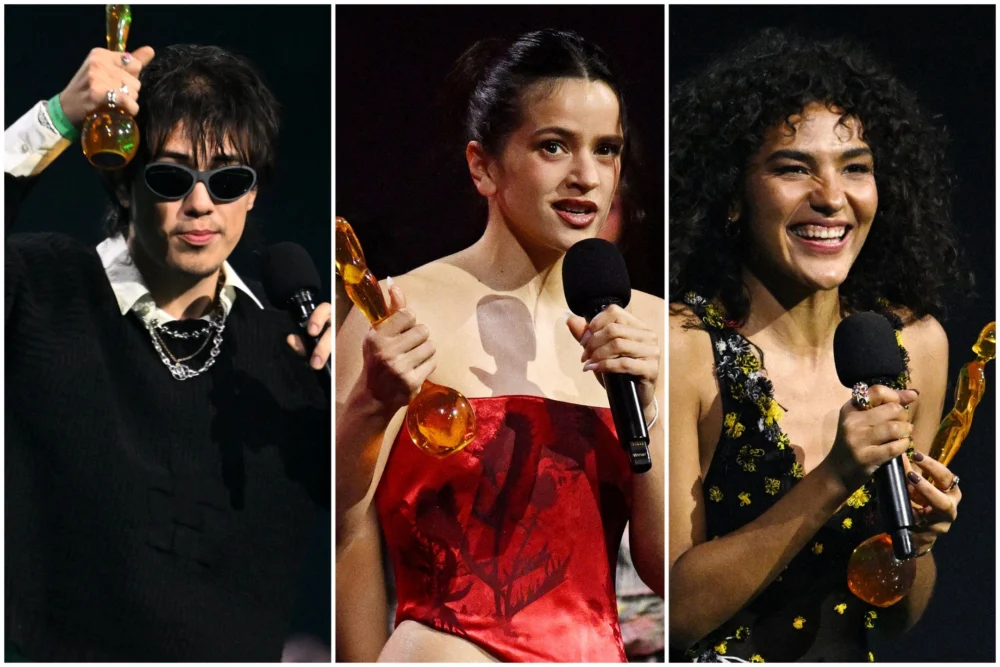
HangupsMusic.com – Manchester, England, witnessed a transformative evening for the global music industry as the 2026 BRIT Awards took center stage at the Co-op Live Arena. In a ceremony that balanced high-octane performances with poignant political statements, the night undoubtedly belonged to Olivia Dean. The London-born singer-songwriter solidified her status as the premiere voice of her generation, walking away with four of the evening’s most prestigious accolades. The event, which has historically been centered in London, found a vibrant new energy in Manchester, serving as a fitting backdrop for a year defined by generic boundary-pushing and the rise of independent spirits.
The narrative of the night was set early on as Olivia Dean’s name was called repeatedly. Dean’s sweep included the coveted Artist of the Year and Mastercard Album of the Year for her critically acclaimed project, The Art of Loving. The record, praised for its lush instrumentation and Dean’s signature lyrical vulnerability, has been a mainstay on the charts and a favorite among critics since its release. Her success continued into the genre categories, where she secured Best Pop Act, further proving her ability to bridge the gap between soulful intimacy and mainstream appeal. However, perhaps the most emotional moment of her evening came during the announcement of Song of the Year. Dean shared the win with North Shields’ own Sam Fender for their collaborative duet, “Rein Me In.” The track, a soaring ballad that explores the complexities of modern companionship, beat out stiff competition from heavyweights like Ed Sheeran and Calvin Harris.
While Dean provided the evening’s emotional core, the Brooklyn-based rock outfit Geese provided its most talked-about moment of social commentary. Upon accepting the award for International Group of the Year, the band’s drummer, Max Bassin, delivered a speech that was as brief as it was incendiary. Stepping to the microphone, Bassin bypassed the traditional list of industry thank-yous, instead opting for a concise political manifesto: “Free Palestine, fuck ICE, go Geese.” The statement immediately rippled across social media, sparking a blend of controversy and applause, and reminding the audience of the long-standing tradition of the BRITs as a platform for counter-culture expression. Geese’s victory in the category was a notable upset, as they beat out established global icons like Tame Impala and Haim, signaling a shift in the Academy’s appreciation toward more experimental, post-punk sounds.
The international categories further highlighted the globalized nature of today’s music consumption. Rosalía was named International Artist of the Year, a testament to her enduring influence and her ability to transcend linguistic barriers with her innovative blend of flamenco and experimental pop. The Spanish superstar also graced the stage for a performance that was widely considered the visual highlight of the night, blending intricate choreography with her powerhouse vocals. In the International Song of the Year category, the viral sensation “APT.” by Rosé and Bruno Mars took the top prize. The collaboration, which became a global phenomenon for its infectious hook and the seamless chemistry between the Blackpink star and the American pop veteran, triumphed over tracks by Taylor Swift and Chappell Roan.
The 2026 ceremony also marked a historic moment for gender representation and youth in music production. Earlier in the week, it was announced that PinkPantheress had been named Producer of the Year. In doing so, she became the youngest artist ever to receive the honor and the first woman to be recognized in the category’s history. This win serves as a significant milestone for the industry, acknowledging the "bedroom pop" pioneer’s technical prowess and her unique ability to blend drum-and-bass aesthetics with nostalgic pop sensibilities. Although she did not take home the Artist of the Year trophy, her presence was felt throughout the night as a symbol of the DIY ethos that has come to dominate the modern era.
In the genre-specific categories, the competition was particularly fierce. The Hip Hop/Grime/Rap Act award was presented to Dave, whose intellectual lyricism and cinematic production on The Boy Who Played the Harp continued his streak of dominance in the UK rap scene. Meanwhile, the Dance Act award went to the powerhouse trio of Fred again.., Skepta, and PlaqueBoyMax for their high-energy contribution to the club scene, “Victory Lap.” The win underscored Fred again..’s continued evolution from a niche producer to a stadium-filling headline act. In a move that surprised some but delighted fans of the avant-garde, the mysterious R&B collective Sault took home the R&B Act award, maintaining their tradition of anonymity while their music continues to speak volumes about Black identity and soul.
Rock and alternative music also saw a changing of the guard, though with some familiar faces. Wolf Alice, long-time darlings of the British indie scene, were named Group of the Year. Their win was a celebration of longevity and consistent excellence in a fast-moving industry. Sam Fender, in addition to his shared win with Olivia Dean, was crowned the winner of the Alternative/Rock Act category. Fender’s ability to capture the anxieties and hopes of the working class has made him a vital figure in British guitar music, and his win over acts like Wet Leg and Blood Orange solidified his standing as the genre’s current torchbearer.
The Breakthrough Artist award, often a predictor of future superstardom, was handed to Lola Young. Young’s raw, honest approach to songwriting and her gravelly, soulful voice have earned her a dedicated following over the past year. Her victory over talented nominees like Barry Can’t Swim and Skye Newman suggests that the UK music industry is leaning back toward authentic, vocal-driven artistry. In the Critics’ Choice category, which focuses on emerging talent for the coming year, Jacob Alon was announced as the winner, following in the footsteps of previous recipients who have gone on to global fame.
The evening was punctuated by a series of high-profile performances that showcased the diversity of the current musical landscape. Harry Styles returned to the BRITs stage with a charismatic performance that reminded the audience of his unparalleled showmanship. Björk also made a rare and ethereal appearance, providing a stark but beautiful contrast to the pop-heavy lineup. However, it was the back-to-back performances from the night’s big winners, Rosalía and Olivia Dean, that truly defined the spirit of the event. Dean’s performance, in particular, felt like a victory lap, as she took to the stage surrounded by a full orchestra to deliver a soaring rendition of her award-winning hits.
As the 2026 BRIT Awards concluded, the industry looked back on a year of significant shifts. The move to Manchester’s Co-op Live Arena was hailed as a success, decentralizing the awards and tapping into the rich musical heritage of the North. The dominance of artists like Olivia Dean and PinkPantheress suggests a future where the industry is more inclusive and more focused on multi-faceted talent. Simultaneously, the bold political stances taken by artists like Geese ensure that the BRITs remain a place where the music is not just heard, but felt as a reflection of the world at large. With a blend of established icons and a new wave of trailblazers, the 2026 ceremony proved that British music, and its relationship with the global stage, is as potent and unpredictable as ever.
