
 By admin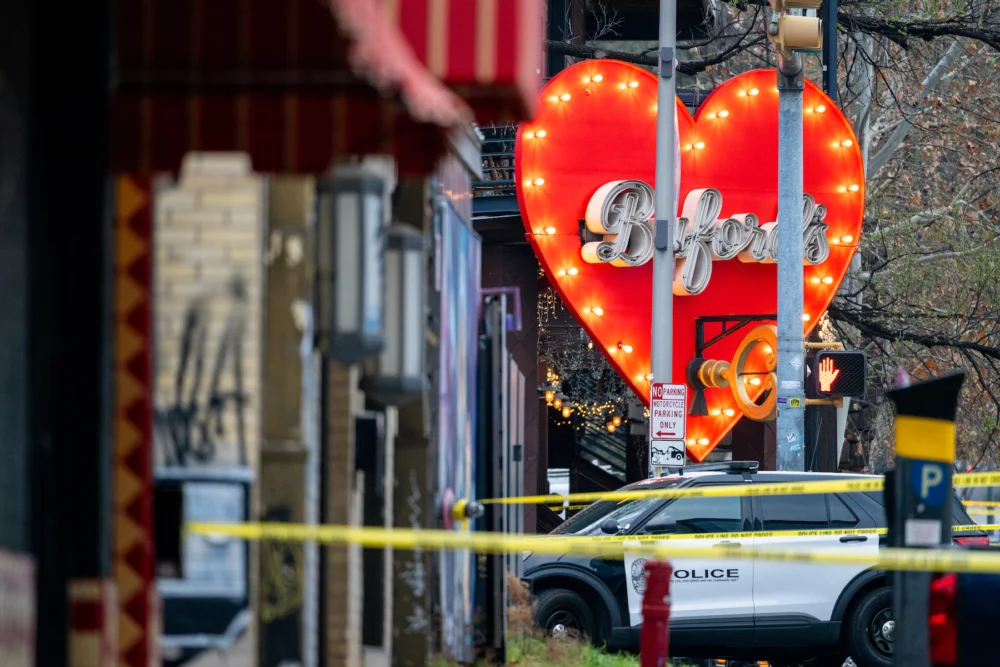
HangupsMusic.com – Austin, Texas, a city celebrated globally as the "Live Music Capital of the World," found its vibrant pulse tragically interrupted by an act of horrific violence on an otherwise ordinary Sunday morning. A beloved establishment on the iconic Sixth Street, the very heart of Austin’s nightlife and entertainment scene, became the epicenter of a mass shooting that left two individuals dead and fourteen others injured, three of whom remain in critical condition. The devastating incident not only plunged the community into shock and grief but also triggered a high-stakes investigation by federal authorities, who have cautiously indicated a "potential nexus to terrorism" while simultaneously acknowledging the complex possibilities of mental health factors.
The tranquility of the early hours was shattered when the suspect, later identified as 53-year-old Ndiaga Diagne, a naturalized U.S. citizen originally from Senegal, initiated his deadly assault. According to law enforcement reports, Diagne began his rampage from inside his SUV, using a pistol to fire upon patrons gathered on the patio and outside the bar. Austin Police Chief Lisa Davis detailed the chilling sequence, noting that Diagne briefly put on his vehicle’s hazard lights, lowered his window, and systematically targeted unsuspecting individuals enjoying the nascent hours of the weekend. Following this initial volley, Diagne reportedly parked his vehicle, exited, and continued his indiscriminate shooting spree with a rifle and a pistol, turning the lively street into a scene of unimaginable chaos and terror.
The swift and courageous response of Austin’s law enforcement officers was instrumental in preventing further casualties. Officers engaged Diagne soon after he exited his vehicle, neutralizing the threat and bringing his violent rampage to an end. This decisive action, occurring mere moments after the first shots rang out, was lauded by city officials, including Austin Mayor Kirk Watson, who credited the rapid intervention with undoubtedly saving lives. Emergency medical services, arriving on the scene within a minute of the initial reports, demonstrated extraordinary efficiency under pressure, tending to the wounded and coordinating transport to area hospitals. Among the fourteen injured, three required immediate critical care, underscoring the severity of the wounds inflicted during the assault.
The subsequent investigation has unfolded with significant complexity. FBI agent Alex Doran, speaking at a press conference, underscored the preliminary nature of their findings, stating it was "way too early to determine motivation." However, Doran confirmed that evidence discovered on Diagne’s person and within his vehicle pointed towards a "potential nexus to terrorism." This revelation cast a long shadow, introducing a new layer of concern for a city accustomed to celebrating culture and community. Despite this alarming possibility, authorities have been careful not to definitively label the motive, maintaining an open mind regarding other factors, including the potential role of mental illness. This multi-faceted approach reflects the challenges inherent in understanding such acts of violence, where personal grievances, extremist ideologies, and psychological states can often intertwine in bewildering ways.
Adding another layer to the intricate timeline, the mass shooting occurred mere hours after the United States, in conjunction with Israel, reportedly launched "Operation Epic Fury" against Iran. This military campaign, as reported, had resulted in the deaths of high-ranking Iranian officials, including Ayatollah Ali Khamenei. While authorities have not publicly established a direct causal link between this geopolitical event and Diagne’s actions, the temporal proximity has undoubtedly been noted as part of the broader context under federal investigation, particularly given the FBI’s mention of a potential terrorism nexus. This confluence of events highlights the increasingly interconnected nature of global affairs and domestic security concerns.
For Austin, the incident on Sixth Street resonates far beyond the immediate tragedy. Sixth Street is more than just a thoroughfare; it is the beating heart of the city’s identity, a vibrant mosaic of historic buildings, eclectic bars, live music venues, and bustling restaurants that collectively define Austin’s unique cultural landscape. For decades, it has been a magnet for musicians, artists, tourists, and locals alike, a place where melodies spill from open doors, laughter echoes through the night, and the spirit of creativity thrives. The very notion that such a sanctuary of sound and celebration could be breached by indiscriminate violence sends a profound ripple of unease through the community.
The attack forced Austinites to confront the fragility of their cherished public spaces, prompting questions about security in entertainment districts. While the city’s police and EMS response was exemplary, the incident underscores the vulnerability inherent in open, accessible urban environments. Businesses along Sixth Street, many of which are independently owned and deeply embedded in the local music ecosystem, faced the immediate aftermath of shock, fear, and disruption. The long-term psychological toll on patrons, staff, and residents who frequent the area is immeasurable, as the carefree joy once associated with Sixth Street now contends with a lingering sense of apprehension.
In the wake of such a tragedy, the resilience of Austin’s community is often its most defining characteristic. The city, known for its strong sense of civic pride and mutual support, is expected to rally around the victims, their families, and the affected businesses. Calls for unity, remembrance, and a renewed commitment to safety and well-being will undoubtedly emerge. The healing process will be complex and prolonged, requiring not only empathy and solidarity but also a thorough understanding of the factors that led to this devastating event. As federal and local investigators continue their meticulous work, Austin grapples with the pain of loss and the challenge of restoring faith in the safety of its most iconic and beloved cultural hubs. The music may have momentarily paused, but the city’s determination to reclaim its rhythm and continue its vibrant song remains unwavering.
