
 By admin
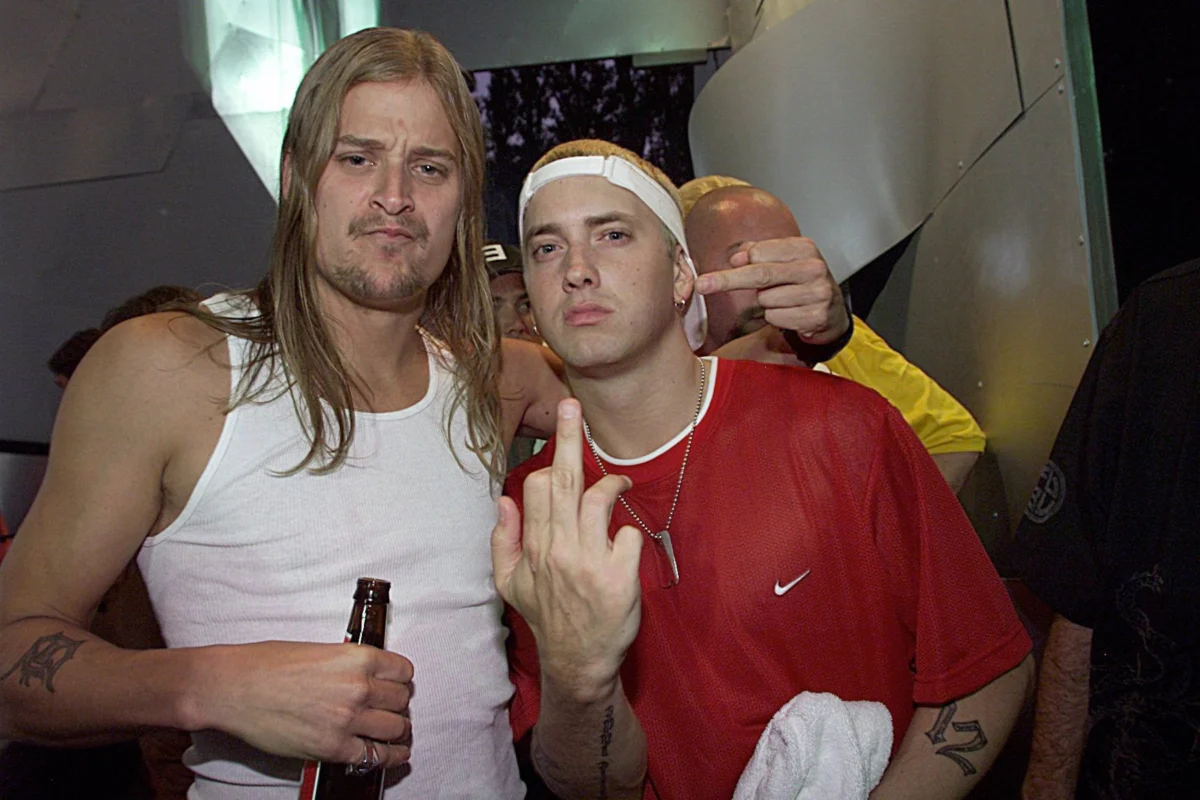
HangupsMusic.com – Detroit, Michigan – In a musical landscape increasingly defined by cultural and political schisms, a recent collaboration between two of Michigan’s most iconic, yet ideologically divergent, artists has sent ripples through the industry. Marshall Mathers III, globally renowned as Eminem, recently lent his distinctive lyrical prowess to "Heal My Faith," a track featured on Robert Ritchie’s, better known as Kid Rock’s, newly released faith-based album, Halfway 2 Jesus. The unexpected pairing has sparked considerable discussion, prompting Eminem to address the rationale behind his involvement, emphasizing the enduring power of friendship over political allegiance.
Kid Rock unveiled Halfway 2 Jesus to the public on Friday, marking a notable shift in his musical direction towards overtly spiritual themes. Among the album’s offerings, "Heal My Faith" immediately captured attention due to the inclusion of Slim Shady, a fellow Detroit native whose career has often run parallel to Rock’s, albeit on a vastly different lyrical and political trajectory. Their shared history, stretching back decades within the vibrant Detroit music scene, forms the bedrock of a friendship that, according to both artists, transcends their public political personas.
The collaboration, however, was not met with universal acclaim, particularly from segments of Eminem’s devoted fanbase. Mathers has a well-documented history of political engagement, notably endorsing Kamala Harris at a Detroit rally in 2024 and delivering scathing critiques of Donald Trump in tracks like "Campaign Speech." This established political stance stands in stark contrast to Kid Rock, who has emerged as one of Trump’s most vocal and visible supporters within the music industry, frequently incorporating conservative political messaging into his public appearances and music. The dissonance between these public positions led many to question Eminem’s decision to contribute to an album from such a politically polarized figure.
Hours after the release of Halfway 2 Jesus, Eminem took to social media to clarify his position, succinctly stating, "Not about choosing sides, just choosing to make music with my old friend. Praying for all of us." This concise message underscored a desire to prioritize personal connection and artistic collaboration above the prevailing political divides that often dictate public perception and interaction. It was a plea for understanding, suggesting that human relationships can, and perhaps should, exist independently of partisan alignment.
Kid Rock further illuminated the genesis of the collaboration in an interview with Billboard. He revealed that while Eminem’s participation was initially teased for a different track, "7 Sins," the rapper ultimately contributed to "Heal My Faith," the song Rock had originally envisioned him on. Rock humorously recounted their agreement to limit their joint appearances: "We agreed we didn’t need two songs together…people are going to think we’re dating." This lighthearted anecdote hints at the comfortable familiarity and deep rapport that characterizes their long-standing friendship.
Rock elaborated on the nature of their bond, stating, "We’ve been friends for, like, 40 years. I really didn’t want to drag him into my political world… We talk about [politics] a little bit, not a ton. There’s a lot of stuff we agree on, and we can have a laugh about what [we don’t]. That’s why I asked him to write a verse for me." This candid insight paints a picture of a relationship built on mutual respect and a shared history, where political disagreements are acknowledged but not permitted to overshadow the core connection. It suggests a nuanced approach to friendship that many in an increasingly polarized society might find both aspirational and challenging.
Eminem’s verse on "Heal My Faith" directly addresses the perceived incongruity of their collaboration, delivering a powerful message of unity. He raps, "From shock rap to the rock rap / My homie and me / He is my brother, not my political enemy / B.O. to the B. / We wrote this for those who believe in G.O. to the D / However you voted or lean / Liberal and evangelical can agree / It’s God first, home of the free." The lyrics are a deliberate attempt to bridge the ideological chasm, emphasizing shared human and spiritual values over partisan affiliations. By invoking the concept of brotherhood and a universal belief in a higher power, Eminem articulates a vision where common ground can still be found, even amidst profound political differences.
The thematic core of Halfway 2 Jesus itself aligns with this message of reconciliation. Kid Rock told Billboard that the album "is about forgiveness and second chances. Trying to heal some of the division in our country. I’m just putting a positive message out there in the world… showing a little more grace, trying to kill some of the division." This statement positions the album, and by extension, Eminem’s involvement, as a deliberate effort to foster unity and understanding in a fractured society. It’s an artistic endeavor to inject a sense of healing and shared humanity into a public discourse often dominated by acrimony.
The decision by two artists of such prominence to publicly set aside their political differences for a creative project holds significant cultural weight. In an era where "cancel culture" and rigid ideological purity tests often define public engagement, Eminem and Kid Rock’s collaboration challenges the notion that personal relationships must mirror political alignment. It prompts reflection on whether art, particularly music, possesses the unique capacity to transcend tribal boundaries and highlight shared human experiences.
For Eminem, a rapper who has consistently used his platform to critique societal ills and political figures, his verse on "Heal My Faith" represents a moment of personal diplomacy. While his political convictions remain clear, his participation in Rock’s project suggests a belief in the power of individual relationships to foster dialogue and model a different way of engaging with those on opposing sides. It underscores a message that even the most ardent critics can find common ground, particularly when that ground is rooted in a shared history and mutual respect.
Kid Rock’s pivot to faith-based music, culminating in Halfway 2 Jesus, also marks a significant evolution in his artistic journey. Known for his often raucous and provocative persona, this album signifies a more introspective and spiritually oriented phase. His choice to invite Eminem, given their contrasting political profiles, further amplifies the album’s stated goal of promoting unity and forgiveness. It’s a deliberate artistic statement that aims to demonstrate, rather than just preach, the possibility of bridging divides.
The public reception to "Heal My Faith" and the broader album will undoubtedly continue to be scrutinized through various lenses – musical, political, and cultural. However, the collaboration itself serves as a potent reminder that even in the most polarized environments, shared history, personal bonds, and a commitment to artistic expression can sometimes create unexpected pathways to understanding. It asks listeners to consider if, beneath the layers of political rhetoric and partisan division, there remains a fundamental human desire for connection and a shared hope for a more unified future, as Eminem’s verse suggests, "It’s God first, home of the free."
