 By admin
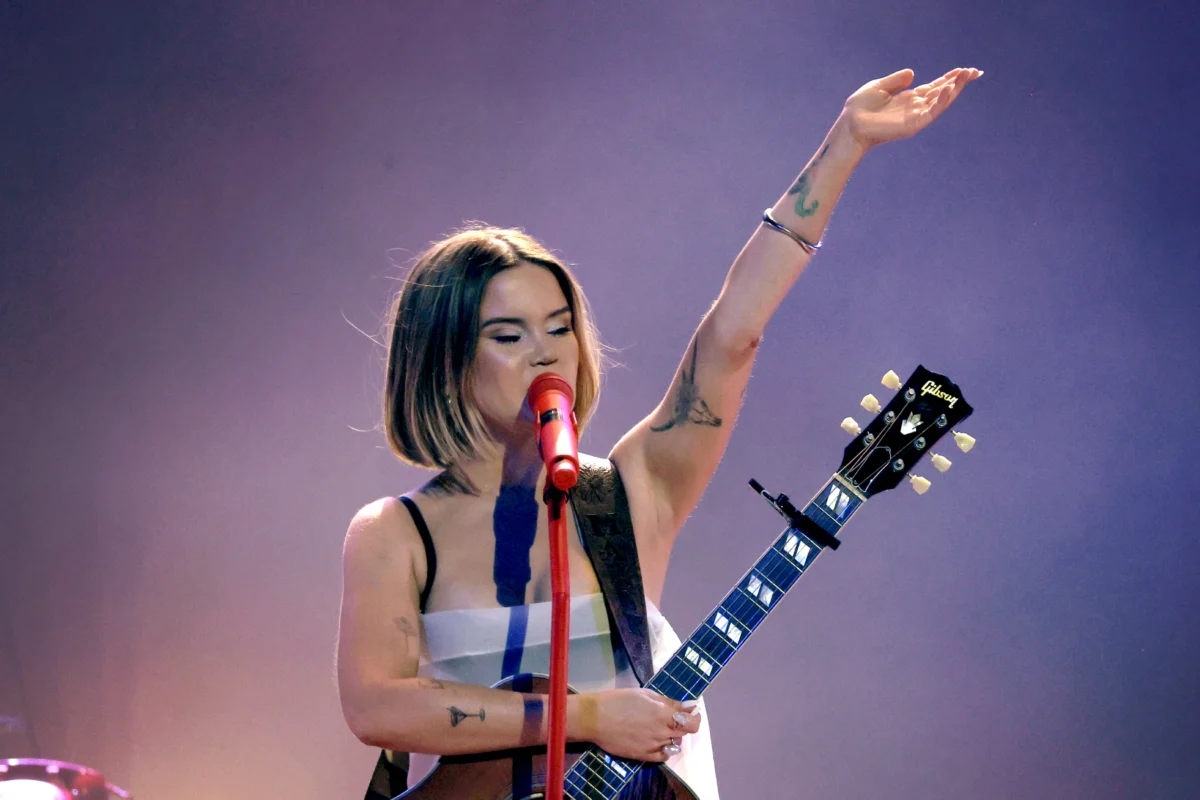
HangupsMusic.com – In a swift and unequivocal act of defiance, Grammy-winning artist Maren Morris recently launched a powerful social media counter-strike against comedian Shane Gillis following his contentious monologue on Saturday Night Live. Morris’s response, which culminated in a clear, unambiguous middle finger gesture, resonated widely, encapsulating a broader frustration with regressive commentary on women’s bodies and autonomy. The incident quickly became a flashpoint in the ongoing cultural discourse surrounding misogyny, comedy, and accountability in public forums.
The controversy ignited during Gillis’s recent appearance as host of the iconic late-night sketch comedy program. His monologue, broadcast to a national audience, veered into territory that many swiftly condemned as deeply offensive and objectifying. Gillis dedicated a significant portion of his opening remarks to critiquing women’s attire at fitness establishments, employing overtly derogatory language. He mused aloud, questioning, "I haven’t been to the gym in so long I didn’t know women just dress like whores now?" He continued with a graphic description of athletic shorts, fixating on their fit and suggesting women intentionally provoke attention while simultaneously warning against looking at them due to potential filming. This particular segment of his monologue was widely interpreted as an embodiment of victim-blaming, shifting responsibility for unwanted male gaze onto the women simply engaging in physical activity.
Shane Gillis’s return to the SNL stage was already laden with controversy, stemming from his abrupt dismissal from the cast in 2019. At that time, unearthed audio clips revealed Gillis making racist and homophobic remarks, leading to widespread condemnation and his eventual removal before he could even debut. His subsequent invitation to host the show years later was viewed by some as a problematic endorsement, or at least a tacit forgiveness, of his past behavior, sparking debates about "cancel culture," rehabilitation, and the standards of conduct expected from public figures, particularly those afforded a platform as influential as SNL. Against this backdrop, his latest monologue further inflamed public sentiment, reigniting questions about the show’s judgment and its role in shaping cultural norms.
Maren Morris, known for her outspokenness and willingness to challenge societal norms within and beyond the country music genre, did not mince words—or gestures—in her retort. Opting for a direct and visually striking approach, Morris took to Instagram to share a video of herself. The clip, strategically captioned "me being a wh0re at the gym," depicted her in activewear, embodying the very image Gillis had attempted to disparage. The accompanying soundtrack was her own track, "Be a Bitch," a defiant anthem whose lyrics perfectly underscored her message. The chorus, "Breaking my neck from turning my cheek / Killing with kindness only killed me / If the truth means I’m a little too mean / Tried to fake nice, but it didn’t quite stick / I’d rather be a bitch," served as a powerful declaration of her refusal to quietly tolerate misogynistic remarks. The video culminated with Morris delivering a clear, unambiguous middle finger directly to the camera, an unvarnished symbol of her disdain. Her accompanying caption, "leave my gym short wedgie out of it," was a sharp, concise demand for respect and an end to unsolicited commentary on women’s bodies.
Morris’s response resonated deeply with her fanbase and a wider audience, solidifying her reputation as an artist unafraid to confront injustice. Her action was not merely a personal reaction but a public stand, leveraging her platform to articulate a sentiment shared by many women who have experienced similar objectification and judgment in everyday life. In an era where celebrity influence is often measured by social media engagement, Morris’s succinct yet potent visual statement cut through the noise, offering solidarity and a clear message that such behavior would not go unchallenged.
The uproar surrounding Gillis’s monologue extended beyond Morris, drawing condemnation and equally pointed responses from other notable figures. Ego Nwodim, a current cast member of Saturday Night Live, subtly yet powerfully expressed her disapproval. Days after Gillis’s controversial remarks, Nwodim posted a gym selfie to her Instagram Stories, captioning it simply, "whore reporting for duty." Her response, coming from within the SNL ecosystem, underscored a potential rift or at least a clear disagreement with the sentiments expressed by the guest host. Her act of reclamation, turning a derogatory term into a badge of defiant solidarity, mirrored the spirit of Morris’s own protest.
Another prominent voice to join the chorus of criticism was actor and filmmaker Dan Levy. Known for his work on the critically acclaimed series Schitt’s Creek and his advocacy for inclusivity, Levy shared an Instagram video articulating his "speechless" disbelief that such content could be aired on "live national television." Levy’s commentary was particularly incisive, dissecting the core issue of misogyny inherent in Gillis’s words. He unequivocally stated, "Women wearing short shorts to the gym does not make them whores. It makes the men calling them whores, misogynists. There’s a difference there." Levy further highlighted the double standard often applied to women’s attire versus men’s, quipping, "By the way, I’ve seen more men’s nipples in the gym than I’ve ever seen women showing their bodies off." His articulate breakdown served to educate and affirm, providing a clear distinction between personal expression and offensive judgment.
The cumulative effect of these celebrity responses underscored a collective rejection of the archaic and demeaning attitudes espoused by Gillis. It highlighted the power of public figures to shape discourse and challenge harmful narratives, particularly when those narratives are amplified by mainstream media platforms. The incident served as a potent reminder that while comedy often pushes boundaries, there remains a critical line between provocative humor and outright misogyny, a line that many felt Gillis had not only crossed but actively trampled.
The broader implications of this SNL episode extend into the ongoing debate about the role of comedy in society. Is comedy a realm where all topics are fair game, or do comedians bear a responsibility to avoid perpetuating harmful stereotypes and prejudices? Gillis’s career has frequently been characterized by a willingness to court controversy, often positioning himself as an anti-establishment figure unbothered by "political correctness." However, his repeated controversies, from his 2019 firing to the recent SNL monologue, have consistently raised questions about whether his humor "punches up" at power structures or "punches down" at marginalized groups. The consensus among his critics suggests the latter, particularly in his recent comments directed at women.
Furthermore, the incident sparked renewed conversations about the pervasive issue of objectification and sexual harassment in public spaces, particularly gyms. Women frequently report feeling scrutinized, judged, or even harassed while exercising, leading to feelings of discomfort or insecurity. Gillis’s comments, delivered on a national stage, were seen by many as legitimizing such intrusive and demeaning attitudes, contributing to an environment where women’s right to exist and move freely in their bodies is constantly under threat. The idea that women’s clothing choices are an invitation for commentary or judgment is a deeply entrenched patriarchal notion that these celebrity responses actively sought to dismantle.
Adding another layer of complexity to Gillis’s controversial SNL appearance, he also inadvertently dropped an F-bomb during a sketch titled "Green Eggs and Ham," a Dr. Seuss-themed bit. While such an expletive might be considered a minor gaffe in some contexts, on live network television, it represented a breach of broadcast standards. Gillis offered a quick, somewhat flippant apology at the end of the sketch, stating, "Sorry about earlier." This additional incident, though separate from the monologue’s misogynistic content, further contributed to a perception of his appearance as chaotic and unprofessional, reinforcing the idea that his return to SNL was perhaps ill-advised.
In conclusion, the confluence of Shane Gillis’s provocative monologue, Maren Morris’s defiant rebuttal, and the unified condemnation from other celebrities like Ego Nwodim and Dan Levy, has created a significant cultural moment. It has underscored the continued relevance of discussions around misogyny, the boundaries of comedic expression, and the power of social media to facilitate rapid, impactful responses from public figures. Morris’s direct, unvarnished message, delivered with a symbolic middle finger, serves as a potent reminder that in the ongoing fight for respect and equality, silence is not an option for those with the platform to speak out. This event stands as a testament to the evolving landscape of celebrity activism and the critical role artists play in challenging harmful narratives and advocating for a more inclusive and respectful society.
