 By Azzam Bilal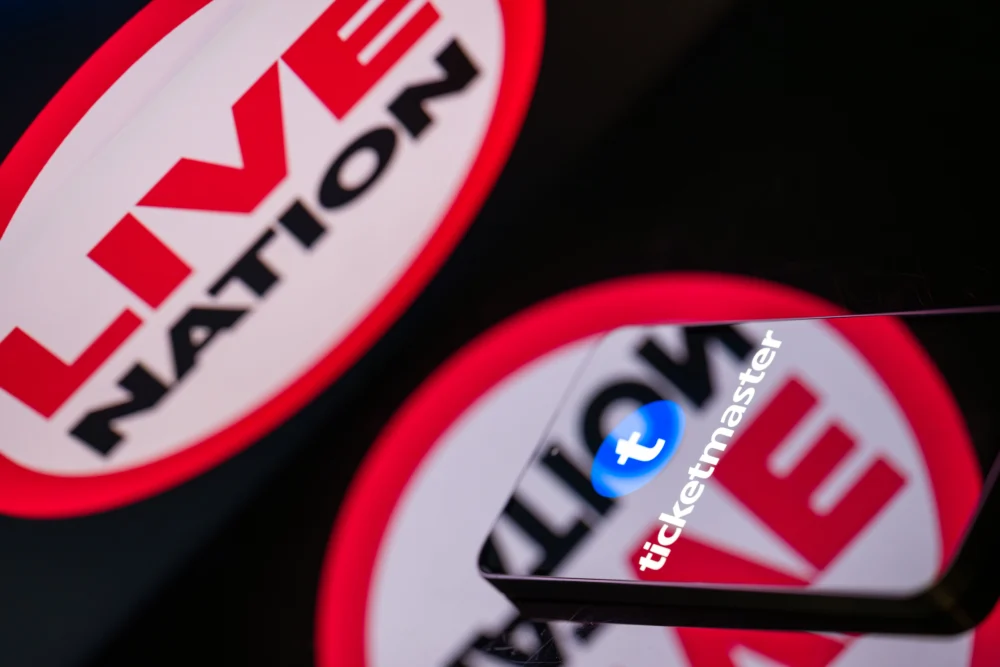
HangupsMusic.com – New York, the landscape of the global live entertainment industry shifted dramatically on Monday morning as the United States Department of Justice (DOJ) announced a tentative settlement in its high-stakes antitrust litigation against Live Nation Entertainment. The agreement, reached just one week after the commencement of a federal trial, represents a pivotal moment in a multi-year effort by regulators to curb the perceived monopolistic power of the world’s largest concert promoter and ticketing provider. While the deal imposes significant financial penalties and structural changes to Live Nation’s venue operations, it stops short of the "nuclear option" many industry critics had campaigned for: the forced divestiture of Ticketmaster.
The settlement, presented before Judge Arun Subramanian in a New York federal court on March 9, 2026, aims to resolve allegations that Live Nation has systematically stifled competition through exclusionary practices. Under the terms of the deal, Live Nation has agreed to pay approximately $280 million to $300 million in settlements to various states. Furthermore, the company must relinquish its exclusive booking rights at 13 major venues across the country and adhere to new restrictions regarding its long-term contracts. However, the most controversial aspect of the announcement is the preservation of the Live Nation-Ticketmaster union, a vertical integration that has been the subject of intense scrutiny since the two entities merged in 2010.
The legal battle began in earnest in May 2024, when the DOJ, joined by the attorneys general of 38 states and the District of Columbia, filed a sweeping lawsuit alleging that Live Nation maintained an illegal monopoly over the live music ecosystem. The government’s case focused on the "flywheel" business model, wherein Live Nation uses its dominance in artist management and concert promotion to funnel business into its owned venues and its Ticketmaster platform. In February 2026, Judge Subramanian issued a summary judgment that dismissed the overarching claim of a total market monopoly. Despite this, the judge allowed the case to proceed on more specific grounds, finding merit in the DOJ’s claims that Live Nation engaged in "tying" behaviors—essentially forcing venues to utilize Ticketmaster or risk losing access to Live Nation’s roster of A-list touring artists.
The specifics of the settlement reveal a strategy of "behavioral remedies" rather than a total structural overhaul. Live Nation is now required to cap its exclusive ticketing contracts with third-party venues at four years, a move intended to allow competitors more frequent opportunities to bid for business. Additionally, venues will be granted the right to sign non-exclusive primary ticketing contracts, allowing them to distribute tickets through multiple platforms simultaneously. In a concession to the secondary market, Live Nation must also allow rival platforms like SeatGeek and Eventbrite to list and sell inventory directly on the Ticketmaster marketplace.
Despite these concessions, the settlement has been met with immediate and fierce resistance from a significant coalition of state regulators. While the federal government appears ready to move past the litigation, 25 state attorneys general have expressed profound dissatisfaction with the deal, labeling it a "slap on the wrist" that fails to address the root cause of the industry’s dysfunction. New York Attorney General Letitia James emerged as a leading voice of dissent, releasing a blistering statement shortly after the court session. James argued that the settlement essentially leaves the Live Nation monopoly intact at the expense of the American consumer. She signaled that New York and nearly two dozen other states are prepared to pursue the case independently of the DOJ, even going so far as to call for a mistrial to prevent the settlement from being finalized in its current form.
The rift between federal and state regulators highlights a fundamental disagreement over how to handle corporate behemoths in the modern era. For the DOJ, the settlement secures immediate financial restitution and implements safeguards that could, in theory, lower the barriers to entry for smaller competitors. For the dissenting states, however, anything less than the separation of Live Nation’s promotion arm from Ticketmaster’s distribution arm is seen as a failure. Critics argue that as long as one company controls the artists, the venues, and the software used to sell the tickets, true competition is an impossibility.

The judicial process is far from over. Judge Subramanian has expressed a need for further clarification before granting his final approval to the agreement, which was reportedly signed by the DOJ and Live Nation on March 5. The judge has ordered a mandatory court appearance for tomorrow involving Live Nation CEO Michael Rapino and the DOJ’s antitrust chief, Omeed A. Assefi. This hearing is expected to be a contentious affair, as the judge will likely question the efficacy of the proposed remedies and address the formal objections raised by the dissenting states.
The reaction from the broader music industry has been equally polarized. Michael Rapino, the longtime architect of Live Nation’s expansion, defended his company’s practices in a public statement following the settlement news. Rapino maintained that Ticketmaster’s success is a product of superior technology and service rather than exclusionary tactics. He characterized the company’s willingness to settle as a gesture of good faith, stating that Live Nation is happy to "empower artists and venues" while remaining confident that the quality of their products will continue to lead the market.
Conversely, the National Independent Venue Association (NIVA), which represents thousands of small and mid-sized music halls across the United States, issued a scathing critique of the deal. Stephen Parker, NIVA’s executive director, suggested that the settlement might actually worsen the situation for independent operators. Parker pointed out that the $280 million payout represents a fraction of Live Nation’s annual revenue—roughly equivalent to four days of business—and argued that opening Ticketmaster to "predatory resale platforms" could lead to higher prices and more confusion for fans. NIVA’s stance reflects a widespread fear among independent promoters that the new rules will simply allow Live Nation to further entrench its power through more sophisticated, non-exclusive arrangements that smaller competitors cannot match.
The history of Live Nation and Ticketmaster is one of constant tension with federal regulators. When the merger was first approved in 2010, it was under a consent decree that prohibited the company from retaliating against venues that chose to use other ticketing services. In 2019, the DOJ found that Live Nation had repeatedly violated that decree, leading to an extension of the agreement through 2025 and the appointment of an independent monitor. The 2024 lawsuit was seen by many as the final admission that behavioral mandates were insufficient to control the company’s market influence. The current settlement’s reliance on similar behavioral remedies is precisely why so many observers are skeptical of its long-term impact.
For the average concertgoer, the immediate effects of this settlement remain unclear. While the introduction of non-exclusive ticketing and shorter contract lengths could theoretically lead to lower service fees through increased competition, history suggests that cost savings are rarely passed down to the consumer in a high-demand market. The inclusion of third-party listings on Ticketmaster may provide more options for fans, but it also risks legitimizing the secondary "scalper" market that many artists have spent years trying to combat.
As the legal drama shifts to the hearing tomorrow, the future of the live music industry hangs in the balance. If Judge Subramanian ignores the states’ objections and approves the settlement, Live Nation will emerge with its core structure intact, albeit with a lighter wallet and a new set of compliance rules. If the states succeed in forcing a mistrial or a renegotiation, the industry could be headed for a protracted legal war that could redefine antitrust law for the 21st century. For now, the "flywheel" continues to turn, even as the government attempts to throw a wrench into its gears.
