
 By Azzam Bilal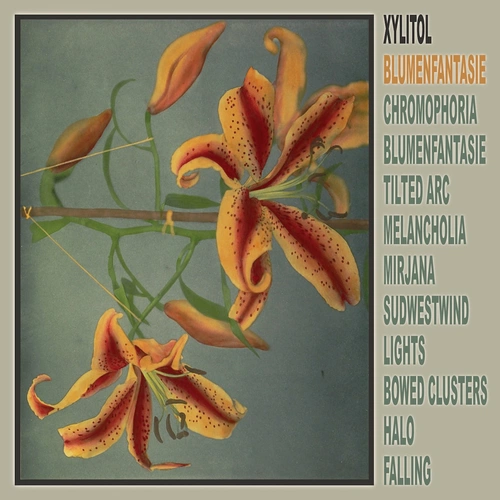
HangupsMusic.com – London, The landscape of contemporary electronic music is often divided between those who prioritize the visceral energy of the dancefloor and those who lean into the intellectual rigors of high-concept composition. Rarely does an artist navigate the space between these two poles with as much dexterity and curiosity as Catherine Backhouse. Recording under the moniker Xylitol, Backhouse has spent years carving out a niche that is as much defined by its rhythmic complexity as it is by its thematic depth. Her latest offering, Blumenfantasie, serves as a testament to this dualistic approach, arriving hot on the heels of her critically acclaimed 2024 project, Anemones. While her previous work found inspiration in the intricate, often alien illustrations of aquatic invertebrates, Blumenfantasie turns its gaze toward a different kind of delicate structure: the minimalist synth compositions of Sarajevo-born artist Miaux and the motoric traditions of Krautrock, all while maintaining a steadfast grip on the evolution of UK breakbeat science.
To understand the weight of Blumenfantasie, one must first acknowledge the intellectual curiosity that Backhouse brings to her production desk. If her career were a specialist subject on a high-stakes trivia show, the questions would likely span the breadth of marine biology, obscure European synth history, and the granular mechanics of drum and bass. This scholarly approach to music-making does not, however, result in something dry or academic. Instead, Xylitol’s music feels alive—a pulsing, breathing ecosystem of sound that rewards deep listening as much as it demands physical movement. The transition from the underwater themes of Anemones to the "flower fantasy" suggested by the title of her new record marks a shift from the fluid and the drifting to the structured and the blooming.
The core of Blumenfantasie is deeply indebted to the work of Miaux, the moniker of Bosnian-born, Antwerp-based composer Mia Prce. Miaux is known for her hauntingly simple, emotionally resonant melodies crafted on minimalist synth setups, often evoking a sense of nostalgia and cinematic melancholy. Backhouse takes these sensibilities and refracts them through the lens of modern UK electronica. This influence is perhaps most palpable on the track "Mirjana." Here, the listener is greeted by a shimmering synth motif that feels like a direct nod to the Berlin School of electronic music, specifically the early, hypnotic work of Tangerine Dream. The sequence is repetitive yet evolving, creating a trance-like state that serves as the melodic spine of the piece. It is a moment of pure atmosphere, demonstrating Backhouse’s ability to pay homage to her influences without losing her own sonic identity.
However, Xylitol is never content to remain in a single stylistic lane for long. The record is characterized by its sudden, exhilarating shifts in tone and tempo. Just as the listener becomes acclimated to the vintage synth textures, Backhouse introduces elements of "ardkore" and jungle that pull the record back toward the gritty reality of the British rave tradition. The track "Falling" is a prime example of this stylistic friction. It features the kind of high-pitched, "chipmunk" vocal samples that defined the early 90s breakbeat hardcore scene—a sound that, on paper, should clash violently with the sophisticated synth-work inspired by Miaux. Yet, in Backhouse’s hands, it works. The juxtaposition creates a sense of temporal displacement, as if the listener is hearing a transmission from a 1992 illegal warehouse party being intercepted by a futuristic satellite. The connection between these disparate elements might be difficult to articulate, but the emotional logic is sound: both genres rely on a certain kind of ecstatic repetition and a willingness to push hardware to its limits.
A significant portion of the acclaim surrounding Blumenfantasie stems from Backhouse’s "breakbeat science"—a term often used to describe the meticulous editing and programming of drum patterns to create complex, polyrhythmic structures. In tracks like "Chromophoria" and "Bowed Clusters," she demonstrates a technical proficiency that places her in the same league as contemporary masters like Skee Mask. The percussion in these tracks is not merely a rhythmic accompaniment; it is the lead instrument. The breaks are chopped, layered, and manipulated with surgical precision, creating a sense of forward momentum that feels both chaotic and entirely controlled. In "Chromophoria," the drums seem to dance around the melodic elements, constantly shifting their center of gravity, while "Bowed Clusters" explores the more metallic, industrial side of the breakbeat spectrum.
This focus on the technical side of production does not come at the expense of "the groove." Even at her most experimental, Backhouse remains tethered to the foundational elements of bass music. This is most evident on "Halo," where she pivots away from the breakbeat focus to explore the dark, spacious architecture of grime. The track is built around a heavy "riddim" that emphasizes the low end, utilizing sub-bass frequencies that are felt as much as they are heard. It is a reminder that while Xylitol may be an intellectual producer, she is also a student of the soundsystem culture. "Halo" provides a necessary weight to the album, grounding the more ethereal synth passages in the physical reality of the club environment.
The title Blumenfantasie itself suggests a sort of botanical surrealism, a concept that is mirrored in the way the tracks grow and mutate. Much like a plant moving through its life cycle, the compositions on the album often start from a single, simple seed—a synth loop or a vocal fragment—and gradually blossom into complex arrangements. There is a sense of organic growth even within the digital confines of her workstations. This theme of "synthetic flora" provides a cohesive thread that runs through the album, linking the motorik rhythms of Krautrock with the frantic energy of drum and bass. It is an exploration of how artificial sounds can evoke natural feelings, and how the rigid structures of electronic music can be made to feel fluid and alive.
Critically, Blumenfantasie arrives at a time when the revival of IDM and jungle is in full swing, yet Catherine Backhouse manages to avoid the pitfalls of mere nostalgia. She isn’t just recreating the sounds of the past; she is using them as building blocks for something entirely new. By drawing on the minimalist synth work of Miaux, she adds a layer of European art-house sensibility to the often-insular world of UK bass music. This cross-pollination of ideas is what makes the album so compelling. It is a record that feels equally at home in a gallery space as it does in a darkened basement club.
In the broader context of Xylitol’s discography, Blumenfantasie represents a peak in terms of both ambition and execution. While Anemones was a brilliant exercise in thematic world-building, this new record feels more expansive and more confident in its ability to bridge the gap between different musical histories. Backhouse has mastered the art of the "deep dive," taking a niche subject—whether it be aquatic life or the discography of a Sarajevo synth composer—and using it as a springboard for sonic innovation.
For listeners who enjoy the technical wizardry of the Ilian Tape roster or the conceptual depth of labels like Hyperdub, Blumenfantasie is essential listening. It is an album that demands attention, requiring the listener to untangle its various threads of influence and appreciation. From the Tangerine Dream-esque vistas of "Mirjana" to the low-end pressure of "Halo," the record is a tour de force of modern electronic production. Catherine Backhouse has once again proven that she is one of the most vital voices in the UK underground, a producer who can turn a "specialist subject" into a universal language of rhythm and sound. To overlook this record would be a significant oversight for anyone interested in the future of the breakbeat. In the high-stakes game of electronic music innovation, Xylitol has most certainly not "passed"; she has taken the lead.
