
 By Rose Miami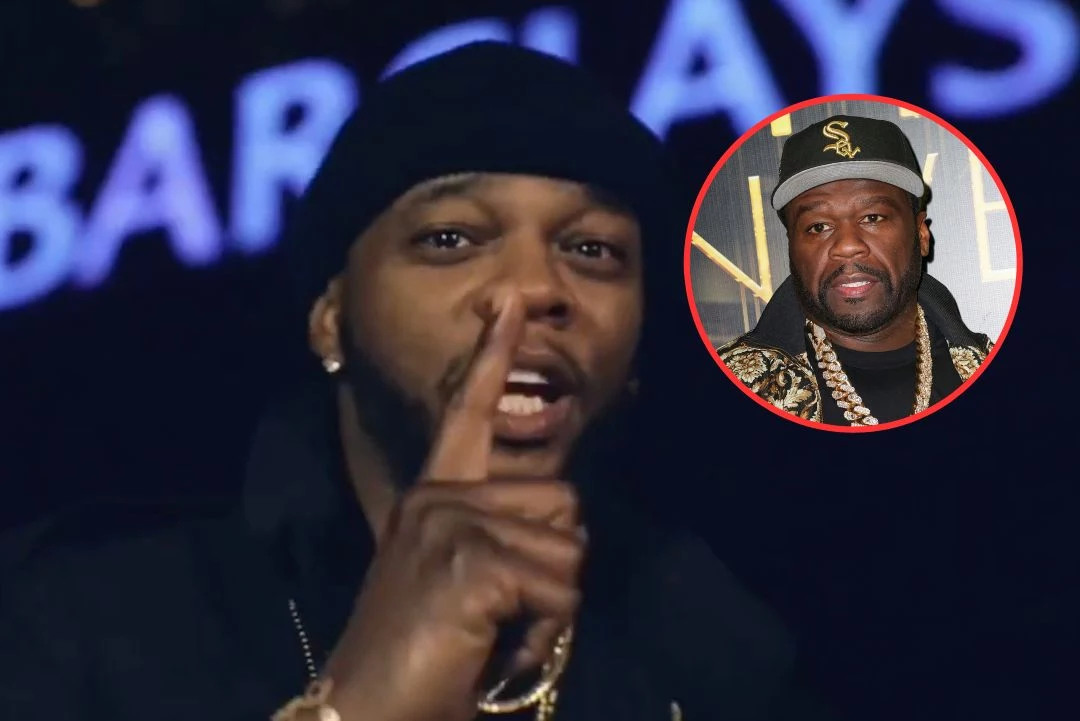
HangupsMusic.com – The simmering tension between Brooklyn lyricist Papoose and rap mogul 50 Cent has once again erupted into the hip-hop ether with the release of Papoose’s latest diss track, "Agent Provocateur." Dropped on his Instagram on Wednesday, March 11th, the visualizer for this Ron Browz-produced banger sees Papoose meticulously dissecting 50 Cent’s carefully cultivated street persona, casting a critical eye on the narrative surrounding his infamous brush with gun violence.
Papoose doesn’t pull any punches, directly challenging the widely circulated story of 50 Cent being shot nine times. "He was a crab in a barrel until Eminem picked him / Made hisself famous by claiming he was a victim," Papoose spits with venom, his words laced with skepticism. He then directly refutes the iconic number, rapping, "His claim to fame was I got shot nine times / But the truth is he only got shot five times." The Brooklyn native further escalates his attack by suggesting a motive for the alleged embellishment: "He lied ’cause he wanted to get shot more than Tupac." The track concludes with a sharp jab, labeling 50 Cent as "Lame choice, game voice / G-U-not," a clear play on the acronym "G-Unit" and a dismissal of his credibility.
The accompanying visual, a collaboration between directors Will C and Tana, amplifies Papoose’s lyrical assault with a series of humorous and pointed imagery that directly illustrates his barbed commentary. The visualizer intersperses clips and graphics that slyly mock aspects of 50 Cent’s public image and past controversies, adding a layer of visual wit to the auditory onslaught. In the caption accompanying the Instagram post, Papoose declared his intentions and timing with a defiant tone: "Been s*tted on this hating as ‘Chump’ I was just waiting for the fight to be over." This statement suggests that "Agent Provocateur" is not a spontaneous outburst, but a calculated response, strategically timed after other recent lyrical confrontations involving 50 Cent have seemingly subsided.
This is not the first time Papoose has targeted 50 Cent. His recent barrage of diss tracks began with a freestyle that cleverly repurposed the instrumental of 50 Cent’s own 2003 hit, "Many Men." In that initial salvo, Papoose systematically dismantled 50 Cent’s claims to authenticity and street wisdom, questioning the foundation of his rap empire and the validity of his tales of hardship. The "Many Men" freestyle served as a clear signal that Papoose was prepared to engage in a lyrical war, and "Agent Provocateur" solidifies his commitment to this ongoing feud.

The current landscape of hip-hop seems to be experiencing a resurgence of lyrical battles, and 50 Cent has found himself at the center of a multi-pronged attack. Beyond Papoose’s persistent jabs, the veteran rapper has also been the subject of lyrical critiques and diss tracks from a variety of artists. T.I., the King of the South, has publicly expressed his disdain and has been rumored to be involved in lyrical exchanges. Furthermore, the Harris brothers, who are affiliated with T.I., have also reportedly entered the fray. Adding to this chorus of opposition, Maino, another prominent figure in New York’s hip-hop scene, has also released a diss track aimed at 50 Cent, titled "Bleed Like Us." This collective wave of lyrical challenges paints a picture of a hip-hop community collectively questioning and challenging 50 Cent’s long-standing dominance and established narratives.
The intensity and breadth of these ongoing lyrical confrontations suggest that this particular rap feud is escalating beyond the confines of individual disses, becoming a significant storyline within the broader hip-hop narrative. The strategic use of iconic beats and the direct confrontation of established personas indicate a desire among these artists to not just engage in a passing diss, but to actively re-evaluate and potentially dismantle the legacies of their targets. The phrase "outta control" in the original context aptly describes the escalating nature of these lyrical skirmishes, with each artist seemingly vying to deliver the most impactful and resonant blow.
Papoose, often lauded for his intricate wordplay and potent lyrical dexterity, appears to be using this opportunity to assert his own lyrical prowess and challenge the established hierarchy within the genre. His decision to release a visualizer for "Agent Provocateur" further demonstrates a strategic approach to his diss campaign, aiming to maximize reach and impact through both auditory and visual elements. The song’s title itself, "Agent Provocateur," implies a deliberate act of stirring up trouble or controversy, suggesting that Papoose sees himself as a catalyst for exposing what he perceives as falsehoods within 50 Cent’s public image.
The influence of Eminem in elevating 50 Cent’s career is a recurring theme in discussions about 50 Cent’s rise to fame, and Papoose’s invocation of this fact adds a layer of historical context to his critique. By suggesting that 50 Cent’s fame was largely manufactured or amplified by the Shady Records machine, Papoose aims to undermine the narrative of a self-made mogul who clawed his way to the top through sheer grit and street credibility alone. The comparison to Tupac Shakur, another iconic figure whose life was tragically cut short, serves to further highlight Papoose’s accusation of attention-seeking and a desire for a more dramatic, victimized narrative.
As this lyrical battle continues to unfold, the hip-hop community remains captivated by the exchanges. The release of "Agent Provocateur" is not merely another diss track; it is a calculated strike in a broader war of words, designed to challenge the very foundations of 50 Cent’s carefully constructed legacy. The ongoing feud between Papoose and 50 Cent, alongside the involvement of other prominent artists, underscores the enduring power of lyrical battles to shape narratives and spark debate within the vibrant and ever-evolving world of hip-hop. The question remains: how will 50 Cent respond to this latest barrage of lyrical artillery, and what further revelations or confrontations will emerge from this escalating hip-hop drama?
