
 By Azzam Bilal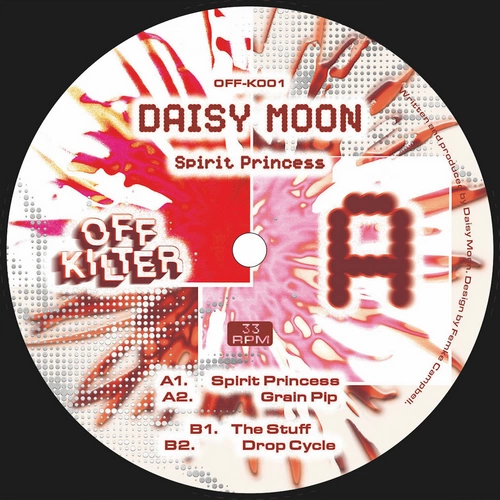
HangupsMusic.com – Bristol, the storied streets of Bristol have long served as a fertile breeding ground for electronic music that defies easy categorization. From the trip-hop foundations of the 1990s to the bass-heavy mutations of the dubstep era and the contemporary experimentalism of the Livity Sound and Idle Hands camps, the city has remained a beacon for the "off-kilter." It is within this rich, idiosyncratic tradition that Daisy Moon has carved out her niche, emerging as a vital figure in the city’s contemporary underground. For years, Moon has been a tireless advocate for inclusive, forward-thinking dance music, a reputation solidified by her stewardship of the Off-Kilter brand. What began in 2022 as a queer-friendly dance party and a curated mix series has now evolved into its most ambitious form: a record label. The debut release, titled Spirit Princess, serves as both a mission statement for the imprint and a definitive showcase of Moon’s evolving prowess as a producer.
The transition from DJ and promoter to label head is a significant milestone for any artist, but for Daisy Moon, it feels like a natural progression of her community-focused ethos. Since its inception, Off-Kilter has been more than just a club night; it has functioned as a safe haven and a creative laboratory for Bristol’s marginalized voices and experimental enthusiasts. By launching the Off-Kilter label, Moon is effectively institutionalizing that spirit, providing a permanent home for the sounds that have echoed through her parties over the last two years. Spirit Princess arrives not just as a collection of tracks, but as a physical and digital manifestation of the energy she has cultivated on the dancefloor.
The EP opens with the title track, "Spirit Princess," a production that immediately asserts its dominance through sheer sonic weight. In a genre where "weight" is often used as a nebulous descriptor, Moon provides a concrete definition. The track is built on a foundation of robust, double-brick percussion that feels as though it could flatten anything in its path. There is a relentless, industrial quality to the rhythm, a "wrecking ball" approach to house and techno that eschews subtle builds in favor of sustained, high-intensity momentum. Yet, despite its heavy-handedness, there is a sophistication to the sound design. The textures are gritty and tactile, reflecting the raw, unpolished aesthetic of the Bristol underground while maintaining a clarity that ensures the track will translate effectively to large-scale sound systems.
Following the title track is "Grain Pip," which continues the EP’s exploration of high-impact club music. Here, Moon leans further into the darker, more percussive elements of her style. The track is characterized by a driving, propulsive energy that leaves little room for pauses or transitions. It is a masterclass in tension and release, utilizing sharp, rhythmic stabs and a dense low-end to create a sense of claustrophobic urgency. In "Grain Pip," Moon demonstrates an ability to manipulate the listener’s sense of space, using layers of atmospheric noise and modulated synths to create a soundscape that feels both expansive and intensely focused. It is the kind of track designed for the peak-time hours of a warehouse party, where the boundaries between the music and the physical environment begin to blur.
However, the EP is far from a monochromatic exercise in industrial techno. The third track, "The Stuff," marks a significant stylistic pivot that showcases Moon’s versatility and sense of playfulness. Drawing inspiration from what she describes as a "summer of fun with friends on festival dancefloors," the track sheds the heavy armor of the previous two cuts in favor of something more fluid and eccentric. "The Stuff" is quintessentially Bristol—"wiggly," unpredictable, and infused with a sense of joyous irreverence. The most striking element of the track is the vocal work. Processed to sound somewhat like pop icon Gina G on helium, the vocals are high-pitched, colorful, and undeniably catchy. It is a bold creative choice that could easily have felt gimmicky in lesser hands, but Moon integrates it seamlessly into the track’s bouncy, house-inflected rhythm.
This contrast between the "wrecking ball" intensity of the first two tracks and the vibrant, characterful energy of "The Stuff" is what makes Spirit Princess such a compelling debut. It mirrors the dual nature of the contemporary club experience: the need for cathartic, heavy-hitting sound and the equally important need for communal joy and lightheartedness. By including "The Stuff," Moon acknowledges that dance music is not just about technical precision or sonic assault; it is also about memory, friendship, and the specific magic of a festival morning. The track is littered with "Daisy Moon-isms"—those idiosyncratic production flourishes that have become her trademark—making it feel deeply personal despite its dancefloor-ready structure.
The significance of the Off-Kilter label launch extends beyond the music itself. In an era where the electronic music industry is increasingly homogenized, independent labels run by active members of the community are essential for preserving the diversity and health of the scene. Moon’s commitment to a queer-friendly environment is not just a marketing slogan; it is a fundamental aspect of her artistic identity. By centering these values in her label’s mission, she is contributing to a broader movement within electronic music that seeks to reclaim the dancefloor as a space of liberation and safety for all. The "off-kilter" currents she champions are not just about musical experimentation, but about challenging the social and cultural norms of the mainstream club circuit.
Technically, the EP is a testament to Moon’s growth as a producer. Her ability to balance the raw energy of live performance with the precision of studio work is evident throughout the three tracks. There is a sense of confidence in the arrangements, a willingness to let ideas breathe without over-complicating the mix. The production on Spirit Princess and "Grain Pip" shows a keen understanding of the physical properties of sound—how frequencies interact in a room and how rhythm can be used to manipulate a crowd’s energy. Meanwhile, "The Stuff" demonstrates an ear for melody and a knack for creating infectious hooks that remain lodged in the listener’s mind long after the track has ended.
As the first release on Off-Kilter, Spirit Princess sets a high bar for what is to come. It establishes Daisy Moon as a formidable producer capable of navigating the various sub-genres of house and techno with ease. More importantly, it reinforces the idea that the Bristol underground is still a place of immense creativity and defiance. While other cities may succumb to the pressures of commercialization, Bristol—and artists like Daisy Moon—continue to push the boundaries of what electronic music can be.
Looking forward, the Off-Kilter label is poised to become a vital outlet for both established and emerging artists who share Moon’s vision of an inclusive, experimental dance culture. If Spirit Princess is any indication, the label will be defined by its refusal to stick to a single lane, embracing both the heavy and the light, the industrial and the whimsical. Daisy Moon has not just released an EP; she has laid the foundation for a new chapter in the Bristol story, one that is as colorful and characterful as the city itself.
In the final analysis, Spirit Princess is a triumphant debut. It captures the essence of Daisy Moon’s journey so far—from the dark corners of Bristol’s clubs to the sun-drenched stages of summer festivals. It is an EP that demands attention, not through flashy gimmicks, but through the strength of its compositions and the clarity of its vision. As she kicks off her shoes and loosens up in the EP’s final moments, it is clear that Daisy Moon is exactly where she needs to be: at the forefront of a movement that celebrates the weird, the wonderful, and the beautifully off-kilter.
