 By Azzam Bilal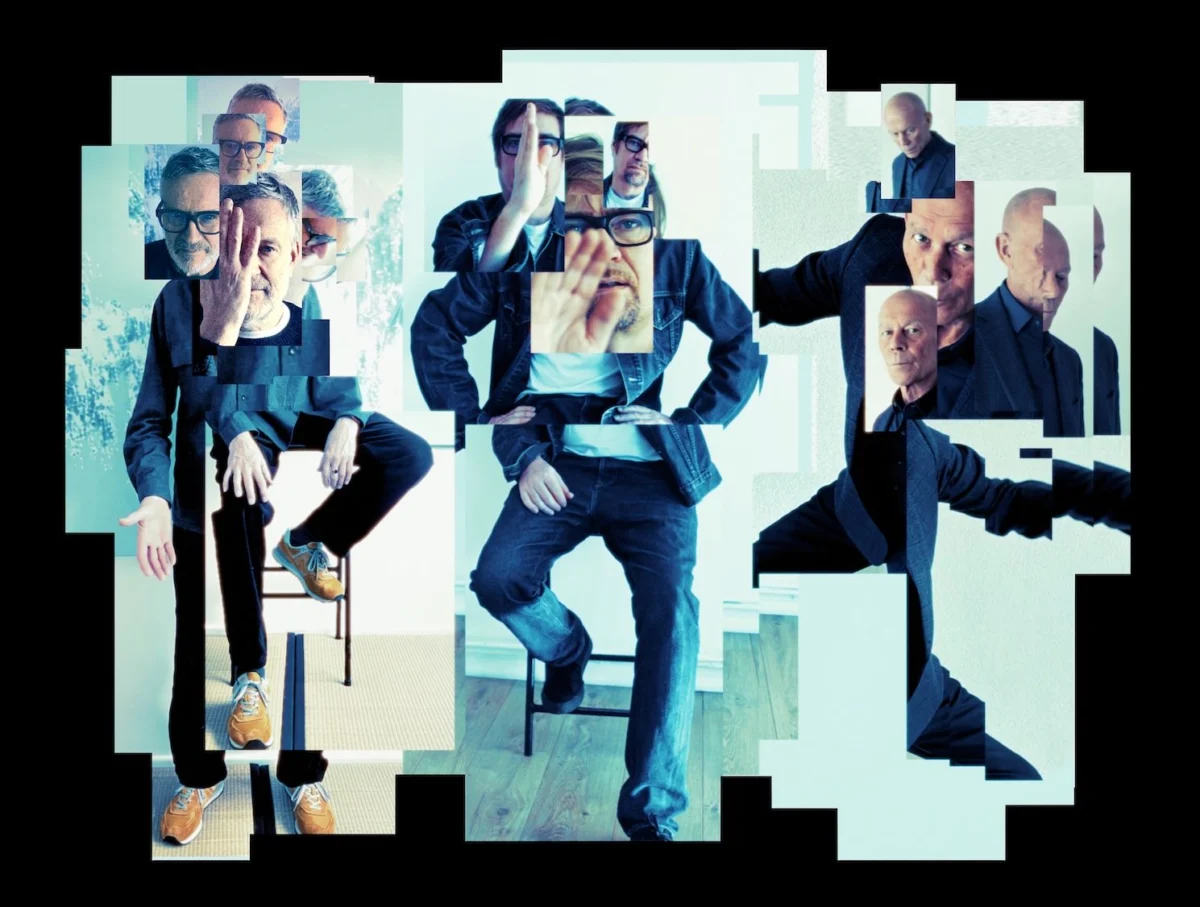
HangupsMusic.com – LONDON, In a momentous development for the electronic music landscape, three of the United Kingdom’s most influential synth-pop architects have converged to form a new creative entity. Vince Clarke, a founding member of Depeche Mode and the melodic mastermind behind Yazoo and Erasure, has teamed up with Neil Arthur of Blancmange and acclaimed producer and synthesist Benge (Ben Edwards). Operating under the moniker Doublespeak, the trio has announced the release of a self-titled debut album that promises to reimagine the art of the cover version through the lens of pure analog synthesis.
The announcement comes at a time of significant creative fertility for all three participants. For Clarke, the project represents a continuation of a late-career exploratory phase that recently saw the release of his first-ever solo long-player. For Arthur, it marks another high-profile collaboration in a decade defined by a prolific output under the Blancmange banner. For Benge, it serves as a further showcase of his technical mastery and his role as a pivotal curator of the modern analog sound.
Scheduled for release on May 29 via the venerable London Records, the eponymous Doublespeak is not merely a collection of hits, but a curated journey through the musical DNA that has informed the trio’s respective careers. The tracklist is an eclectic mix of pop royalty and underground legends, featuring reinterpretations of works by ABBA, The Carpenters, Young Marble Giants, and The Magnetic Fields. By stripping these compositions down to their skeletal structures and rebuilding them with vintage oscillators and sequencers, Doublespeak aims to highlight the enduring strength of the songwriting while introducing a new, starkly electronic aesthetic.
The genesis of the project was rooted in a sense of discovery. Despite his decades at the forefront of the music industry, Vince Clarke approached several of the chosen tracks with a fresh perspective. In a press statement accompanying the announcement, Clarke revealed that his lack of familiarity with some of the source material was actually a creative catalyst. "I knew so little about some of these songs that they were like demos to me," he explained. This detachment allowed the trio to treat the material not as sacred texts to be replicated, but as "brilliant new songs" ripe for experimentation. Clarke also touched upon the emotional resonance of the project, noting that having his own work covered by others has always felt like the ultimate tribute—a sentiment he and his collaborators sought to reciprocate with this album.
The lead single from the project, a haunting rendition of Fad Gadget’s "Back to Nature," serves as a mission statement for the group. Originally released in 1979 as the second-ever single on Daniel Miller’s Mute Records, the track is a cornerstone of the industrial and electronic underground. The Fad Gadget project, led by the late Frank Tovey, was instrumental in shaping the early career of Clarke, who would eventually find his own home at Mute with Depeche Mode and Yazoo. By returning to "Back to Nature," Doublespeak pays homage to the very roots of the British independent electronic scene.
The technical pedigree of the group is a central draw for audiophiles and synth enthusiasts alike. Benge, known for his Memetune Studio and his work with projects like Wrangler and John Foxx and the Maths, brings a deep knowledge of modular synthesis and vintage hardware. His influence ensures that Doublespeak maintains a tactile, organic quality that is often lost in digital production. The interplay between Clarke’s legendary sense of melody and Arthur’s distinctive, soulful vocal delivery—which has defined Blancmange’s hits like "Living on the Ceiling" and "Blind Vision"—creates a dynamic contrast against the cold, precise machinery of the backing tracks.
The album’s tracklist suggests a wide-ranging exploration of mood and genre. The inclusion of ABBA’s "The Visitors" is particularly noteworthy; the original 1981 track was one of the Swedish group’s most paranoid and synth-heavy offerings, making it an ideal candidate for a modern electronic overhaul. Similarly, the choice to cover The Carpenters’ "Goodbye to Love" indicates a desire to subvert the expectations of 1970s soft rock, likely replacing the original’s lush orchestration and famous fuzz-guitar solo with shimmering layers of electronic texture.
Indie-pop sensibilities are also represented through covers of Young Marble Giants’ "Brand New Life" and The Magnetic Fields’ "Smoke and Mirrors." These selections highlight the trio’s appreciation for minimalist songwriting and lyrical depth. The album also delves into deeper cuts, such as "Day Breaks, Night Heals" by Thomas Leer and Robert Rental—two figures who were pivotal in the late 70s bridge between punk and electronics—and "I Can’t Escape Myself" by post-punk outfit The Sound.
This collaboration follows a period of intense activity for Vince Clarke. In 2020, Erasure (his long-running duo with vocalist Andy Bell) released The Neon, an album that was hailed as a return to their classic pop form. This was followed in 2022 by Day-Glo (Based on a True Story), a more experimental companion piece that utilized reworked stems from the previous sessions. In 2023, Clarke surprised the industry with Songs of Silence, a solo album that eschewed traditional pop structures in favor of ambient, drone-based soundscapes. Doublespeak appears to sit somewhere in the middle of these impulses, combining Clarke’s pop instincts with a more rigorous, experimental approach to sound design.
Neil Arthur has been equally busy. Since reviving Blancmange as a solo project following the passing of original partner Stephen Luscombe, Arthur has released a string of critically acclaimed albums that have pushed the boundaries of his original sound. His ability to navigate between the commercial and the avant-garde makes him an ideal foil for Clarke’s meticulous arrangements.
The involvement of London Records adds another layer of historical significance to the release. As a label that was home to many of the defining acts of the 80s and 90s, London Records remains a bastion for high-quality pop and electronic music. The partnership suggests a high level of confidence in the project’s commercial and critical potential.
As the music industry continues to grapple with the role of artificial intelligence and digital saturation, Doublespeak stands as a testament to the enduring power of human collaboration and analog hardware. By revisiting the songs of the past, Clarke, Arthur, and Benge are not just looking backward; they are demonstrating how the foundations of electronic music can be used to build something entirely new and contemporary.
The full tracklist for Doublespeak is as follows:
01 Back to Nature (Fad Gadget cover)
02 Brand New Life (Young Marble Giants cover)
03 The Visitors (ABBA cover)
04 I Can’t Escape Myself (The Sound cover)
05 Goodbye to Love (The Carpenters cover)
06 Rock On (David Essex cover)
07 Smoke and Mirrors (The Magnetic Fields cover)
08 Day Breaks, Night Heals (Thomas Leer and Robert Rental cover)
09 Gentle on My Mind (John Hartford cover)
10 Richard! (Ed Dowie cover)
11 End Credits (Laptop cover)
With "Back to Nature" already available for streaming, the anticipation for the full album is building among fans of the genre. The project serves as a reminder of the rich history of the Mute and London Records legacies, while also proving that the architects of the synth-pop revolution still have plenty of new stories to tell, even when they are using someone else’s words. Doublespeak is set to be a landmark release in the 2024 electronic calendar, offering a masterclass in how to honor the past while firmly grasping the future of sound.
